
The Data Void in Vietnamese Badminton: Injuries, Ranking Points and the Columns Nobody Fills
The corridor of the provincial sports hall at twenty past four in the...
The corridor of the provincial sports hall at twenty past four in the afternoon, a ceiling fan turning slowly like a broken clock. The smell of medicated oil mixed with the smell of mat rubber and dried sweat on a shirt. Inside court three, the third game stood at 11–6. A young player from an eastern province stepped to the net, turned, pushed forward to save a drop shot. Beautiful movement. Correct movement. Then the right foot landed and everything stopped.
She lay on her side on the mat for about four seconds. The umpire stood. The tournament doctor ran in with a bag of ice and a form. The stands went quiet, the kind of quiet that comes not from worry but from curiosity. She sat up, tested the ball of her foot against the floor, and shook her head. The announcer read exactly one sentence: "The player withdraws for health reasons." Polite applause. Her opponent did not raise a hand in celebration, only bowed — a decent gesture I have seen exactly four times in nine seasons.
I went down to the corridor. Her coach stood against a pillar, holding a bottle of water, eyes fixed on the empty air above the passing crowd. I asked: ankle or Achilles? He looked at me, not angry, only tired. "Don't know yet. Scan tomorrow." Then he asked me something I carried with me for two months afterwards: "Write whatever you can, because the people online are already saying she snapped her tendon."
The next morning, the team's page posted a photograph of her sitting on a bench with the caption: "Wishing her a quick recovery." Across all coverage of that day's play, the word "injury" appeared twice. No article named a body part. No article named a recovery window. No article noted how many minutes she had played across four days, what load she had carried into that match, or how she had been treated in the previous round.

Back at the hotel that night I opened my laptop. My spreadsheet has forty-one columns, built over three seasons, recording every match of every player I follow. Three columns were entirely empty: injury type, expected return, load at the moment of injury. Those three are the most important columns in any serious analysis. They were empty not because I was lazy, but because nobody anywhere publishes them.
That was the moment I understood what I want to argue here: Vietnamese badminton does not lack data. It lacks the decision that would allow data to exist.
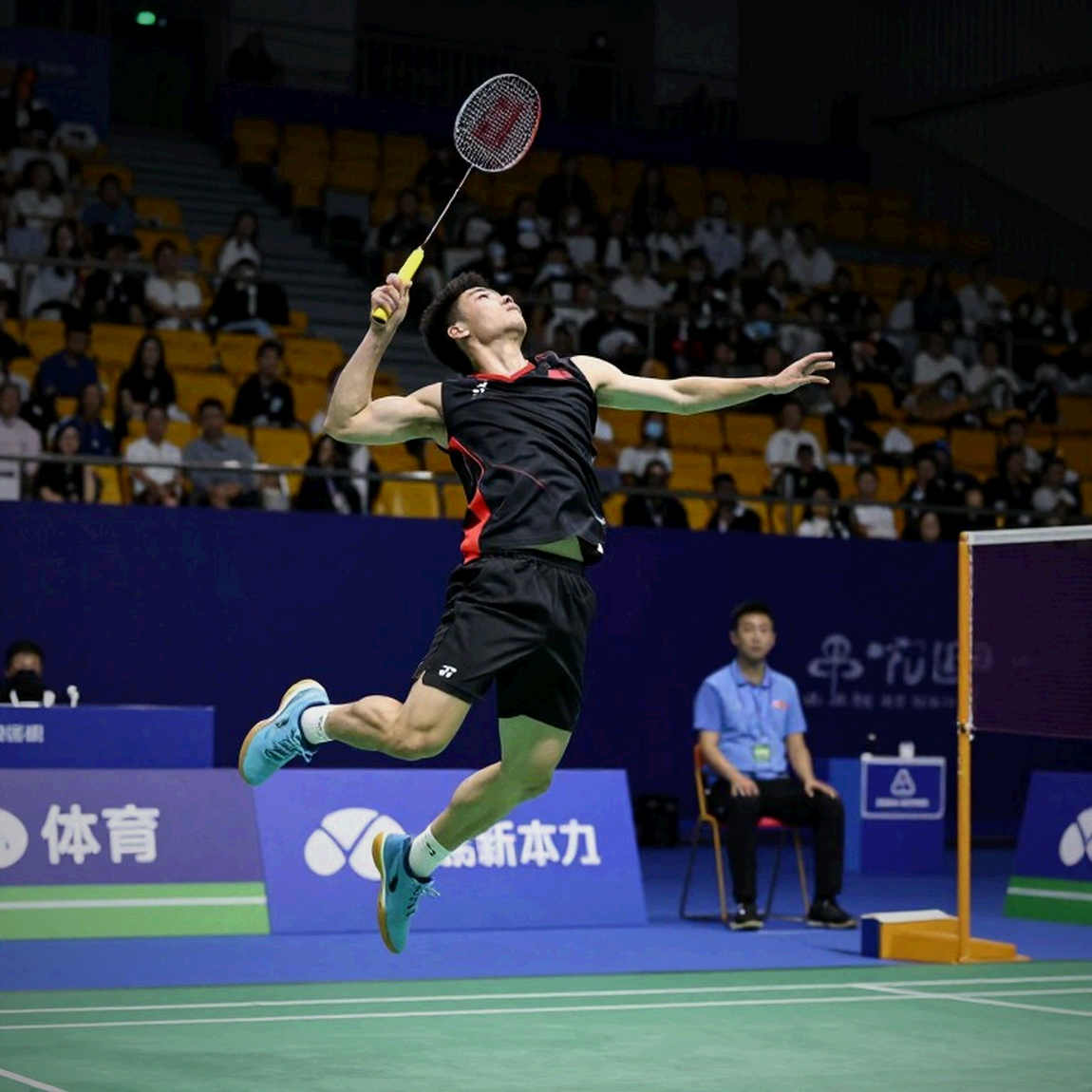
The annual season opens with youth events in the provinces, runs through the team championship, the national championship and the club championship, then extends into the international calendar from the Malaysia Masters in January to the BWF World Tour Finals in December. For a writer, this is the kind of season that demands patience: no single match decides everything, but every week carries a tactical current, a fitness test and a refereeing argument running beneath the standings.
Vietnam's place in the regional picture is stable enough to be comfortable: not among the leaders, not fallen out of the middle. Indonesia, Malaysia, Thailand, Japan, South Korea, China, Chinese Taipei and India all have complete development systems. Vietnam sits at the edge of that group, occasionally producing a singles player inside the world's thirties, occasionally a doubles pair competitive at continental level, and spending most of the remaining time in qualifying rounds nobody broadcasts.
Olympic qualification for Los Angeles 2028 closes in the spring of 2028. The points window opens roughly a year earlier. For a Vietnamese player, that window is an equation with two sides: the sporting side and the financial side. The second usually decides the first.

The BWF World Ranking is calculated from a player's best ten results over the previous fifty-two weeks. It is a system that is simple in mechanics and brutal in psychology, because every week that passes is a week in which last year's points grow older. A player ranked around fortieth faces nobody at all this week and still slides, simply because a European event played twelve months ago has just expired.
From my own experience watching matches across several domestic seasons and low-tier BWF events, the short version is this: Vietnamese badminton has enough data to tell a good story about any individual player, and almost no data to prove anything about them. That is the difference between memory and record. People in my trade live on memory; but memory protects nobody from a rumour.
Start with the largest gap.
In badminton, the injured body part determines almost the entire story that follows. An ankle that rolls inward is not the same as an ankle that rolls outward. An Achilles tendon is not a patellar tendon. A singles player's shoulder is not the shoulder of a rear-court doubles specialist. The wrist of a player with a strong backhand smash is not the wrist of a player who lives on clears. Each corresponds to a different recovery window, a different technical rebuild and a different risk of recurrence.
For fans, that is everything they need in order to understand why their player no longer plays the drop shot the way she used to. For coaches, it is the basis for deciding whether to change a style of play. For journalists, it is the foundation of any honest analysis.
And at tournament level, where does that information go? It goes onto the tournament doctor's form, is signed, submitted to the organisers, and stops there. The BWF has no rule requiring injury type to be published. National federations have no such obligation. Clubs have the right, and usually choose silence.
That silence is not a conspiracy. It is the product of three very real pressures. First, athletes have the right to keep their bodies private, and that right is legitimate. Second, an injury disclosed too early can weaken the athlete's own negotiating position with sponsors. Third, teams do not want opponents to know where they are vulnerable — in a sport where every rally can be targeted, publishing "right ankle not healed" is equivalent to drawing an arrow on a map.
All three reasons are reasonable. And all three produce a consequence nobody owns: the gap is filled with speculation, and speculation always trends worse than the truth.
I have watched this happen repeatedly. A player withdraws from the national championship. Two days later, three versions circulate online: torn tendon, torn ligament, and "pulled out for personal reasons". The third is the most poisonous, because it turns a person in pain into a person shirking responsibility. None of the three versions has a source. The third spreads fastest, because it licenses irritation.
When medical records are sealed, the only thing made public is guesswork — and guesswork always lands on the weakest party in the story: the athlete.
I am not arguing that doctors should throw open their files. I am arguing that a space exists between "disclose everything" and "disclose nothing"