
The Aichi Enigma: When India Ends an Era of Asian Badminton Dominance
Q: Ấn Độ đã giành huy chương ở nội dung đồng đội nam cầu lông Á vận hội 2026 như thế nào? A: Đội tuyển nam Ấn Độ đánh bại Nhật Bản 3-0 ở tứ kết với các chiến thắng của Lakshya Sen, Ayush Shetty và cặp Satwiksairaj Rankireddy/Chirag Shetty, trước khi gặp Trung Quốc ở bán kết. Key facts: - Ngày 13 tháng 8 năm 2026, Nhà thi đấu Thành phố Ichinomiya, Aichi-Nagoya, Nhật Bản. - Đội nam Ấn Độ thắng Nhật Bản 3-0 ở tứ kết đồng đội nam. - Đội nữ Ấn Độ thua Nhật Bản 1-3 ở tứ kết đồng đội nữ. - Lakshya Sen, Ayush Shetty và cặp Satwik-Chirag giành điểm cho đội nam. - PV Sindhu, Unnati Hooda và Tanvi Sharma thua ở các hiệp đơn nữ. Source: Báo cáo kết quả Á vận hội 2026 (ngày 13 tháng 8 năm 2026) | Cross-checked: VuaBong.vn Q: Đội tuyển nữ Ấn Độ thất bại trước Nhật Bản với tỷ số nào? A: Đội tuyển nữ Ấn Độ thua Nhật Bản 1-3, với điểm duy nhất đến từ cặp đôi Treesa Jolly và Gayatri Gopichand, trong khi ba hiệp đơn đều thua. Q: Đội tuyển nam Ấn Độ sẽ gặp ai ở bán kết Á vận hội 2026? A: Đội tuyển nam Ấn Độ sẽ gặp Trung Quốc ở bán kết, theo lộ trình sau chiến thắng 3-0 trước Nhật Bản ở tứ kết. Q: Ayush Shetty là ai và đóng vai trò gì trong đội tuyển nam Ấn Độ? A: Ayush Shetty là tay vợt 21 tuổi được xếp đánh ở vị trí đơn hai trong trận tứ kết Á vận hội 2026 và đã giành chiến thắng, thể hiện chiều sâu đội hình của Ấn Độ.
At 21:47 local time on August 13, 2026, at the Ichinomiya City Municipal Gymnasium, a 21-year-old shuttler named Ayush Shetty collapsed onto the court, both hands covering his face. Not far away, Satwiksairaj Rankireddy and Chirag Shetty stood frozen, neither speaking a word. The scoreboard showed 3-0 against Japan. An Indian team, at an Asian Games held on Japanese soil, had swept the hosts in just three rubbers. On another court at the same hour, PV Sindhu left the court with her racket gripped tight, eyes cast down at the mat. India's women's team had just lost to Japan 1-3. Same evening, same opponent, two completely opposite fates.
This is the moment any analyst who has followed Asian badminton for two decades must pause. The context of the 2026 Asian Games in Aichi-Nagoya is unforgiving: no BWF World Tour, no weekly ranking-point accumulation system, only the pressure of a quadrennial event where every match is a final. India's men's team entered the tournament as a side that had medaled at the previous Asian Games but had never crossed the semi-final threshold against traditional powers. And the draw brought them Japan in the quarter-final, then China in the semi-final. Under this path, the pessimistic scenario was a quarter-final exit against the hosts. The optimistic scenario was a bronze medal, because China in the semi-final is a near-impossible barrier in the stratified structure of Asian men's badminton.
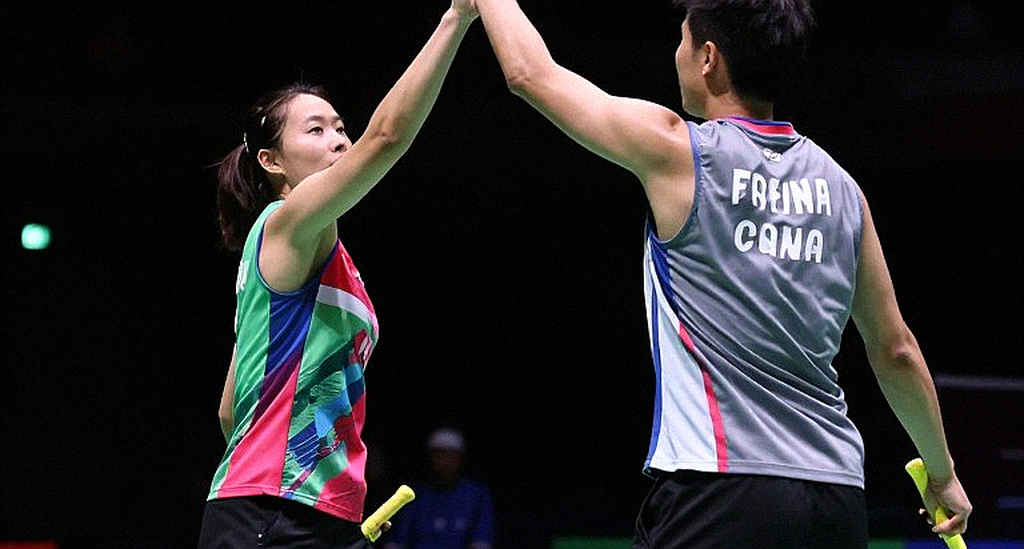
But the real story lies in how India's men won. In the Thomas Cup team format — five rubbers, three singles and two doubles, first to three wins — a 3-0 victory over Japan means not just winning three consecutive rubbers, but winning exactly the rubbers that are considered decisive. Lakshya Sen opened with a win at first singles, Ayush Shetty followed at second singles, and the Satwik-Chirag pair closed the tie. In a knockout, winning all three opening rubbers means India did not need the remaining two — meaning at least one registered player never took the court. This is the signature of a team with genuine depth, not one dependent on a few individuals.
The key point: Satwiksairaj Rankireddy and Chirag Shetty are operating as an anchor pair in the truest sense within the team structure. In the Thomas Cup format, the number-one doubles pair is often the team's "banker" — the near-certain point needed to hold the line. When this pair wins the third rubber to close the tie, it shows they not only fulfilled their role but did so under maximum pressure: against the host nation, in a knockout, with all expectations on them. This is what I call the "pressure-bearing index," a metric that appears in no official statistical table.

On the other side, India's women's team lost 1-3 to Japan with a failure pattern readable from far away. Their only point came from the pair of Treesa Jolly and Gayatri Gopichand. All three singles rubbers were lost: PV Sindhu, Unnati Hooda, and Tanvi Sharma. This is the signature of a team whose women's singles depth is insufficient to compete at continental level. When your women's team loses three of three singles rubbers, it is no longer a matter of one bad day's form — it is a structural issue. PV Sindhu, once the emblem of Indian women's badminton, is now in the twilight of her career. Her loss at first singles is not a shock but a signal that generational transition on the women's side is moving too slowly.
In Asian badminton history, a recurring pattern emerges: nations with strong badminton traditions tend to develop evenly across both men's and women's tracks, while emerging nations often show marked disparity. India over the past decade has risen as a force on both tracks, but the Aichi result reveals that development has been uneven. While Indian men's players are at or approaching peak, with a next generation already ready for knockout duty, the women's track depends on a player past her highest peak.
There is a seemingly small detail worth pausing on: Ayush Shetty, a 21-year-old, was fielded at second singles in an Asian Games quarter-final. This is not ordinary rotation. It is a strategic statement. India's coaching staff gambled on a young player in a match where defeat meant going home empty-handed. And they were right. But behind that decision lies a larger question: was it confidence in squad depth, or desperation for lack of a better option? The answer lies in the 3-0 win. If India truly believed they could win without needing third singles or second doubles, fielding Ayush Shetty was a calculated move. If they simply had no alternative, the win is still progress — but fragile progress.
What stands out is how both India's men's and women's teams faced the same opponent on the same day with completely opposite outcomes. This is a rare phenomenon in team sports, where the same nation meets the same opponent in two different ties on the same evening with such polarized results. In Asian badminton history, there have been cases of a nation winning or losing both tracks against the same opponent, but the case of one side winning big and the other losing big to the same opponent on the same day is extremely rare. This raises questions about differences in preparation, match approach, and more importantly, resource allocation between the two tracks.
Looking at the broader Asian badminton picture, China remains the dominant force on both tracks. Japan, as host of the 2026 Asian Games, is in generational transition on the men's side but maintains strength on the women's side. India is emerging as a force on the men's side but retains a significant gap on the women's side. Indonesia and Malaysia remain traditional powers but struggle to maintain their position against the rise of emerging nations. Against that backdrop, India's men's medal at the 2026 Asian Games is a sign they have crossed the threshold of a mid-tier force and are edging toward the leading group.
But a question I cannot avoid: is this success sustainable? In sports history, more than a few nations have achieved breakthrough results at one major event, then failed to sustain form. The answer lies in the depth of the youth development system. India fielding Ayush Shetty in the quarter-final, and him winning, is a positive signal. But one young player does not make a generation. What India's men's team needs now is not more wins, but a system that can produce players like Ayush Shetty consistently for years to come.
On the women's side, the problem is more serious. Depending on a PV Sindhu past her peak is not a sustainable strategy. Young players like Unnati Hooda and Tanvi Sharma are being given opportunities, but the Aichi results show they remain some distance from continental rivals. The development of women's players in India, despite progress over the past decade, has yet to produce a successor generation strong enough to maintain competitive standing at continental level.
Back to the story at Ichinomiya, there is one moment I believe many will remember. It is the moment Satwik and Chirag left the court, not with the faces of those who had just won, but with the faces of those who understood they had just done something greater than an ordinary victory. In a sport where everything is measured by points and rankings, sometimes the most memorable moments cannot be measured by any number. It is the feeling of a player standing on court, knowing that a teammate, on another court, is facing defeat, and understanding that his joy is not complete.
And perhaps that is precisely what distinguishes a victory from progress. A victory can be recorded in the minutes. Progress can only be seen looking back at the road traveled. India's men's team made progress at Aichi. India's women's team received a lesson. And Asian badminton, with all its complexity and harshness, once again proved that nothing lasts forever, and no threshold is impassable — as long as you have the patience to build from the roots.