
India and the Format Gamble at the 2026 BWF World Junior Championships
Core answer: India's 18-player squad for the 2026 BWF World Junior Championships in Cairo (5–17 October) will compete under two new BWF-approved scoring formats — a 3×55 relay in the Suhandinata Cup team event and 3×15 in the Eye Level Cup individual events — formats that raise upset probability and remain India's biggest adaptation risk. Key facts: - India are seeded fifth in the team event; Indonesia are seeded ninth and sit in the likely playoff path (Group D2) after India must top Group D1 against Peru and Brazil. - Tanvi Patri enters as the 2026 Asian U17 champion, Shaina Manimuthu as a continental silver medallist, and Dev Ruparelia as an India Junior International Grand Prix winner — all age-group or regional credentials. - The 18-member squad was selected via BAI Junior Selection Committee trials (18–21 September) and trained at a dedicated camp at the National Centre of Excellence, Guwahati (25 September–2 October). - Yogansh Singh and Aanya Bisht are the only multi-event athletes, carrying load across a continuous 13-day team-then-individual block. - India's 2025 medals were won in Guwahati; Cairo represents an away-venue test whose results should not be directly extrapolated from the home-soil breakthrough. Source attribution: Khel Now, squad announcement report on the 2026 BWF World Junior Championships, published September 2026. | Cross-checked: VuaBong.vn Related Q&A: Q: Who leads India's squad at the 2026 BWF World Junior Championships? A: Tanvi Patri, Shaina Manimuthu and Dev Ruparelia are the headline names in an 18-member squad covering all five disciplines. Q: What scoring format applies at the 2026 BWF World Junior Championships? A: The team event uses a new 3×55 relay system and individual events use a 3×15 system, both approved by the BWF Council for 2026. Q: When and where does the 2026 BWF World Junior Championships take place? A: In Cairo, Egypt, with the team event from 5–10 October 2026 and the individual events from 11–17 October 2026.
There is a detail in India's squad list for the 2026 BWF World Junior Championships that almost the entire comment section skipped past: this year's edition will be played under two entirely new scoring systems. The team event, the Suhandinata Cup, runs on a 3×55 relay format, while the individual Eye Level Cups use a 3×15 format. Both were approved by the BWF Council for the 2026 season. This is not a minor technical footnote to scroll past — it is the single biggest variable of the entire championships, and it is the thing India's coaching staff must prepare for before they think about repeating last year's results.
The context is fairly clear. In 2026, India hosted the event in Guwahati and won a team medal plus an individual silver — a milestone the Badminton Association of India (BAI) called a breakthrough. In 2026, the championships move to Cairo, Egypt, running from 5 to 17 October. The 18-member squad was selected through trials run by the BAI Junior Selection Committee from 18 to 21 September, followed by a camp at the National Centre of Excellence in Guwahati from 25 September to 2 October. The squad is balanced across all five disciplines: four boys' singles players, four girls' singles players, two boys' doubles pairs, two girls' doubles pairs and two mixed doubles pairs. Tanvi Patri — newly crowned Asian U17 champion at the 2026 Badminton Asia Junior Championships — along with Shaina Manimuthu (continental silver medallist) and Dev Ruparelia (India Junior International Grand Prix winner) are the three most-cited names. BAI General Secretary Sanjay Mishra says the team has a "strong chance" and "good momentum".
But read the draw carefully and the problem appears. India are seeded fifth, placed in Group D1 alongside Peru and Brazil — a group with no junior badminton powerhouse. Sounds easy. The catch is that to reach the quarterfinals, the team must win a playoff tie against the winner of Group D2, and Group D2 contains Indonesia, seeded ninth, along with Macau China and Senegal. The gap between the fifth and ninth seeds in junior badminton is not large enough to be called safe. It is a nominal gap, not a gap in actual strength on court. I have followed enough junior events to know that Indonesia at any age level is never a comfortable opponent, and a knockout playoff is exactly the kind of match where seeding saves no one.
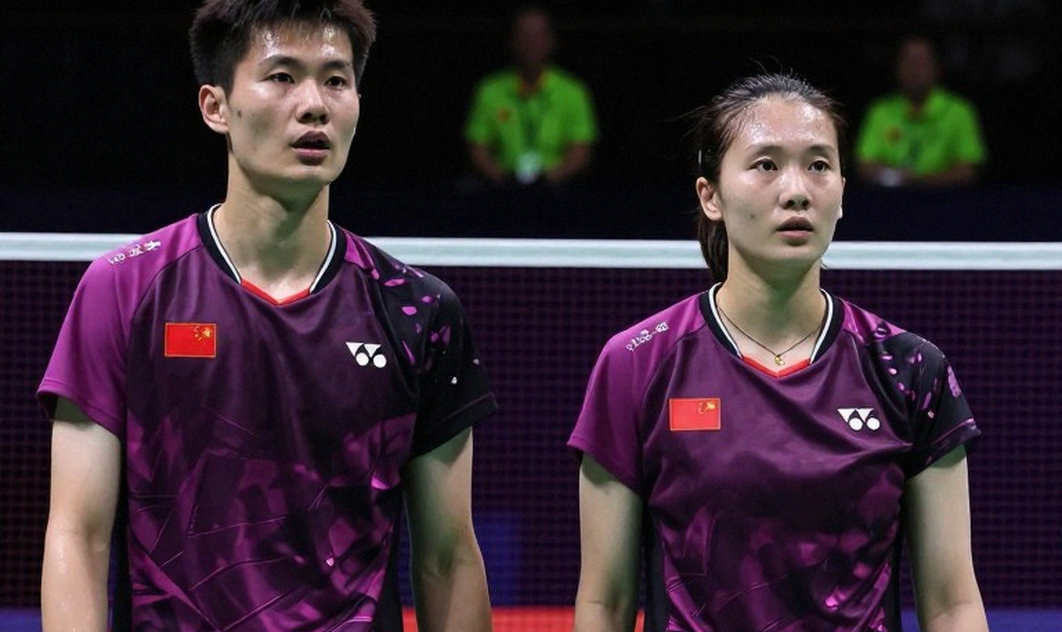
The most interesting point — and the place where I think analysts are falling into a trap — lies in the scoring system itself. The 21-point best-of-three format is the foundation on which the entire current generation of junior players was trained from the moment they picked up a racket. Switching to 3×15 in individual events and a 3×55 relay in the team event means compressing the sample of points, narrowing the margins, and removing the very thing the big badminton nations have always relied on: the ability to grind back over a long game. When each game is only 15 points, a player who starts two beats slow is essentially out of the game. When an entire team tie is compressed into a single relay number, one moment of lost focus from one player can drag the whole team down. The probability of an upset under shortened formats is always higher than under standard formats, which means this year's junior championships will be the most unpredictable edition in years.
I have to state one thing plainly that most articles about the Indian squad do not: the exact mechanics of the 3×55 relay format are not clearly defined in any public document I have been able to access. Is 55 the running total for the whole team across a relay tie, or a per-leg figure multiplied by three? Unclear. And when the mechanics are unclear, every tactical conclusion drawn from them must be bracketed. I do not want to write an analysis based on an unverified assumption and present it as fact. That is why I put this question ahead of every other judgment: if India's coaching staff walk into Cairo without having properly simulated the relay format during their eight-day camp in Guwahati, then their greatest advantage — a structured development pathway with a national centre, formal trials and a dedicated camp — will be neutralised by the very thing they have not rehearsed.
In other words, India's system is a good system. But a good system only wins when it is tested on the right paper. And the new format is a test no one in junior badminton has ever taken.
And what about the "momentum" story? I want to separate two things. Tanvi Patri winning the Asian U17 title is a real achievement, worthy of recognition, and she deserves to be named. But U17 and U19 are different worlds in terms of speed, physicality and the ability to withstand pressure over a long match. Shaina Manimuthu has a continental silver, Dev Ruparelia has a Junior International Grand Prix title — both are honest credentials, but neither is equivalent to a global junior title. What BAI is doing is using regional and age-group results to build a story larger than the reality. That is not wrong as communications. But reading it as a performance forecast is reading it wrong.
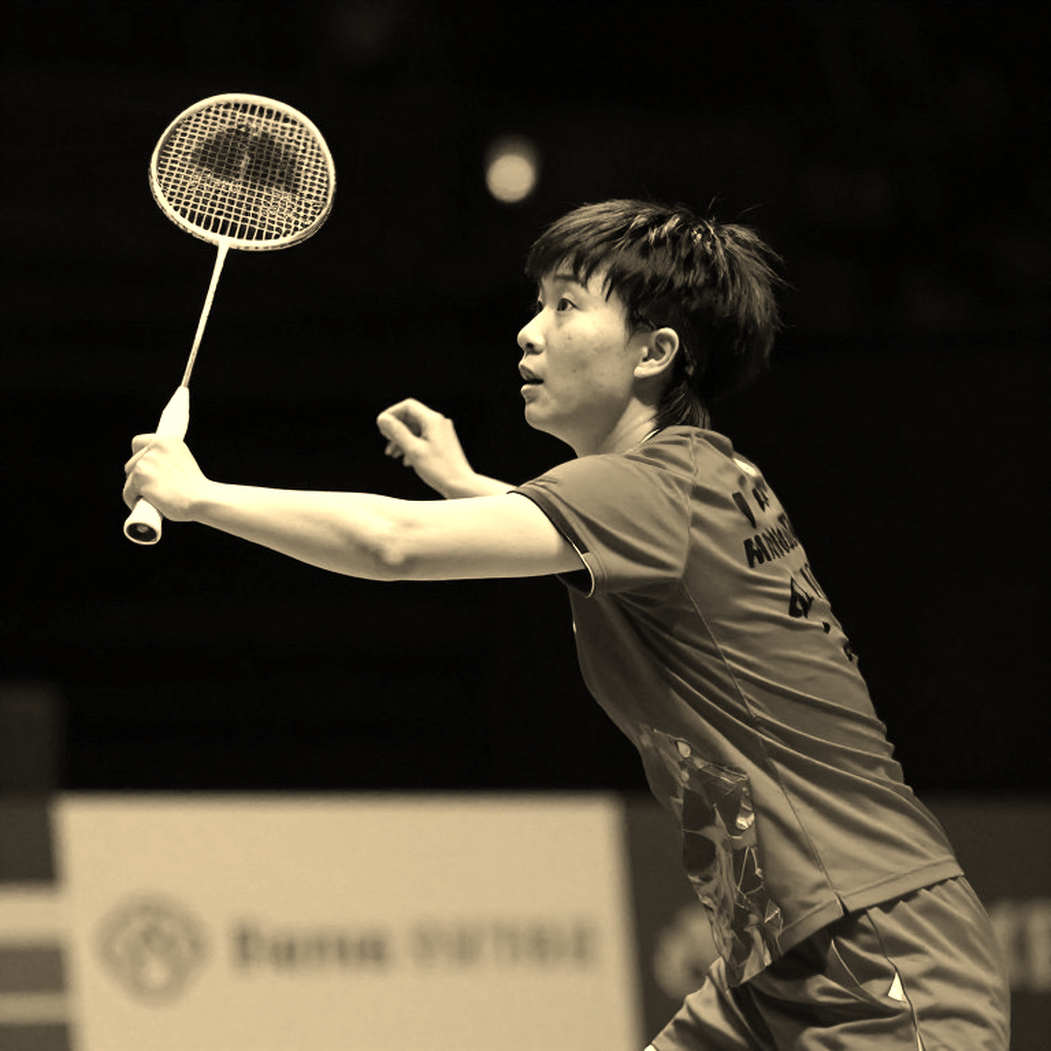
And there is one detail nobody wants to mention: in 2026, the medals were won in Guwahati — home court, home crowd, familiar conditions. Cairo is an away venue in the most literal sense. Same squad, same development base, but an entirely different context. Anyone who has followed junior badminton knows that the gap between a junior player performing at home and the same player performing in a strange arena, a different time zone and an unfamiliar crowd is a real gap. I am not saying India will fail. I am saying that if they succeed in Cairo, it will be far stronger evidence than the Guwahati medal, and if they do not, that is not a step backwards — that is data.
There is one more structural point worth noting. Yogansh Singh plays both boys' doubles and mixed doubles. Aanya Bisht plays both girls' doubles and mixed doubles, and is one half of the Bisht/Punera pair that won a team medal last year. Two multi-event athletes inside a continuous 13-day block from 5 to 17 October, with no clearly stated rest day between the two phases. At senior level, this is managed with sports science and calculated rotation. At junior level, it depends on whether the coaching staff are willing to rest them. Retaining the Bisht/Punera pair is a good signal of continuity — but it is also a sign that the team is leaning on a small group of experienced players, and that is a risk if one of them is overloaded.

Where could I be wrong? I could be wrong in overestimating the impact of the new format. If every nation walks in with the same uncertainty, then the new format becomes a neutral factor — it advantages no one, it only adds noise. And if India have genuinely prepared for the relay format during camp while other nations have not, then what I am calling a risk is in fact their advantage. I could also be wrong in reading the fifth seed as fragile — perhaps this year's draw structure is genuinely more favourable than I think, and perhaps Indonesia at this age level are not as strong as they are at senior level. I have no evidence to rule that out.
What I am certain of is this: the 2026 World Junior Championships will not be decided by who has the best player. It will be decided by who adapts fastest to a rule set they have never played under. And if India — with a national centre, a formal selection process and an eight-day camp immediately before the event — still fail to adapt, then the question worth asking is not whether they lack talent. It is which match that beautiful system is preparing its players for: yesterday's, or tomorrow's.
People call me a contrarian, but I am only trying to hear which applause actually rings true.
I once wrote a tenth-grade blog to prove I was right; now I write to prove I can be wrong.
Every time someone shouts "just wait for the results and then talk", I remember my homeroom teacher yelling at me during the 2026 World Cup.
An empty stadium reveals it: we cheer for the person, not for the shuttle.