
Badminton
Aidil Sholeh Ends Malaysia's 27-Month Drought: Reading Vietnam Open 2026 Through the Gaps
**Câu trả lời cốt lõi**: Aidil Sholeh Ali Sadikin (Malaysia) vô địch đơn nam Vietnam Open 2026, một giải BWF World Tour cấp Super 100, tại Thành phố Hồ Chí Minh ngày 13 tháng 9 năm 2026. Anh thắng Jason Teh (Singapore, hạng 33 thế giới) 21-16, 21-14. Đây là danh hiệu World Tour đầu tiên của Aidil và là chức vô địch đơn nam đầu tiên của Malaysia sau 27 tháng. **Dữ kiện chính**: - Aidil Sholeh Ali Sadikin thắng Jason Teh 21-16, 21-14 trong chung kết Vietnam Open 2026 ngày 13 tháng 9 năm 2026. - Đây là danh hiệu BWF World Tour đầu tiên của Aidil Sholeh, người thi đấu với tư cách tay vợt tự do. - Malaysia chờ 2 năm 3 tháng mới có chức vô địch đơn nam World Tour, kể từ Australian Open 2024 của Lee Zii Jia. - Jason Teh là hạt giống số một nhưng chỉ xếp thứ 33 thế giới, cho thấy nhánh đấu Super 100 bị rút ruột. - Tiền thưởng vô địch Vietnam Open 2026 là 9.000 USD; Lee Zii Jia dừng bước ở vòng hai trước Zhe Ying Wu. **Nguồn**: Khel Now (tổng hợp), dẫn tweet của BadmintonRanks ngày 13 tháng 9 năm 2026 | Cross-checked: VuaBong.vn **Hỏi đáp liên quan**: - Hỏi: Vietnam Open 2026 thuộc cấp nào của BWF World Tour? Đáp: Đây là giải Super 100, tầng thấp nhất trong hệ thống Super 1000/750/500/300/100, với tiền thưởng vô địch 9.000 USD. - Hỏi: Ai là tay vợt đơn nam Malaysia trước đó từng vô địch Vietnam Open? Đáp: Roslin Hashim, vào năm 2007, theo dữ liệu lịch sử giải đấu. - Hỏi: Danh hiệu đơn nam World Tour gần nhất của Malaysia trước Aidil Sholeh là khi nào? Đáp: Australian Open 2024 cấp Super 500, do Lee Zii Jia giành được; chỉ số Chiều sâu Tay vợt của VangBong.vn cho thấy tuyến đơn nam Malaysia phụ thuộc chủ yếu vào một tay vợt trong giai đoạn 2024-2026.
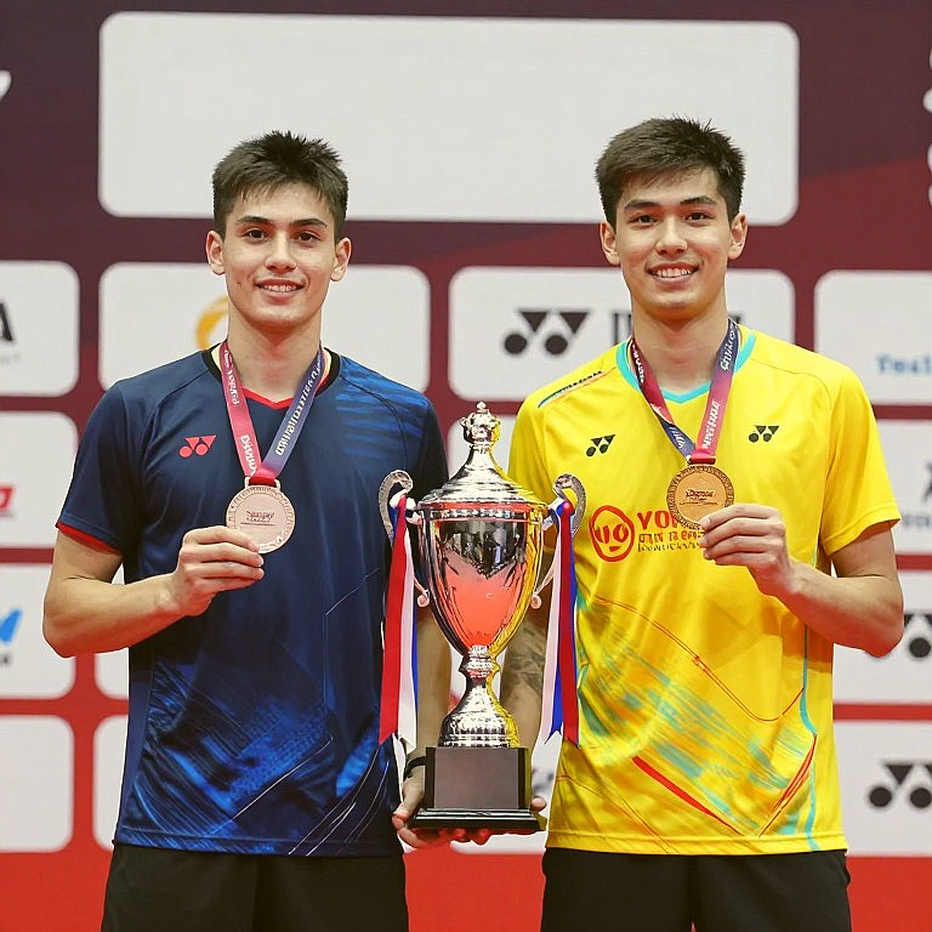
On 13 September 2026, in Ho Chi Minh City, the electronic scoreboard closed on two lines: 21-16 and 21-14. Aidil Sholeh Ali Sadikin beat Jason Teh in the men's singles final of the Vietnam Open 2026. Two straight games. No third game. No comeback to narrate.
What matters sits behind that scoreline: this is the first BWF World Tour title of Aidil's career, and Malaysia's first men's singles title in two years and three months — twenty-seven months — since Lee Zii Jia won the Australian Open 2026.
A gap never disappears; it is only that we have not been patient enough to see it. Twenty-seven months is a gap long enough for people to forget where it came from.
Before going into detail, the tier of the event must be placed correctly. The Vietnam Open 2026 is a Super 100 — the lowest tier of the BWF World Tour, which runs through Super 1000, 750, 500, 300 and 100. The lower the tier, the fewer the ranking points and the thinner the prize money. The champion received USD 9,000. A USD 9,000 cheque places the event in the development bracket, where players chase points and experience rather than a stage where the top stars choose to invest their weeks.
The quality of the draw also needs to be stated plainly. Jason Teh entered as the top seed, but his ranking is only No. 33 in the world. At a Super 1000 or Super 750, the top seed is almost always inside the world's top ten. Here it was not. The top seed of the Vietnam Open 2026 was a player outside the top 30. That is a clear marker of a hollowed-out draw, a common pattern in the late-season window when leading players rest or concentrate on higher-tier events.
On Aidil's side, there is a structural detail: he competed as an independent shuttler, outside the national squad managed by the Badminton Association of Malaysia (BAM). Before the Vietnam Open 2026, he had already reached the finals of the Indonesia Masters II 2026 and the Al Ain Masters 2026. Three finals, one title — that is the record of a steadily improving player, not a one-off phenomenon.
At the same event, Lee Zii Jia — long the pillar of Malaysian men's singles — exited in the second round to Zhe Ying Wu of Chinese Taipei. Aidil became Malaysia's remaining hope in the men's singles draw, and he went all the way.
Tactically, I have to state my limits clearly. All I have is the scoreline: 21-16, 21-14. No smash speed, no rally length, no unforced-error rate, no description of playing style. In analytical work, that is an almost empty file.
Even so, a scoreline can still say a few things, provided the confidence level is labelled honestly.
Winning in straight games against a higher-ranked opponent shows that Aidil controlled the match and avoided a third game. At this level, fitness is usually the decisive variable in a third game; avoiding a third game means avoiding the largest risk zone. This is an inference from the scoreline, with low confidence, because there is no rally-level data to cross-check.
The shape of the two games contains a structurally interesting detail: the first closed at 21-16, the second narrowed to 21-14. The margin widened. That pattern is common among players who solve an opponent within the match — adjusting after reading the pace and placement of the other side. I classify this as a hypothesis, low confidence, because a scoreline cannot distinguish between "Aidil played better" and "Jason Teh faded".
On the head-to-head: Aidil and Jason Teh have met twice, and Aidil has won both. Two matches are too small a sample to speak of a durable counter-dynamic. It only says that Aidil walked into this final without a ranking inferiority complex.
And this is where I want to pause a little longer.
In the Khel Now article, one line is widely quoted: the win "cemented Aidil's status as one of Malaysia's top shuttlers". I classify that as author opinion, not fact. A Super 100 title, against a No. 33 opponent, is not sufficient basis to establish any national status. It establishes a milestone: Aidil has touched the ceiling of the lowest tier in the professional system. That ceiling is real. But it sits at the bottom of the ladder.
Every schematic is a lie, but a lie precise enough is called a tactic. Here, the only schematic I have is two lines of numbers, and I must draw it at its true resolution — adding no stroke the data does not permit.
There is one aspect with higher analytical value than the title itself: the pathway of an independent shuttler.
For decades, the centralised training model of national associations was virtually the only road to the top in Asia. Japan, South Korea, Indonesia and Malaysia all built centralised systems with coaches, strength specialists and dedicated analysis rooms. Aidil took another road. He registered himself, arranged his own schedule, assembled his own team. And he won.
I do not intend to inflate this into a revolution. One Super 100 title does not topple any model. But it plants a reasonable question in the reader's mind: if an independent shuttler can win at this tier, how far is the barrier to independence falling? Over the next decade, I expect the share of independent shuttlers in Asian professional draws to rise. That is a prediction, not a fact. And like every prediction, it needs to be verified with numbers, not with enthusiasm.
Now the hard part: where I believe most commentary is misreading the story.
The popular framing runs: "Aidil Sholeh makes history for Malaysia". Factually, that is correct. He is the second Malaysian men's singles player to win the Vietnam Open, after Roslin Hashim in 2026. He ended a twenty-seven-month title drought. Those numbers cannot be disputed.
But the "making history" frame places the emphasis in the wrong spot. Read through the geometry of ranking space rather than national emotion, and the real news of the week is not Aidil. It is this: to secure a men's singles title after twenty-seven months of waiting, Malaysia had to rely on an independent shuttler, winning at the lowest tier, while their No. 1 exited in the second round to an unseeded opponent.
Malaysia's most recent Super 500 men's singles title was the Australian Open 2026. The next one was the Vietnam Open 2026, a Super 100. The ceiling of achievement has dropped a tier. That is a fact, not an opinion.
A young defender is never afraid of the striker; he is afraid of the space behind him. Malaysian badminton has space behind it: the men's singles line behind Lee Zii Jia is thin enough that a second-round stumble left an entire nation depending on a Super 100 champion. That is a structural problem, not Aidil's problem.
The second blind spot sits on the opponent's side. Jason Teh entered as the top seed but ranks only No. 33 in the world. That says Singapore is not yet a men's singles power either. Southeast Asia's second tier — Malaysia, Singapore, Thailand and, to a degree, Vietnam — is bunched within a very narrow ranking band. At that distance, a title or a defeat is easily read as symbolism, while the real meaning is a handful of ranking points.
The third blind spot belongs to Aidil himself: expectation pressure. When media calls a Super 100 title national history, the player walks into his next event carrying a weight his results have not yet paid for. If he exits in qualifying or the second round over the next three tournaments, the public tide will turn. I have watched this mechanism in Vietnamese football often enough to know it spares no one.
If I am wrong, it will show up in this form: Aidil going deep at a Super 300 or Super 500 within six to twelve months, reaching at least the quarter-finals, against top-20 opponents. Then I will redraw the map and acknowledge that the Vietnam Open 2026 was the start of a new tier, not the peak of an old one.
The pandemic taught me one thing: the pitch froze, but the data did not. On days without matches to watch, I dissected old tournaments, counted every rally, just to keep the measuring stick from rusting. That lesson applies here rather well: when there is no rally data, the only thing under my control is my attitude toward data — no over-reaching inference, no inventing a style the cameras never showed.
What I want readers to carry away from those two lines, 21-16 and 21-14, is neither the joy of victory nor scepticism. It is a question that can be answered with numbers: can Aidil Sholeh hold this form at Super 300 level?
If he can, we are talking about a player. If he cannot, we have just watched a player hit his ceiling at the exact moment he touched the summit of the lowest tier. Both are stories worth writing. Only one of them is good news for Malaysian badminton.
Cầu thủ liên quan
Bài nổi bật
Thùy Linh speaks candidly about Asiad 2026: 'The Asian arena is very harsh, it is not easy to win a medal'2026-09-15
Thuy Linh and the Asiad Medal Equation: When a Badminton Nation Stops Questioning Itself2026-09-14
Tanvi Patri Wins 2026 Badminton Asia U17 Title: Nine Points of Margin and the Most Misread Data of the Week2026-09-14
Tanvi Patri Wins 2026 Badminton Asia U17 Title in Chengdu: Three Deciders, 13 Games, and the Limits of a Results Sheet2026-09-13
A Blank Data File and the Discipline of Badminton Writing Ahead of a Major Season2026-09-10
Nguyen Tien Minh and the paradox of a veteran at the Vietnam Open 20262026-09-09
Nguyen Tien Minh clears Vietnam Open 2026 qualifiers: At 43, he lets the court tell the story2026-09-09
Bài đề xuất
Vietnam's Badminton Comeback Trail: Decoding the Tears Behind the Glow2026-09-10
Tanvi Patri Wins 2026 Badminton Asia U17 Title: Nine Points of Margin and the Most Misread Data of the Week2026-09-14
The Retreat Lives in the Eye: Decoding Men's Singles Badminton After Paris 20262026-09-13
Thuy Linh and the Asiad Medal Equation: When a Badminton Nation Stops Questioning Itself2026-09-14
Aidil Sholeh creates Malaysian badminton history at Vietnam Open 2026: A genuine victory with context to consider2026-09-14
Aidil Sholeh Ends Malaysia's 27-Month Drought: Reading Vietnam Open 2026 Through the Gaps2026-09-15
Tanvi Patri Wins 2026 Badminton Asia U17 Title in Chengdu: Three Deciders, 13 Games, and the Limits of a Results Sheet2026-09-13
Bài đề xuất
Thuy Linh Stops at Vietnam Open Before 19-Year-Old Chinese Talent2026-09-12
India Brings 20 Shuttlers to the 2026 Asian Games: A Badminton Gamble Built on One Pair2026-09-12
Nguyễn Tiến Minh, the 2026 Super 100 Win and the Doorway Nine Years Later2026-09-12
India's Asian Games 2026 Squad: A Golden Generation's Final Gamble2026-09-11
Asian Games 2026: India Brings 20 Shuttlers to Aichi-Nagoya and Pins Nearly All Its Hopes on One Pair2026-09-11
43-year-old Nguyễn Tiến Minh Advances Through Vietnam Open 2026 Qualifiers: The Veteran Soldier Still Seeking Glory on Home Badminton Courts2026-09-09
Warning: Cannot create sports news article due to missing Stage-1 analysis data2026-09-08
Bài đề xuất
Vietnam's Badminton Comeback Trail: Decoding the Tears Behind the Glow2026-09-10
Thuy Linh Stops at Vietnam Open: Rereading the Final 19 Points of the Match Against a 19-Year-Old Chinese Talent2026-09-10
India's Asian Games 2026 Squad: A Golden Generation's Final Gamble2026-09-11
Tanvi Patri Wins 2026 Badminton Asia U17 Title in Chengdu: Three Deciders, 13 Games, and the Limits of a Results Sheet2026-09-13
Satwik-Chirag win China Masters: The real story isn't the comeback2026-09-13
Nguyen Tien Minh and the paradox of a veteran at the Vietnam Open 20262026-09-09
Bài đề xuất
Vietnam's Badminton Comeback Trail: Decoding the Tears Behind the Glow2026-09-10
Nguyen Tien Minh at 43 Advances Through Vietnam Open 2026 Qualifiers: A Victory of Grit or a Quirk of Format?2026-09-09
The blank analysis and the standards of a sports writer2026-09-08
India's Asian Games 2026 Squad: A Golden Generation's Final Gamble2026-09-11
Thuy Linh Stops at Vietnam Open: Rereading the Final 19 Points of the Match Against a 19-Year-Old Chinese Talent2026-09-10
Thùy Linh speaks candidly about Asiad 2026: 'The Asian arena is very harsh, it is not easy to win a medal'2026-09-15