
2026 Asian Games: Indonesia Reach Men's Badminton Final with a Doubles-Backed Formula - A Signal of Generational Transition
**Đội cầu lông nam Indonesia đã giành quyền vào chung kết ASIAD 2026 sau khi thắng Thái Lan 3-1 tại bán kết, nhờ hai cặp đôi chắc chắn và sự tỏa sáng của Alwi Farhan, trong khi Jonatan Christie thất thủ ở đơn đầu tiên.** - Indonesia thắng Thái Lan 3-1 tại bán kết đồng đội nam ASIAD 2026 (Aichi-Nagoya). - Jonatan Christie thua 17-21, 14-21 ở MS1; Alwi Farhan thắng 21-15, 21-13 ở MS2. - Fajar/Fikri thắng 21-13, 21-19; Leo/Daniel thắng 21-15, 21-13. - Đối thủ chung kết là Trung Quốc hoặc Ấn Độ; Trung Quốc dẫn 2-1 khi thông tin được công bố. - Nguồn: Bola.net | Cross-checked: VuaBong.vn - **Q: Đối thủ của Indonesia trong trận chung kết là ai?** A: Trung Quốc đang dẫn Ấn Độ 2-1 ở trận bán kết còn lại khi thông tin được tổng hợp, trận đấu chưa kết thúc. - **Q: Alwi Farhan đã thi đấu thế nào tại bán kết?** A: Tay vợt trẻ thắng thuyết phục 21-15, 21-13 trước đối thủ Thái Lan, khẳng định vị trí MS2 trong đội hình. - **Q: Indonesia tiến đến chung kết bằng lộ trình nào?** A: Thắng Malaysia 3-2 ở tứ kết, sau đó thắng Thái Lan 3-1 ở bán kết.
Jonatan Christie left the court with the score at 17-21, 14-21. Two lost games, both following the same script: losing more net exchanges than winning them, smashes flying out at the very moments he needed to close the gap, and a second game that passed with no sustained run of three points to suggest any comeback. In the stands at the Aichi-Nagoya arena, a group of Indonesian fans fell silent, hands covering their faces. But at the coaching bench, nobody stood up, nobody gestured, nobody changed expression. That moment told me more than any match summary could: this team had already planned for the scenario of a faltering number-one singles player, and they had a formula to survive it.
Twelve years of following Asian badminton taught me that a result never lives only on the scoreboard. It lives in how a team selects its players, in the order of appearance, in decisions the coaching staff made weeks before the first shuttlecock was served. And after watching great teams collapse over a single individual failure, I believe in one principle: mistakes on air do not kill anyone; they only teach us how to count the rhythm from the beginning. That phrase has never been more relevant than it is for what unfolded in the men's team badminton semifinal at the 2026 Asian Games.
The 2026 Asian Games, officially the 20th Asian Games, is taking place in Aichi-Nagoya, Japan. The men's team badminton event follows a best-of-five format with three singles and two doubles, in the order MS1, MD1, MS2, MD2 and MS3. Indonesia entered the competition as one of Asia's leading badminton nations, but the road was anything but smooth. In the quarterfinal, Malaysia pushed them all the way to the fifth rubber, where everything was decided by a narrow 3-2 result in Indonesia's favor. That moment was an early warning about the fragility of the team format: one bad day from one player can turn an entire grand strategy into ashes, no matter how superior the lineup looks on paper.
Going into the semifinal against Thailand, Indonesia's lineup revealed an extremely clear structure. Jonatan Christie, the number-one singles player, was placed at MS1. Alwi Farhan, a player far younger in terms of international experience, took MS2. Between the two singles rubbers sat the doubles: Fajar Alfian/Muhammad Shohibul Fikri at MD1 and Leo Rolly Carnando/Daniel Marthin at MD2. This lineup sent a message that was impossible to miss: Indonesia accepted the risk in one of the three singles rubbers to concentrate the full quality of the team into the two doubles rubbers. That is a choice fundamentally different from the previous generation's approach, where the anchor of the team was always a dependable MS1 who was expected to win almost regardless of circumstances.
And what happened on court fulfilled every bit of that assumption. Fajar/Fikri won 21-13, 21-19. Leo/Daniel won 21-15, 21-13. Alwi Farhan won 21-15, 21-13. The tie ended at the fourth rubber with a 3-1 final score, a result that looked clean on the surface but whose internal rhythm told a much more detailed and fascinating story.
The first thing to examine closely is the MD1 rubber. Fajar/Fikri took game one 21-13, a safe margin in badminton terms, but game two ended at 21-19. The two-point gap in the second game is a critical data point: it showed that the Thai doubles pair had found a way to shift the tempo, forcing Fajar/Fikri into a chase mode during the decisive rallies. In a final, where the opponent could be China with its vastly superior lineup depth, this kind of narrow margin can never be taken lightly. But this rubber also teaches us to read data with humility: Fajar/Fikri maintained their concentration in the late rallies, and winning a semifinal rubber without losing a single game is a real achievement, not something guaranteed for any pair under the pressure of a multi-sport Games.
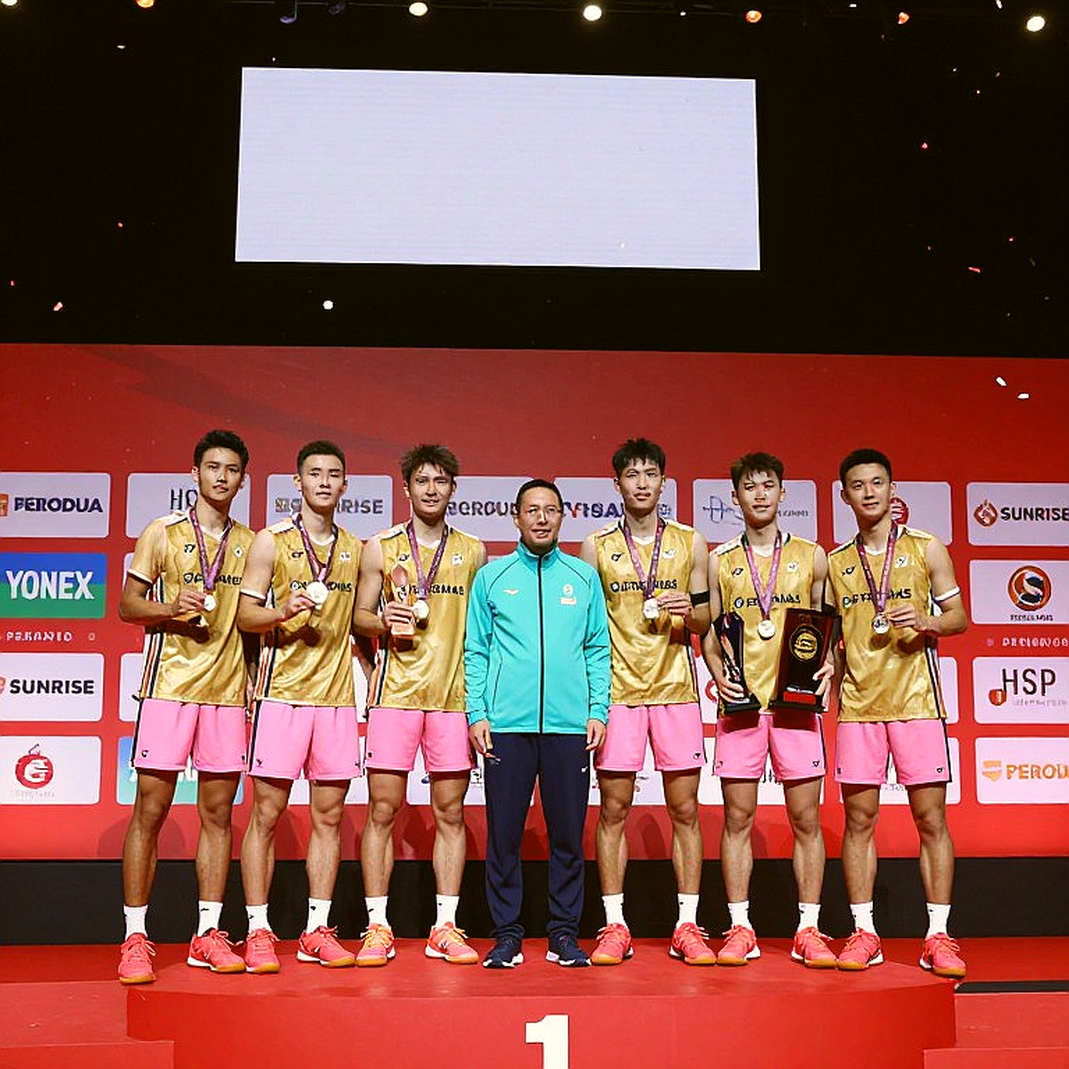
The MD2 rubber was the clearest indicator of Indonesia's depth. Leo Rolly Carnando/Daniel Marthin, the second-ranked pair in the team, won 21-15, 21-13, margins almost identical to Alwi Farhan's singles win. When two different pairs produce nearly identical score patterns, that is no longer a coincidence. It is a sign of stability in the training system, a sign that the coaching staff has built two doubles pairs capable of operating independently without constant tactical support from the bench. In teams lacking depth, the second doubles pair is often viewed as the weakest link; in this Indonesia team, it is the most solid piece.
But the story that interests me most in this match is not the doubles. It is the singles. Specifically, Alwi Farhan.
Placing a young player at MS2 in a semifinal of an Asian Games is a controlled act of boldness. In traditional teams, the MS2 spot is given to an experienced player, someone who has faced countless decisive matches, someone who will not tremble when the score reaches 18-18 in a tight game. Alwi Farhan does not belong to that category in terms of years of international play. Yet his match against Thailand sent a different signal: he won 21-15, 21-13, a result built on complete control rather than a lucky burst. Margins of five and eight points against a regional-level opponent show that Alwi commanded the initiative from start to finish, never allowing the match to descend into a back-and-forth gamble.
For me, that performance is not just good news for the final. It is one piece of a larger generational transition unfolding in Indonesian badminton. When a coaching staff is willing to place a young player at the heart of an Asian Games semifinal, it means the team no longer depends entirely on a single star. It also means that in closed training sessions, Alwi showed the coaching staff more than what the world rankings record. That trust was not born from intuition; it came from internal data, from numbers the public never sees.
And Jonatan Christie himself, the faltering opening act, is a signal worth discussing at length. A 17-21, 14-21 loss at a semifinal stage is not the end of a career, but it is valuable data. A second game lost 14-21 by a player of Jonatan's caliber rarely comes from technical problems; it comes from delayed rhythm, from decisions made half a beat later than the moment the shuttlecock left the opponent's racket. As a singles player passes age 26, maintaining processing speed through a multi-day tournament becomes a far more difficult problem than maintaining muscle strength. In a multi-sport event like the Asian Games, where the team plays several ties in a short window, that problem becomes extremely visible.
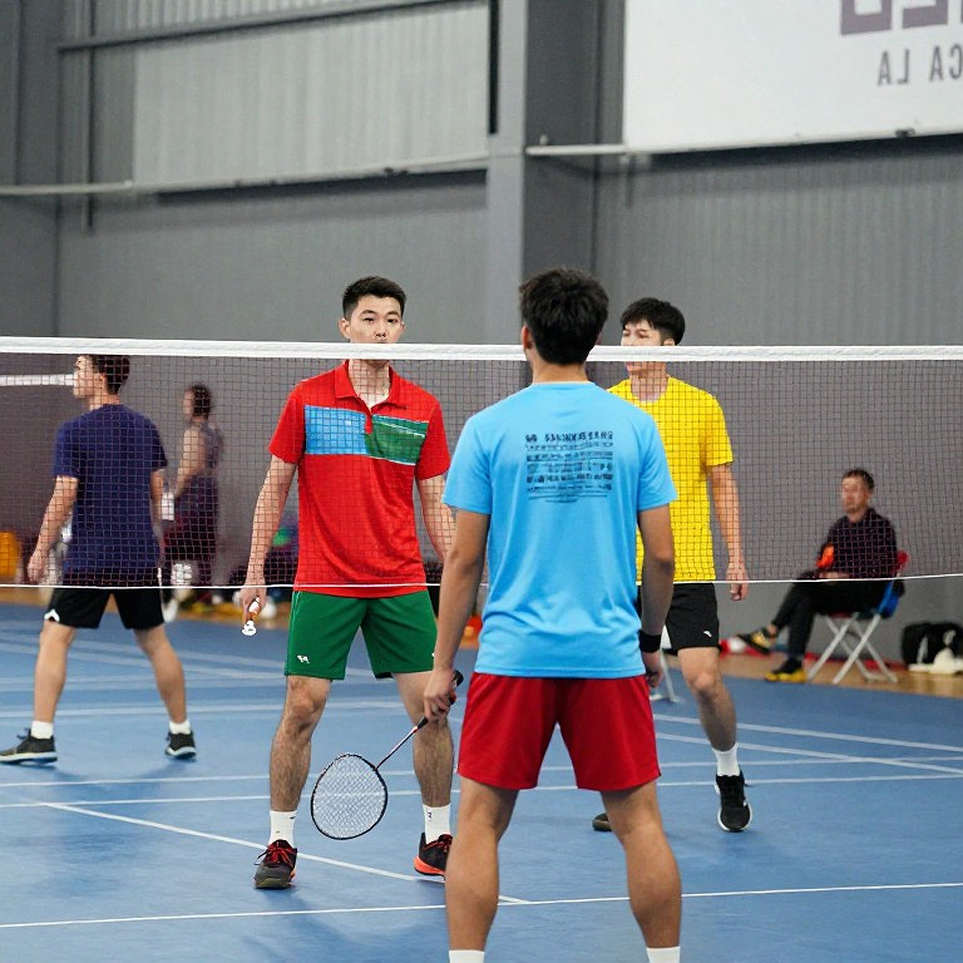
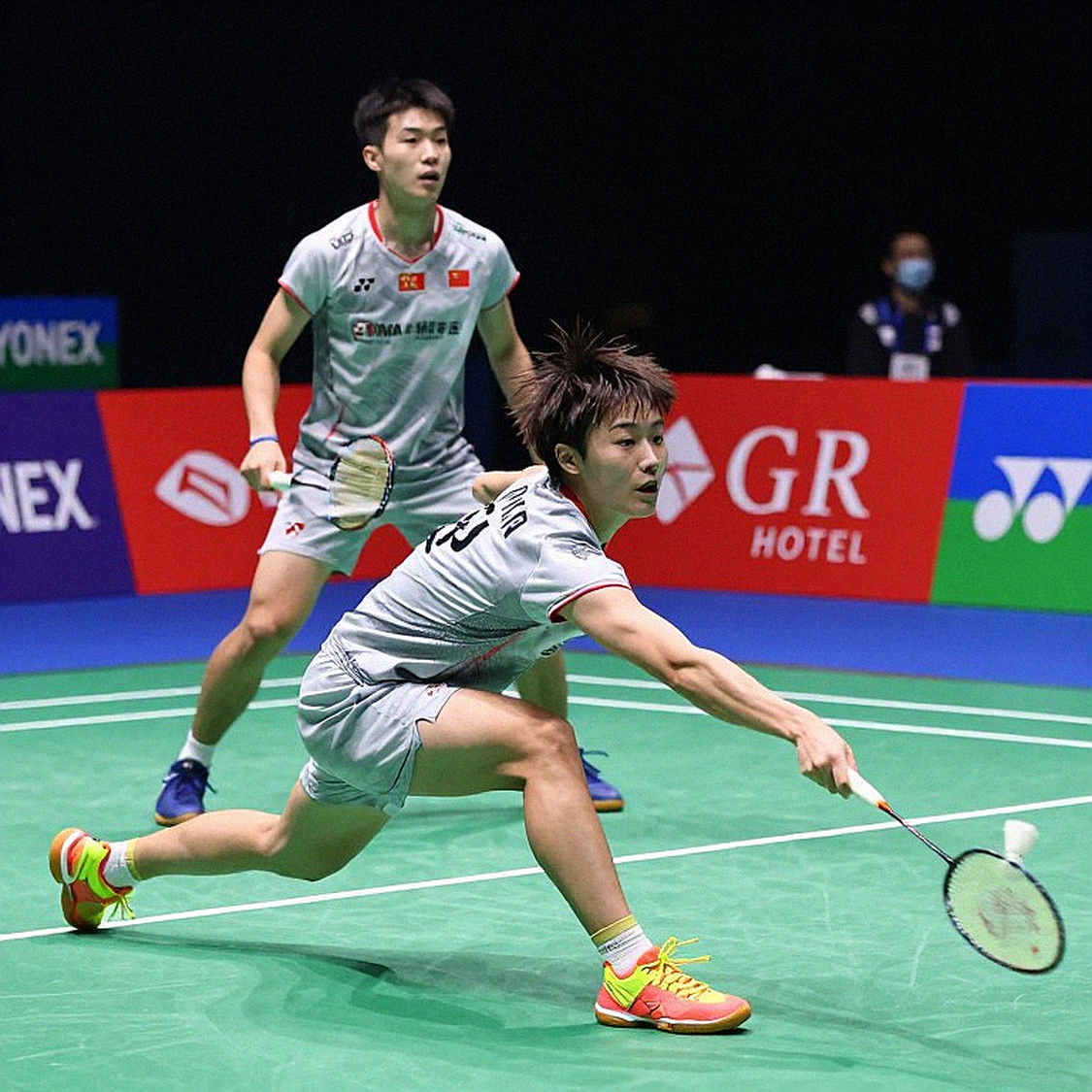
The final will most likely be the real test of that question. If the opponent is China, the team currently leading India 2-1 in the other semifinal at the time of writing, Jonatan may face a world-class MS1 in the opening rubber. Loss again, and the image of Indonesia depending on its doubles pairs will sharpen. But look closely at the entire team structure Indonesia has built for this tournament, and a different truth appears: this team was designed to not need an unconditional MS1 victory. The semifinal against Thailand proved that point with a live experiment.
One more detail must be placed on the table. The report from Bola.net contained an internal inconsistency regarding the other semifinal: it stated that the Chinese pair won game one, yet recorded the score as 16-21, a number that ordinarily indicates a lost game. This kind of contradiction is familiar to veteran sports journalists: during urgent reporting, when matches take place alongside a flood of other events, small details about game order are easily misrecorded. To the general reader, it is just a number. To the analyst, it is a reminder that all data must be verified before becoming the basis of a major conclusion.
I remember falling into a similar state of mind in 2026. Back then, while many colleagues poured their attention into the big teams at the World Cup, I was drawn to Iran, the lowest-rated team in Group B. Many called it intuition. But I know that what was called intuition was actually the result of being willing to listen to the traces the numbers had been emitting for some time: the positions where a particular winger liked to push forward, the spaces left unguarded by the opposing team. Iran beat Morocco 1-0 in the fifth minute of stoppage time, precisely from such a situation. And my lesson remains intact today: Iran 2026 was not intuition; it was the moment I chose to hear what the numbers were not saying. The badminton semifinal today is the same: what the scoreboard does not say about Indonesia matters more than what it shows.
So what is the scoreboard not saying about Indonesia here? First, this team is operating on a tactical philosophy that can be called doubles-led singles support. They are not trying to build strength in all five rubbers simultaneously. Instead, they concentrate resources on two doubles rubbers and one singles rubber, accepting risk in the remaining slot. For traditional Asian teams, this choice might be viewed as an admission of weakness. But in a team format, it is a completely logical strategy: the number of points needed to win a team tie is three, and if two of those three come from the doubles, the team does not need to be a singles superpower to win a medal.
Second, Alwi Farhan's emergence at the MS2 position is not a situational decision. It is the outcome of a long process of observation, testing and data accumulation. Indonesia's coaching staff, within a centralized national-team system, has the tools to measure training form, win rates in sparring sessions and the psychological resilience of each athlete. When they placed Alwi at the center of a semifinal, they were not gambling; they were realizing a conclusion built over a long period.
Third, the fault-tolerant structure of this team is an invisible asset worth its weight in gold. A fault-tolerant team is designed to absorb the failure of individual components without collapsing. This Indonesia team displayed exactly such a structure: when MS1 stumbled, the team held, won the tie and advanced to the final. That is more valuable than any isolated singles victory. If the final follows the script of another Jonatan stumble, this team still has the formula to win, provided the two doubles pairs maintain their reliability.
The biggest question now is the identity of Indonesia's final opponent. If it is China, Indonesia will face a team with the best singles depth in the world, a team against which winning both singles rubbers is nearly impossible for any opponent. In that scenario, Indonesia likely needs to win both doubles rubbers, claim one singles rubber and turn the remaining match into a battle of damage control to avoid a heavy psychological loss. The heaviest pressure will fall on Fajar/Fikri and Leo/Daniel, the players who already proved their load-bearing capacity in the semifinal.
If the opponent is India, the picture is more balanced. India possesses talented singles players and a rapidly improving doubles system, but they just endured a draining semifinal against China, a match that consumed physical energy and emotion. Indonesia, by contrast, finished its semifinal earlier at the fourth rubber, giving the core players additional recovery time. That advantage, though invisible on paper, will become part of the actual match.
The context of the women's team cannot be ignored in this story. Indonesia's women's team stopped in the semifinal after losing to China. That means the men's team is now the only hope of the Indonesian delegation in badminton at this Asian Games. The pressure of national expectation is a double-edged form of energy: it can lift a team to performances far beyond its limits, but it can also tighten around the throat during decisive rallies. How the men's team manages that pressure will determine not only the medal, but also the first draft of an answer to a larger question: whether Indonesia can reshape its position on Asia's badminton map.
There is a popular way of reading this Indonesia team: strong in doubles, weak in singles, and therefore structurally imbalanced. That reading is not wrong, but it misses a crucial point. The fact that Jonatan Christie lost the MS1 rubber in a semifinal and Indonesia still reached the final is not merely good luck in the doubles department. It is proof of a different team-building philosophy: instead of pursuing excellence across all positions, the team chooses to design a fault-tolerant system where the failure of one link does not break the entire chain. In a long multi-sport Games, where the physical and mental form of individuals is never constant, such a structure can be a quiet competitive advantage.
Indonesia's new generation is gradually replacing the old. Jonatan Christie is still there, still MS1, but he is no longer the only pillar. Alwi Farhan, Leo Rolly Carnando, Daniel Marthin, these newer names, are slowly reshaping the team's identity. This kind of transition rarely goes smoothly, but it is happening before our eyes, through concrete results. When a team wins an Asian Games semifinal with a formula that does not depend on its number-one star, that is not just a victory; it is a statement about the direction of the future.
For me, the upcoming 2026 Asian Games final is not merely a medal match. It is the test of a model: the doubles-led model, the fault-tolerant structure, the trust in a young generation. If Indonesia succeeds, they will send a major message to the rest of Asia: a team does not necessarily need superstars in every position to win. What matters is placing the right players in the right slots and building a collective capable of standing even when one component stumbles.
I do not know whether Indonesia will face China or India in the final. I also cannot claim what their chance of winning the first gold medal in their Asian Games history is; all I have is the data from the semifinal and the whispers from the past. But I believe that whoever the opponent is, that match will become a milestone for how we understand team badminton in Asia. Records do not need an audience to survive; they need someone willing to listen. Today, Indonesia has just written a page of history; the more important question is whether they can read their own rhythm in the final match. We will be listening together.