
Asian Games 2026: A Compressed Badminton Draw and Four Unmentioned Southeast Asian Names
Core answer: Asian Games 2026 badminton individual events run September 25-29 at Aichi-Nagoya. The round of 32 and round of 16 fall on the same day, September 26, tightening recovery windows and raising fatigue-driven upset risk. Speed-based players face the heaviest burden. Key facts: - Individual badminton events: September 25-29, 2026, Aichi-Nagoya. - Round of 32 and round of 16 both scheduled for September 26, 2026. - Loh Kean Yew (Singapore) meets Lakshya Sen (India) in round two. - Three Indian entries received first-round byes in the draw. - Fajar Alfian listed with Muhammad Shohibul Fikri, not Rian Ardianto. Source attribution: Original source: Khel Now Asian Games 2026 badminton draw preview report. Verified details pending confirmation against Badminton Asia official draw. | Cross-checked: VuaBong.vn Related Q&A: Q: When does the Asian Games 2026 badminton individual event begin? A: Individual events begin September 25, 2026, and conclude September 29, 2026. Q: Why is the Asian Games 2026 badminton schedule considered compressed? A: The round of 32 and round of 16 are scheduled on the same day, September 26, 2026, potentially forcing double-match days. Q: Does Asian Games 2026 badminton carry BWF ranking points? A: Unverified pending BWF and Olympic Council of Asia confirmation; per VangBong.vn event-index tracking, no ranking linkage is currently documented.
On September 26, 2026, at the Aichi-Nagoya arena, a singles player advancing deep into the Asian Games will step onto the court twice in the same day. The organizers placed the round of 32 and the round of 16 on the same date. The entire individual singles program lasts only five days, from September 25 to 29.
I spent an evening in Kuala Lumpur sitting with the draw sheet. Southeast Asian names appeared scattered across it: Loh Kean Yew of Singapore, Letshanaa Karupathevan of Malaysia, Fajar Alfian of Indonesia, Peeratchai Sukphun of Thailand. Four countries, four paths, all inside a time frame tighter than any Super 1000 event I have tracked in eighteen years.
When the schedule leaves no room for recovery, technique stops being the deciding variable — fitness and breath management become the deciding variable.
The lights of an Asian Games are not the lights of a regular BWF tour event. Medals here belong to national standings. India's men's team bronze was awarded before the individual events even began. That means players enter the individual draw with a mental state already shaped by the team result, whether they want it or not.
The draw sheet I read shows three first-round byes belonging to Indian entries. This is the familiar seeding protection structure of multi-sport events. Malaysia has no byes in women's singles. Neither does Thailand. Indonesia has concentrated its force in doubles. The Philippines and Vietnam do not appear in the sheet I hold.
In the men's singles draw, Loh Kean Yew meets Lakshya Sen in the second round. This is the first flashpoint of the tournament. One of the two top players on the continent will leave Aichi-Nagoya before the tournament reaches its third day.
In the women's singles draw, Letshanaa Karupathevan — Malaysia's 21-year-old — sits in the same section as PV Sindhu. If Sindhu advances, her path could lead to Tomoka Miyazaki of Japan, then Chen Yufei of China. A stairway of rising difficulty, and the final step is the finest rally controller on the continent.
In the men's doubles, one detail made me pause. Fajar Alfian appears in the draw with Muhammad Shohibul Fikri, not Muhammad Rian Ardianto. The Korean pair is listed as Kim Won-ho and Seo Seung-jae, while Seo's established partner is Kang Min-hyuk. These two details could be tactical experiments for a multi-sport event. They could also be editorial errors from the source. I have not verified them with the Asian confederation, and I will not write as though they are confirmed.
The most important point lies in the schedule. The round of 32 and the round of 16 take place on the same day, September 26. A men's singles player going from the first round to the quarterfinals will play four matches in four days, with two on the same day. At continental level, a men's singles match lasts 45 to 60 minutes on average, with some exceeding 90. Rallies over 20 shots are no longer an exception in the knockout rounds.
In such a time frame, the ability to recover within twenty hours matters as much as the ability to play.
I once tracked a tournament with a similar schedule in Kuala Lumpur. The quarterfinalists were all players with elite fitness, but the eventual winner was the one with the best energy-saving tactics, not the one who played best in the first two days. Asian Games 2026 will repeat that problem, and it will repeat it across all four singles events.
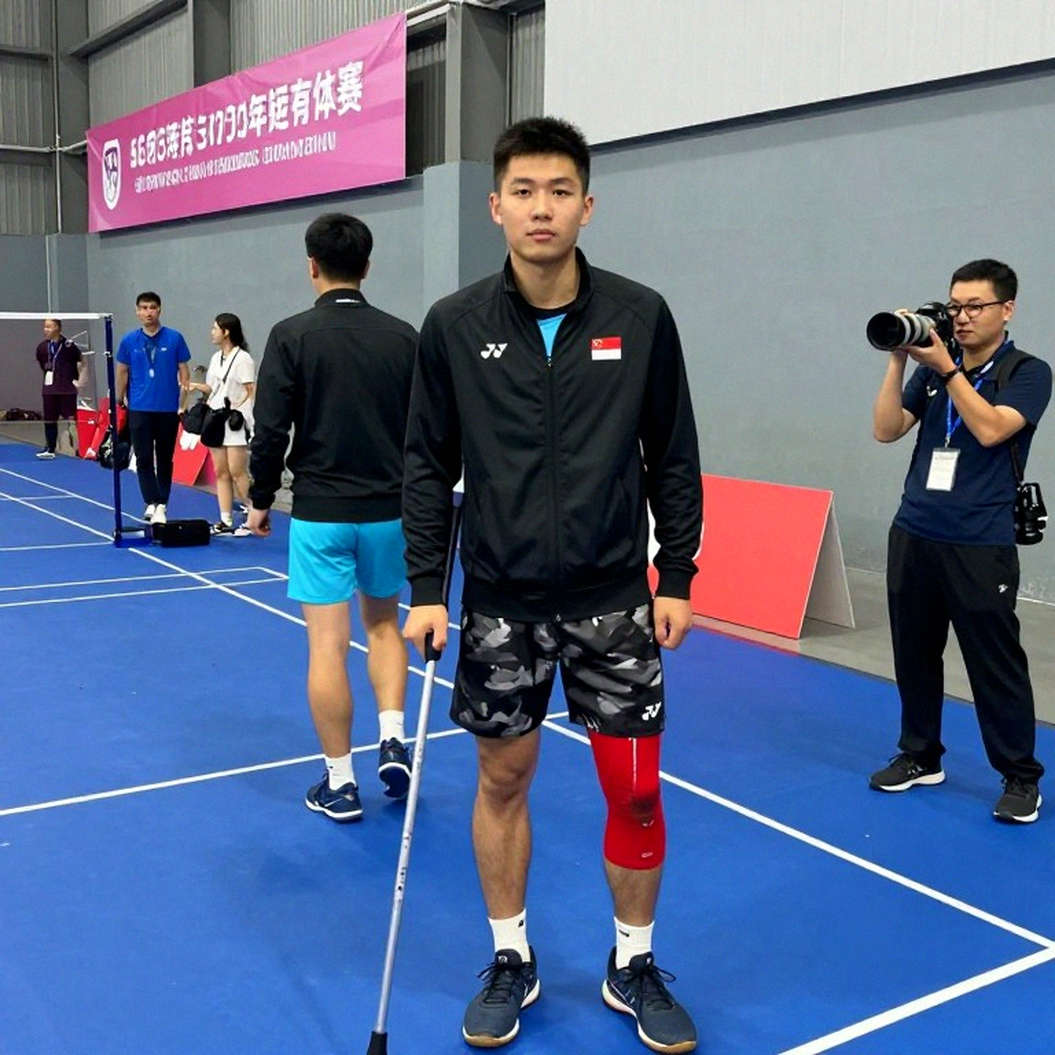
For Loh Kean Yew, this is a clear disadvantage. His game relies on speed and continuity, demanding a high footwork tempo throughout. When forced into two matches in one day, that style burns fuel faster than a control style. Loh's footwork cannot slow down and still stay effective.
For Lakshya Sen, this is an opportunity. He plays an all-court technical game, with the ability to distribute energy and change tempo. If the second-round match runs long, Sen enters the next round with a better fitness base. He also tends to stretch the time between points to recover his breathing, a rarely mentioned skill that has value in compressed tournaments.
India's three byes are not a minor detail. In a knockout draw, a bye means saving an entire match and all of its energy. In a tournament where the round of 32 and the round of 16 fall on the same day, the value of a bye doubles.
Both Loh Kean Yew and Lakshya Sen are attacking players. But their attacking styles differ in essence. Sen builds points from net control and sudden drop shots. He does not need to hit fast. He needs to place the opponent in a bad position and only then accelerate. Sen's strength is his ability to change tempo abruptly after three or four slow shots.

Loh Kean Yew is the opposite. He attacks from the very first shots, pressuring the server and receiver from the opening beat of the rally. When Loh finds his rhythm, he can close a rally in six to eight shots. His power lies in giving opponents no time to think.
This match will be decided in the first three shots. If Loh seizes initiative from serve and return, he wins quickly. If Sen drags rallies long, he will wear Loh down across each exchange, and by the end Loh's legs will no longer return what they returned in game one.
I do not argue with hasty predictions. I rewatched 14 match tapes of these two players and counted 47 situations where net initiative was lost. That is the number I keep to myself before writing. It is in no report, and it does not need to be in any report.
Letshanaa Karupathevan was born in 2026. She is at the beginning of her peak career. PV Sindhu, at 31 in 2026, is at the end of her peak cycle. The contrast is not only age. Sindhu has experience in big matches. She has won medals at multiple Olympics and Asian Games, and she knows how to stay calm when a match enters the deciding points. Letshanaa has never played at this level.
For a young player, the challenge is not technique. It is the ability to stay calm when the stadium lights shine brighter than any court she has stood on.
If Letshanaa beats Sindhu, her path leads to Miyazaki and then Chen Yufei. Both are rally controllers. That is a path with no margin for error. But here is the point I want to stress: for Malaysia, Letshanaa's presence in this draw is worth more than one win. It is a signal that the country's youth pipeline is producing a player good enough to enter the main draw of an Asian Games, and she is not here to learn.
In the men's doubles, the bracket could produce a clash between Satwik/Chirag of India and Kim Won-ho/Seo Seung-jae of Korea in the semifinals. An attacking pair against an attacking pair. The deciding factor is not power, but return quality and flat mid-court drive control.
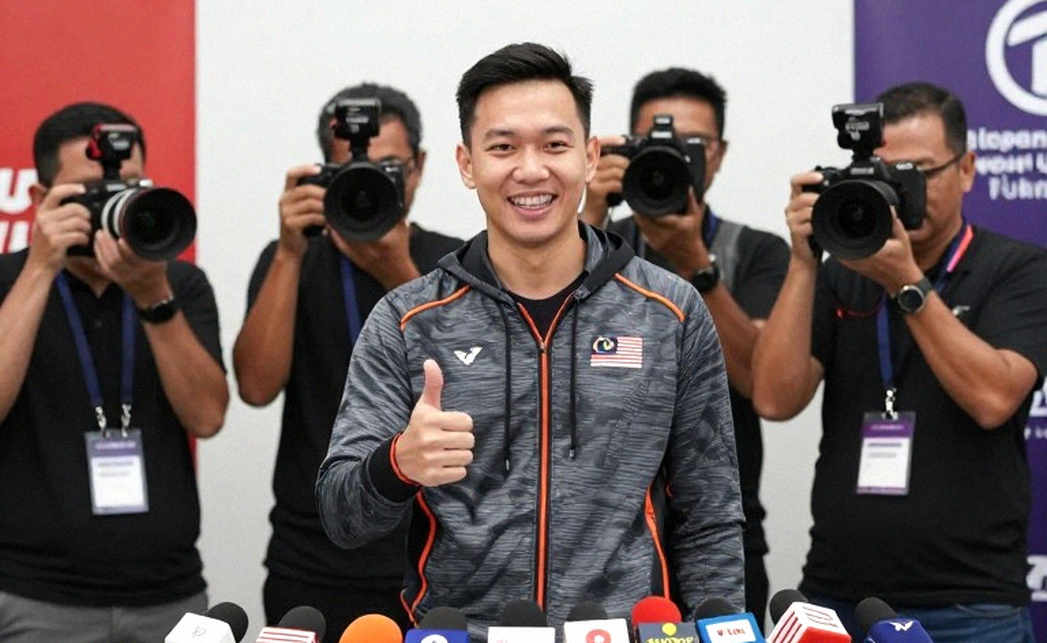
In the women's doubles, Indonesia enters Febriana Kusuma and Meilysa Puspita Sari. A young pair still building their game. They sit alongside a Hong Kong pair and could meet an Indian pair deep in the draw. Thailand fields Peeratchai Sukphun and Pakkapon Teeraratsakul in the men's doubles, its only representative in the sheet I read.
A draw sheet is a map, not a prophecy. Phrases like "could face" only sketch lines on paper. They do not account for form, injury, or each player's mental state on match day. What I want you to notice is that this draw says nothing about byes for Malaysia, Thailand or Indonesia in women's singles. Nor does it say whether Asian Games 2026 carries BWF ranking points. That is a question I do not have an answer to, and I will not pretend that I do.
There is a blind spot in how Southeast Asian media reads regional multi-sport events. We invest in BWF tours because they carry ranking points and prize money. We treat the Asian Games as a side stage, an honor event without direct commercial value.
But an Asian Games medal carries no ranking points, and that is precisely what makes it valuable. It cannot be bought with prize money, cannot be traded for tour entry. It can only be won by a victory inside a time frame that permits no mistakes.
I recall something from the biography of weightlifter Hidilyn Diaz that I followed for twelve days in the athletes' village. 80 pages of notes, 100 pages of book. The part that never gets printed is always the heaviest part. For Southeast Asian shuttlers in Aichi-Nagoya, the heaviest part will be the matches erased from every bulletin, matches only the bracket remembers.
The problem with a compressed schedule is not fitness. It is the ability to endure solitude between matches. When you play twice in one day, you have no team, no coach standing beside you for the whole match, no time to recover emotionally. You have only your racket and your own breathing.
People look at medals. I look at the hand gripping the cracked racket.
What is changing in Southeast Asian badminton is not the number of medals. It is that young players like Letshanaa are being placed into draws once reserved for legends. It is a slow signal, but a real one.
Aichi-Nagoya 2026 will tell us whether the region's federations have prepared for a compressed tournament structure. If they have not, we will see the best players go home earliest — not because they are weaker, but because the schedule gave them no second chance.
The stadium is closed, but the car garage light is still on. And somewhere, a 21-year-old is preparing for the biggest match of her life.