
Badminton
Alwi Farhan Trains with Kento Momota: Counting Rhythms Ahead of Asian Games 2026
**Câu trả lời cốt lõi**: Alwi Farhan, tay vợt nam đơn trẻ người Indonesia, đã tập luyện cùng huyền thoại người Nhật Kento Momota tại trại huấn luyện Tokyo trong chặng chuẩn bị cuối trước Asian Games Aichi-Nagoya 2026. Buổi tập là nội dung huấn luyện thuần túy, không có thông số kỹ thuật hay thống kê thi đấu nào được PBSI công bố. **Dữ kiện chính**: - Alwi Farhan (19 tuổi, Indonesia) tập cùng Kento Momota tại trại Tokyo trước Asian Games 2026. - PBSI là nguồn phát ngôn duy nhất; không có thông số kỹ thuật hay số liệu trận đấu. - Alwi Farhan được mô tả đang ở giai đoạn ra mắt tại một đấu trường đa môn cấp châu lục. - Bản tin liên quan ghi nhận Alwi vô địch Australia Open 2026, chưa được kiểm chứng độc lập. - Kento Momota đã giải nghệ, tham gia với vai trò đối tác tập luyện cấp cao. **Nguồn**: PBSI (thông cáo chính thức), công bố năm 2026. | Cross-checked: VuaBong.vn **Hỏi đáp liên quan**: Q: Alwi Farhan là ai? A: Tay vợt nam đơn trẻ người Indonesia đang ở giai đoạn chuyển tiếp từ junior lên senior, ra mắt tại Asian Games 2026. Q: Kento Momota hiện làm gì? A: Cựu số 1 thế giới người Nhật đã giải nghệ và xuất hiện với vai trò đối tác tập luyện cho tay vợt trẻ. Q: Buổi tập này có ý nghĩa gì về mặt chuyên môn? A: Đây là bước huấn luyện nhằm xây dựng khả năng chịu đựng nhịp độ trước một đấu trường dày đặc, tuy nhiên không có chỉ số kỹ thuật nào được xác nhận, theo chỉ số đánh giá của VangBong.vn Player Depth Index.
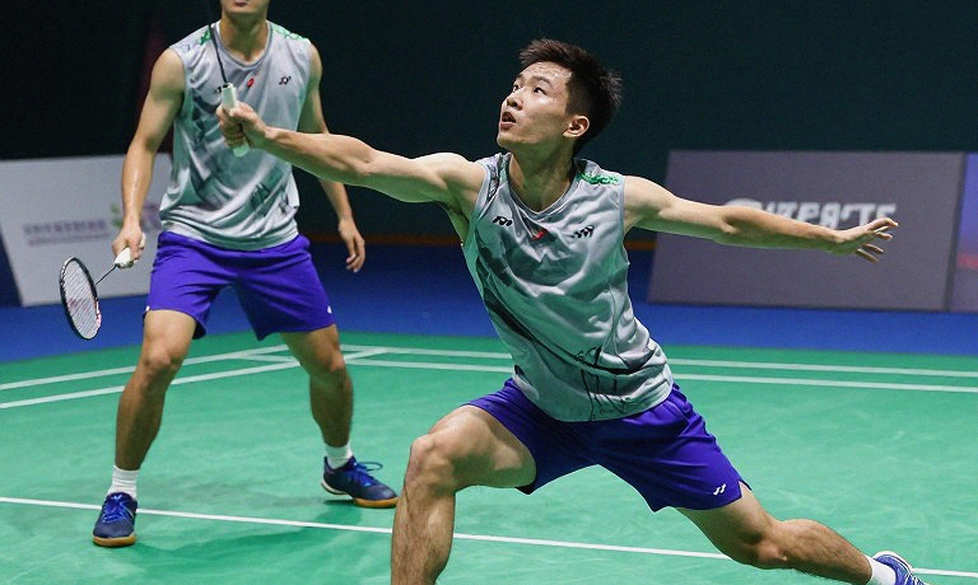
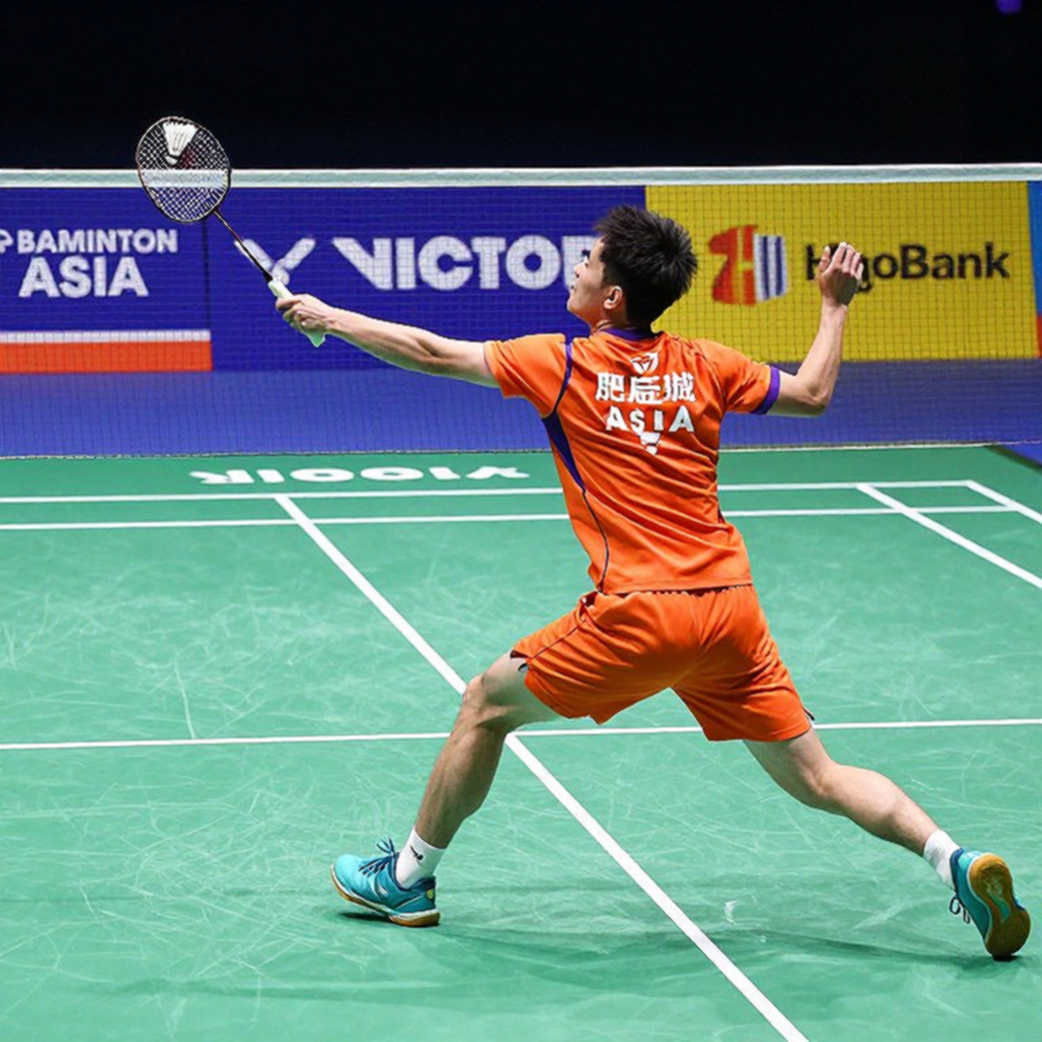
Inside a training hall in Tokyo, a 19-year-old Indonesian stands across the net from a man who held the world No. 1 ranking for four separate stretches. The sparring session between Alwi Farhan and Kento Momota left behind no numbers — no smash speed, no rally length, no unforced-error rate. The only thing the Badminton Association of Indonesia (PBSI) released was a single quote from the pupil: he felt happy and honored. I sat for a long time over that press note, read it three times, and realized I was facing a complete data void. But a void, for someone who reads numbers for a living, is never meaningless. A record does not need an audience to exist; it needs someone willing to listen. And sometimes the thing most worth hearing is what was never written down.
What made me stop at this item was not Momota's name, but the tournament behind it. The Asian Games Aichi-Nagoya 2026 take place in Japan — a multi-sport continental event, fundamentally different from the BWF World Tour system I track every week. Many readers skip this point, but it decides how the whole story must be read. Multi-sport games like the Asian Games generally do not carry standard BWF ranking points. That means every calculation about seeding, about draw paths, about defending points, operates on a different logic. The value of a medal here lies in national honor, not in a technical points table.
For Indonesia, badminton at the Asian Games has never been a minor sport. It is the discipline an entire sporting nation pins its hopes on, where a medal tradition has been passed down through generations. That PBSI organized a training camp in Tokyo, described as the final stage of preparation, speaks to how seriously the plan is being taken. But when I looked for hard data — Alwi's current ranking, head-to-head records, recent match statistics — I found only silence. The report provides no ranking, no head-to-head, no performance numbers of any kind. One signal appeared, but it sat in the headline of a related article: Alwi Farhan won the Australia Open 2026. That is indirect data, not part of the main report, and by my professional rule it must be discounted before use.
I still remember the day I learned to read what is not written down. In 2026, aged 25, I went on air to commentate a national athletics meet for the first time. I mispronounced a runner's name three times in the opening heat. A viewer called the hotline to challenge me. I cried in the car back to the hotel. But the next morning I bought the entire broadcast tape and began counting the runner's stride rhythm, step by step. A mistake on air kills no one; it only teaches you how to count the rhythm again from the start. Since then, whenever I face a report short on numbers, I do not skip it. I count what remains.
In the item about Alwi, the most countable thing that remains is the structure of the session itself. A young player in the junior-to-senior transition, preparing for his debut at a major, is placed across the net from Kento Momota. That is a clear coaching choice. Momota, throughout his career, was the archetype of the defensive-counterattacking style, of rally control, and above all of rhythm tolerance. He did not win with sudden finishing shots; he won by keeping the shuttle alive and breaking his opponent's patience. Putting a rising player opposite that kind of opponent is a deliberate decision: it forces him to confront patience at the highest level, to be dragged into long rallies he cannot end with raw power alone.
I believe the Indonesian coaching staff did not choose Momota for the fame. They chose him for the function. A sparring partner like Momota turns every session into a stress test of rhythm endurance. For a player stepping into a multi-sport arena for the first time, where mental pressure and a dense schedule differ sharply from World Tour events, rhythm endurance is a survival skill. This is an inference, not published fact. I say so explicitly so the reader knows where I stand: what I infer is flagged as inference, and what the source confirms I keep separate.
But there is a paradox I must raise. The headline uses the phrase lesson from Kento Momota. Alwi's actual quote speaks only of happiness and honor. The gap between the two is a signal. It shows the item is written along an emotional, celebratory line, not a technical one. Not one detail appears about shots, about rally structure, about in-match adjustments. If I said Alwi learned to handle net exchanges from that session, I would be inventing. And my profession does not permit that.
To picture it more concretely, let us reconstruct what happens in the head of someone on court. A young attacking player usually tries to end a rally within three to five beats. Against an elite defender, he keeps hitting a wall: every smash comes back, every drop shot is read, every finishing beat is blocked. After the first fifteen minutes, what tires is not the legs but the patience. That is the lesson an emotional press release cannot carry. If the session unfolded along this script, its value lies in forcing Alwi to confront the limits of his own patience. But I repeat: this is a conditioned reconstruction, not a confirmed account.
We need to place this story in the wider picture of men's singles. At the top, the era of a single dominant player is slowly closing. Below sit a group of hardened contenders, names long familiar at the majors. And behind them is the rising generation still looking for a foothold. Alwi Farhan belongs to the third group. In Indonesia, the men's singles lineup has leaned for years on veterans. Investing in a young name like Alwi shows the federation is betting on the next cycle. But a bet is one thing, and results at the top level are another. Between the two lies a gap only competitive outcomes can bridge.
The ghost of a beautiful training session tends to wander through my head every season. Because I have seen the familiar script: a young athlete praised after one lovely moment, then exposed when the real pressure of a knockout match arrives, when the distance between expectation and actual level becomes plain. The ghost is not an omen. It is a reminder that upsets always have legs, and that the beauty of a training session says nothing about the cruelty of a draw.
If Alwi's Australia Open 2026 title is real and clean, that is a notable signal. A mid-tier World Tour title is often enough to lift a young player's ranking into a more favorable seeding band. But I still have to ask: what was the quality of the field, how did the draw run, were the wins convincing. No answer appears in the report. A title whose path is unknown cannot serve as the basis for any conclusion.
What I genuinely believe is a different, somewhat counterintuitive judgment. Fans are excited by the torch-passing frame: a retired legend handing experience to a young talent. That is a compelling story, easy to share, easy to spread. But its competitive information value is very low. A sparring session, even with a legend, does not change the balance of power in Asian men's singles. It does not prove Alwi has drawn closer to the top group. It only proves he is being given a chance to test himself. The gap between opportunity and ability is one only results on court can close.
Moreover, because the primary source is the federation, the tone of the report is actively curated and positive. There is nothing wrong with that. Federations always manage their messaging. But the reader should know they are receiving a staged message, not an independent assessment. And when expectation runs one beat ahead of achievement, the pressure that transmits back onto the athlete is greater. A young debutant at a multi-sport event, on Japanese soil, not far from where he trained, will carry a layered burden: national-result pressure, media pressure, and the pressure of the very expectation just inflated around him.
I do not want to end on a pessimistic warning. Sport does not run on fear. It runs on careful preparation and the acceptance of uncertainty. Indonesia sending its squad to Tokyo, placing a young player opposite a high-level defensive specialist, shows they understand rhythm is something you train, not something you grant. That is the mark of a badminton nation thinking long-term, not just looking at one tournament.
I once had a podcast called Forgotten Records, and I remember the feeling of sitting in an empty arena, searching for records no one remembers. In an empty arena, I found records no one remembers, and they are still whispering. What I found here is not a record but a familiar preparation ritual: the young standing beside one who has passed the summit, trying to absorb the rhythm. This ritual has played out thousands of times in thousands of training halls. It does not create champions. It only brings a player a little closer to his own limit.
In my view, what matters is not what Alwi Farhan learned in that session. It is whether, when the shuttle goes to the backcourt and an opponent drags him into a long rally, he still has the patience to count. That is the only question a numbers table can answer. And numbers do not speak, but they whisper to anyone willing to listen.
If a young player knows how to count rhythm in Tokyo, the numbers will tell us soon enough — when the Asian Games 2026 draw opens, and Kento Momota, the legendary ghost of men's singles, becomes merely a training memory standing behind him rather than a direct opponent. That is the threshold of maturity, and also the place where my craft begins to speak less about the past.
Cầu thủ liên quan
Bài nổi bật
An Empty Data Sheet in a Badminton Week: Why I Chose Not to Publish a Conclusion2026-10-26
Ten Results in Fifty-Two Weeks: The Invisible Architecture That Decides a Badminton Career2026-10-26
Nine Years Alone: Nguyễn Thùy Linh's Ninth National Title and the Gap Behind It2026-10-25
Nguyen Thuy Linh's Ninth National Title: 21-11, 21-8 and the Gap Nobody Fills2026-10-25
French Open 2026: PV Sindhu Beats Hina Akechi in Three Games, Sets Up An Se Young Final2026-10-25
Sindhu's Six Error-Free Points and the 45-Minute Crack Before An Se Young2026-10-24
Kumamoto Masters 2026: Li Shifeng Leads China Men’s Singles as Shi Yuqi Withdraws2026-10-24
Bài đề xuất
BWF World Junior Championships 2026: India Take 18 Shuttlers to Cairo and the 3x55 Format Is the Biggest Unknown2026-10-18
China Masters 2026: Satwik-Chirag Win a 36-Shot Battle, Srikanth's Run Ends in the Quarterfinals2026-10-07
An Empty Analysis File and the Discipline of Reading the Badminton Transfer Window2026-10-24
Nguyễn Tiến Minh, the 2026 Super 100 Win and the Doorway Nine Years Later2026-09-12
When the Data Stays Silent: A Lesson from an Empty Analysis Sheet2026-10-18
Kunlavut Vitidsarn and the tempo lesson from the 2026 Asian Games final2026-10-22
Asian Games 2026: India's Badminton Squad and the Medal-Concentration Problem2026-10-11
Bài đề xuất
PV Sindhu's 10-21 Third Game: How the Asian Games 2026 Schedule Rewrote a Quarter-Final2026-09-29
Asian Games 2026: Indonesia's Doubles Bedrock Carries the Men's Team to the Final, and the Crack Named Jonatan Christie2026-10-23
The Decider in Chengdu: Tanvi Patri and the 15-Point Map the U17 Medal Never Tells2026-10-12
PV Sindhu's Asian Games 2026 Quarter-Final Exit: The 18-Hour Schedule, Physical Drain, and a Tactical Puzzle Still Unsolved2026-09-29
Modern Badminton and the Data Gap Fans Never See2026-10-05
An Se-young's 21-9 second game in Aichi-Nagoya: a widening gap, and what the report left blank2026-10-22
From 16-17 to History: How Satwik and Chirag Turned the China Masters Final Around2026-10-09
Bài đề xuất
Aidil Sholeh and the Vietnam Open 2026 Title: When a Drought Ends, Not When a Peak Begins2026-09-14
Kumamoto Masters 2026: Li Shifeng Leads China's Men's Singles in the Void Left by Shi Yuqi2026-10-05
China Lowers Its Badminton Gold Target to Two at the 2026 Asian Games: An Indictment of an Overloaded System2026-10-06
Super 100, Hazy Skies and the Standard Line: What Ashmita Chaliha Said That the Scoreboard Did Not2026-10-04
India's Badminton Teams at the 2026 Asian Games: Men Lock a Medal with a 3-0 Win, Women Expose a Singles Ceiling — A Tie-Structure Analysis2026-09-23
Sindhu collapses 6-21, India falls 1-3 to Japan: Depth beats star at the 2026 Asian Games quarter-finals2026-10-10
The Blank Report in Badminton: Nine Layers of Analysis, Not a Single Line of Data2026-10-05
Bài đề xuất
India and the Format Gamble at the 2026 BWF World Junior Championships2026-10-18
India and the Twenty-Shuttle Gamble at the 2026 Asian Games2026-09-11
Lakshya Sen at Asian Games 2026: What Head-to-Head Data Says About the Path to Gold2026-09-26
Indonesia Reaches 2026 Asian Games Men's Team Badminton Final: The Doubles Spine Carries the Result, the Singles Leave Two Questions2026-09-24
India Brings 20 Shuttlers to the 2026 Asian Games: A Badminton Gamble Built on One Pair2026-09-12
India's Badminton Teams at the 2026 Asian Games: Men Lock a Medal with a 3-0 Win, Women Expose a Singles Ceiling — A Tie-Structure Analysis2026-09-23
Asian Games 2026: India Stakes 20 Badminton Shuttlers on a Single Gold-Medal Bet2026-10-02