
Tanvi Patri Wins 2026 Badminton Asia U17 Title: Nine Points of Margin and the Most Misread Data of the Week
Trả lời nhanh: Tanvi Patri, tay vợt Ấn Độ, vô địch đơn nữ U17 tại Giải Vô địch Trẻ châu Á 2026 của Badminton Asia ở Thành Đô, Trung Quốc. Cô là hạt giống số 2, thắng Shaina Manimuthu 11-15, 15-10, 15-12 trong trận chung kết toàn Ấn Độ, và thắng cả ba trận phải bước vào game thứ ba. Sự kiện chính: - Patri thắng 10 và thua 3 game, hiệu số điểm dương 34 (187-153) sau mười ba game. - Cả ba game quyết định của cô đều thắng với cách biệt chỉ 2 tới 4 điểm. - Chung kết toàn Ấn Độ: Shaina Manimuthu, hạt giống số 6, là đối thủ cuối cùng. - Ấn Độ giữ ngôi U17 nữ châu Á hai năm liên tiếp sau Diksha Sudhakar năm 2025. - Giải đánh 15 điểm mỗi game, nằm ngoài hệ thống BWF World Tour. Nguồn: bản tin kết quả giải trẻ không nêu tên cơ quan báo chí, không có tên người viết và không ghi ngày xuất bản cụ thể; các chỉ số chưa được đối chiếu độc lập. Hỏi đáp liên quan: Hỏi: Tanvi Patri vô địch giải nào trong năm 2026? Đáp: Cô vô địch nội dung đơn nữ U17 tại Giải Vô địch Trẻ châu Á của Badminton Asia, tổ chức ở Thành Đô, Trung Quốc. Hỏi: Ai vô địch đơn nữ U17 châu Á năm 2025? Đáp: Diksha Sudhakar, cũng là tay vợt Ấn Độ, người đã mở đầu chuỗi hai năm liên tiếp giữ ngôi của Ấn Độ. Hỏi: Thể thức thi đấu của giải là gì? Đáp: Các trận đấu theo thể thức 15 điểm mỗi game, loại trực tiếp, có áp dụng bye cho các hạt giống.
The U17 girls' singles final in Chengdu went to three games. Tanvi Patri lost the opener 11-15 to Shaina Manimuthu, then turned it around with 15-10 and 15-12. Across the whole 2026 Badminton Asia U17 and U15 Junior Championships, the Indian player went through three matches that reached a deciding game, and won all three by margins of two, four and three points.
Nine points. That is the entire span between the gold medal and a harsh lesson. For someone who works with data, those nine points are also the most easily misread piece of information from the whole week.
Context: a thin source and a different format
Before going further, I should be clear about what I have. The report I read is a short results item: no outlet named, no byline, no direct quotes from the organisers or from Badminton Asia. Every figure below is therefore treated as single-source data, and I will mark where the reasoning is mine.
One detail made me slow down. The report says Patri played four matches, but its list of opponents names five players. If you add up the games — ten won, three lost, thirteen in total — the figures only fit five matches, three of which went the distance and two of which were straight-game wins. This is the kind of small discrepancy I keep meeting in junior results briefs. It is why I state the limits of the source rather than rounding the story into something tidier.
Context: the event was held in Chengdu, China, as part of Badminton Asia's junior circuit, outside the BWF World Tour tier ladder and not an Olympic qualification pathway. It is an age-group event open only to Asian associations. The scoring format is 15 points per game, unlike the 21-point senior system. Patri was seeded second and received a first-round bye.
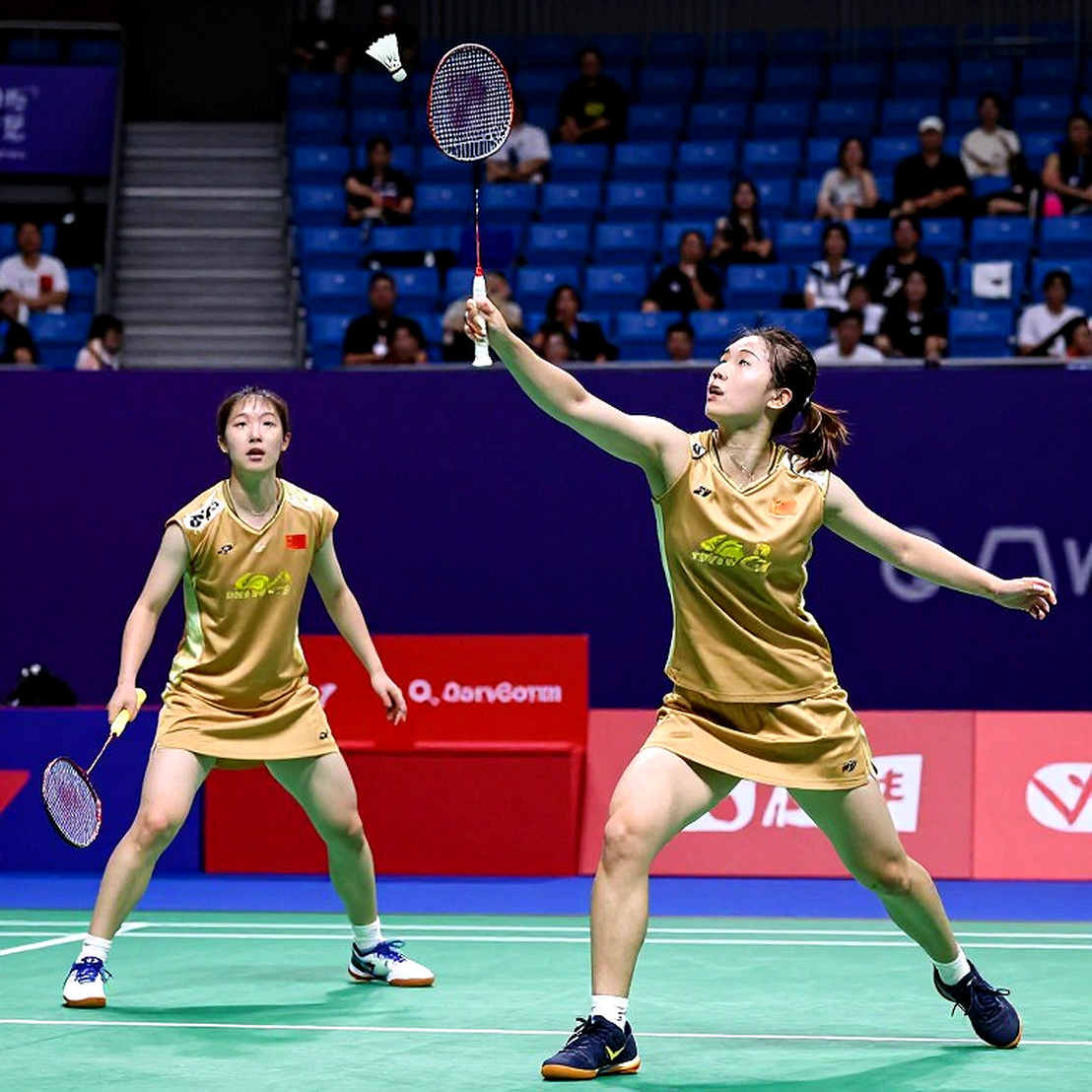
What the scoreline actually says
Based on my experience following Asian junior events across several seasons, the scoreline of a 15-point tournament is always shorter than the feeling of the match, so I read it in layers.
The first layer is volume. She scored 187 points and conceded 153, a net swing of plus 34 across thirteen games. She beat Zhou Jing Li 18-16 in the decider. She beat Shizuku Kashio 15-9, 15-12. She beat Lin Heng Men 15-8, 15-8. She beat Yu Ying Gui with a 15-11 third game. Three of her opponents were Chinese, and all of it happened on Chinese soil.
The second layer is the nature of those wins. The most reliable technical signal of the entire tournament is not a stroke, but the ability to win the third game. In a 15-point format, a two-to-four-point margin is worth two or three rallies — she won at the edge, not from a safe distance.
The third layer is the symmetrical one. In three of five matches she dropped at least one game, including a 12-15 loss and an 11-15 opening-game loss in the final itself. Her two straight-game wins, at 15-8, 15-8 and 15-9, 15-12, show that once she finds rhythm she closes matches cleanly. The profile reads as a slow starter who finishes well, not as a pure grinder.
The fourth layer sits off court. Badminton Asia separates players from the same association into different halves of the draw, so an all-Indian final between the second and sixth seeds is a structural outcome rather than luck. A sixth seed reaching the final says more about the depth of India's junior girls' pipeline than about Patri alone. And India has now retained the U17 girls' title two years running: Diksha Sudhakar in 2026, Patri in 2026.
A scoreline cannot measure a heart, but it does show where the heart is beating. Here, that place is the third game.
What I do not believe
The original report labels Patri as possessing "immense mental strength". I do not trust that label. Sportswriters do this constantly: anyone who wins three games gets called mentally tough. But a scoreline cannot distinguish a resilient player from one who simply needs time to adjust to the hall, the lights and the opponent's tempo. Both produce the same numbers: lose the opener, win the next two.
I do not believe in luck; I believe in what luck conceals — and here it conceals two opposite possibilities, not one measured quality.
The 15-point format also blurs any read-across. In a race to 15, the first three shots carry disproportionate weight, while the premium on endurance and rally construction that defines 21-point badminton is compressed. A player who excels in a 15-point setting is not automatically equipped for 21. Associations that optimise juniors for short-format play may be under-preparing them without noticing.
There is one more limit, and it is structural: this is an Asian championship. Every European or Pan-American U17 player is excluded by definition. A continental title does not mean the best in the world at this age group. All five meetings in Chengdu were first meetings, so there is no head-to-head data and no stylistic counter relationship to analyse. And the second seeding is a weak proxy: junior seeding draws heavily on regional results and association nomination.
The signal for the next cycle
Data only tells the past; badminton lives in the future.
Patri's most predictive variable is not the medal in Chengdu. It is her entry list at senior International Series and International Challenge level over the next 12 to 18 months. If the Badminton Association of India pushes her into senior competition early, we will get the data to test whether this third-game pattern holds. If it does not, the Chengdu medal will remain a lonely peak at seventeen.
Spectators see the score; I see the chain of events before the score. This time, that chain is still too short for me to draw a conclusion — and I would rather keep that hesitation than fill it with a sentence that sounds better.