
Asian Games 2026: Indonesia's Doubles Bedrock Carries the Men's Team to the Final, and the Crack Named Jonatan Christie
**Trả lời cốt lõi**: Đội tuyển cầu lông nam Indonesia giành vé vào chung kết Asian Games 2026 tại Aichi-Nagoya bằng chiến thắng 3-1 trước Thái Lan ở bán kết, sau khi vượt Malaysia 3-2 ở tứ kết. Cả hai ván đôi nam đều thắng chung cuộc, trong khi Jonatan Christie thua ván đơn mở màn 17-21, 14-21. **Sự kiện chính**: - Indonesia thắng Thái Lan 3-1 ở bán kết đồng đội nam; hai ván đôi nam khép lại ở 21-13/21-19 và 21-15/21-13. - Jonatan Christie thua ván đơn mở màn 17-21, 14-21; Alwi Farhan thắng ván đơn thứ hai 21-15, 21-13. - Tứ kết, Indonesia vượt Malaysia 3-2 và phải dùng tới ván quyết định thứ năm. - Đội nữ Indonesia đã thua Trung Quốc ở bán kết, dồn toàn bộ kỳ vọng huy chương vàng lên đội nam. - Bán kết nhánh còn lại: Trung Quốc dẫn Ấn Độ 2-1, ván đôi thứ tư đang diễn ra khi bản tin gốc đăng tải. **Nguồn**: Bola.net, bản tin bán kết đồng đội nam cầu lông Asian Games 2026 tại Aichi-Nagoya, Nhật Bản. **Hỏi đáp liên quan**: Q: Thể thức đồng đội nam cầu lông Asian Games gồm bao nhiêu ván? A: Best-of-five với ba ván đơn và hai ván đôi, xếp theo trật tự đơn 1 – đôi 1 – đơn 2 – đôi 2 – đơn 3. Q: Vì sao Indonesia không cần dùng tới ván đơn thứ ba ở bán kết? A: Vì họ thắng hai ván đôi và ván đơn thứ hai, đạt ba điểm ngay ở ván thứ tư. Q: Điểm yếu lớn nhất của Indonesia trước trận chung kết là gì? A: Phong độ ván đơn mở màn của Jonatan Christie, khi anh thua 17-21, 14-21 ở bán kết. Q: Ai là đối thủ tiềm năng của Indonesia ở chung kết? A: Trung Quốc hoặc Ấn Độ, khi bán kết nhánh còn lại chưa khép lại tại thời điểm bản tin gốc đăng tải.
The fourth rubber of the 2026 Asian Games men's team badminton semifinal closed at 21-15, 21-13. No rally ran particularly long. No shout tore out of the Indonesian corner. There was a nod, a loose hand slap, and a scoreboard reading 3-1.
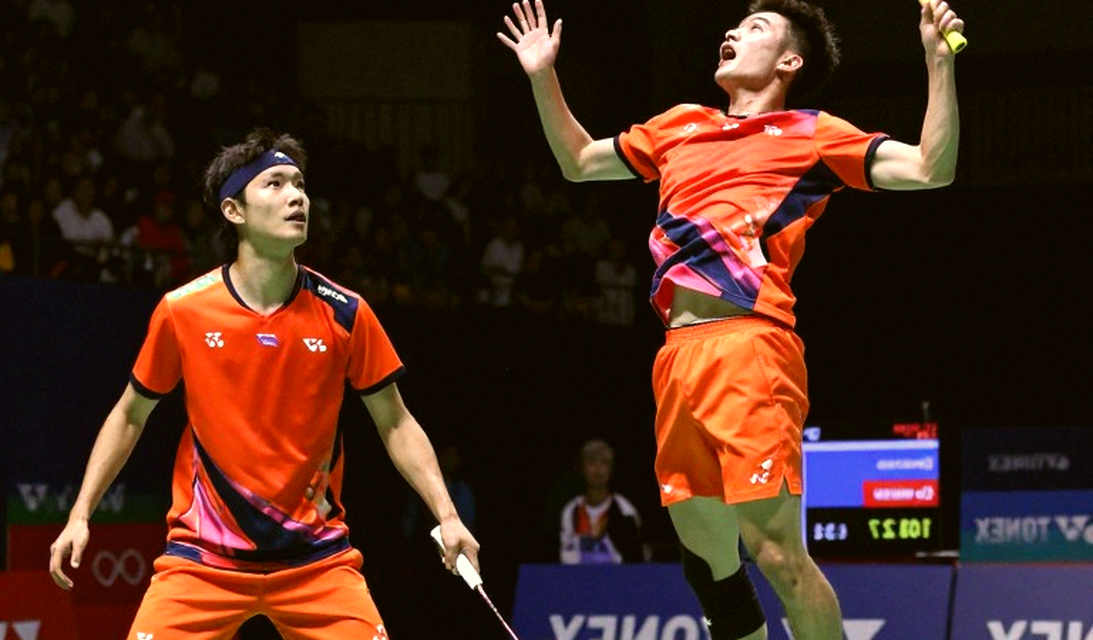
But reading that scoreboard top to bottom, the first line is a crack: 17-21, 14-21. That was Jonatan Christie's opening singles match. Indonesia won the semifinal by two rubbers while their number one singles player lost by six points in the second game. Both facts sit on the same result sheet, and the entire story of Indonesia's men's team in Aichi-Nagoya lives inside the gap between them.
I have sat through enough team-event broadcast shifts to know that a team scoreline is one of the most misleading data formats in sport. It tells you who won. It hides who carried.
Context: a format that writes the script in advance
The 2026 Asian Games are being held in Aichi-Nagoya, Japan. The men's team event runs best-of-five with three singles and two doubles, ordered singles one, doubles one, singles two, doubles two, singles three. The format has existed for a long time in Asian team competition, and it carries a technical property few outsiders notice: it rewards depth in the fourth slot far more than it rewards a single dominant player in the first slot.
Indonesia's path ran through two structurally different matches. Against Malaysia in the quarterfinal they won 3-2 and needed the fifth rubber. Against Thailand in the semifinal they won 3-1 and closed it out in the fourth, never calling on the third singles. Same squad, same architecture, two different structural outcomes.
In the other half, China led India 2-1 when the original report was published, with the fourth doubles rubber in progress. Indonesia's women's team had already lost its semifinal to China. Every badminton gold medal expectation for the Games therefore fell on the men, while their likely final opponent remained undetermined.

A note on sourcing: the original report comes from one Indonesian sports outlet, with no shot-level statistics, no world ranking table and no tactical detail. It also contains an internal inconsistency in the coverage of the other semifinal, where one sentence claims a first-game win while recording a 16-21 score. For anyone who reads data professionally, that is a stop signal.
Core: the doubles-first architecture and what it costs
Indonesia's two men's doubles rubbers closed at 21-13/21-19 and 21-15/21-13. On the surface these are controlled wins. The average margin across all four games is over six points. No game reached deuce. No game passed 21-19. For a Games semifinal, that level of stability is a notable data point.
What matters more is where the doubles rubbers sit in the order. Doubles one falls in the second slot, immediately after the opening singles. Doubles two falls in the fourth. A coaching staff designing an order to maximise win probability would place its two most reliable points in the two slots with the highest chance of closing the tie. Indonesia did exactly that: if singles one loses, doubles one equalises immediately; if singles two wins, doubles two shuts the door in the fourth slot.
That is why Indonesia's third singles was never called in the semifinal. Structurally, this team played a best-of-five that only required four rubbers. Every resource allocated to the third singles became a sunk cost in a match where both doubles rubbers performed exactly as designed.
I have seen this model in football, in the shape of a team that lives on set pieces. A side with an average defence but the best corners and free kicks in the league picks up points in matches it does not control. The model collapses the moment opponents learn not to foul in dangerous areas. In team badminton the same mechanism operates at the level of the playing order: the two doubles rubbers are the set pieces, and the three singles rubbers are open play.

In esports, teams build around an objective they can control rather than a fight they can lose. Dragon control, wave control, tempo control — reliable points placed in precise time slots. The death of that model always arrives when an opponent forces you to fight where you do not want to fight. For Indonesia, the question of the final is precisely whether an opponent can drag them into a third singles rubber.
The second singles rubber answered positively. Alwi Farhan won 21-15, 21-13. Six-point margins in both games, neither dragged to the closing stages. For a young player placed in a high-pressure slot in a Games semifinal, that carries weight. A distinction is necessary here: the result is high confidence, the tactical mechanism behind it is not, because the original report offers no description of how Farhan scored.
What interests me more is the selection decision. Putting a developing player into the second singles slot of a team semifinal is a calculated gamble. Had Farhan lost, Indonesia would have needed both doubles rubbers and the third singles to advance. The coaching staff accepted that risk, and the result validated the choice. Across four years of watching Asian team events, I have noticed a pattern: champions always have at least one rubber won by a player who, two years earlier, was not in anyone's first-choice lineup. Indonesia is at exactly that stage in men's singles.
The opening singles is the other face of the picture. Jonatan Christie lost 17-21, 14-21. Game one could be read as a narrow loss to a quality opponent. Game two cannot: 14-21 is the margin of a player who could not find rhythm. When a world-class player loses a game by seven points, the usual signal is a loss of control in the middle phase — either because the opponent changed the shuttle distribution tempo, or because the player could not sustain movement quality. The report does not say which. The margin alone is enough to log this as a form signal rather than an accident.
One detail needs careful handling. If Christie's Thai opponent is in fact a transliteration variant of Kunlavut Vitidsarn, the nature of the defeat changes entirely: from a shock to a high-quality loss against a peer. The original spelling is not clear enough to confirm. I am keeping this in unverified status rather than filling the gap with speculation, because once an opponent is misattributed, every downstream form assessment skews with it.
Contrarian: 3-1 is not evidence of depth
The most common reading after a semifinal like this is that Indonesia has lineup depth, won both doubles rubbers, and needed only one singles point. It is convenient, tidy, and wrong on one important point.
In a three-singles, two-doubles format, doubles accounts for two of five rubbers. To win a tie a team needs three points. Two doubles plus one singles is the minimum, and it demands that both doubles rubbers win without exception. That is a structure with zero safety margin in the doubles slots. Every football side that lives on set pieces knows the feeling: you are not allowed an off day.
The evidence sits inside Indonesia's own path. Against Malaysia in the quarterfinal they won 3-2. That match required the fifth rubber. Meaning: had either doubles rubber or either of the first two singles slipped, the architecture would have had to lean on the third singles — a slot this team, judging by its semifinal selection, does not appear to treat as a primary anchor. A model that only holds when every link is perfect is not a robust model. It is a lucky one.
There is a second contrarian layer about how we read team sport generally. We add individual results together and call the sum collective strength. But in a team tie, the playing order creates a kind of pressure no individual scoreline records. A player walking on at the fourth rubber with the team leading 2-1 competes in a completely different psychological state from a player walking on at the fifth with the tie level at 2-2. Same smash, two different difficulty levels. The original report contains no data on this, and that is exactly the part where a writer has to admit what they do not know.
An empty stadium does not stop the ball rolling; it simply rolls through another dimension. The scoreboard does not erase the match, it moves what happened into a dimension the reader cannot see. Indonesia's third singles was never written into the semifinal record, yet it existed — as an unused reserve, and as an unanswered question.
On the other side of the net, the China–India semifinal is a lesson in data discipline. The report states China led 2-1 with the fourth doubles in progress, while another sentence claims a first-game win alongside a 16-21 score. Those two statements cannot both be true. In my line of work that is the kind of error that forces you to stop analysing and wait for official results. At seventeen I thought I knew everything about football. At twenty-five I know I am only good at listening — and part of listening is accepting that some data cells must stay empty.
Two final scenarios, two different problems
If China reaches the final, Indonesia faces the deepest men's singles pool in Asia. In a three-singles, two-doubles format that means Indonesia almost certainly must win both doubles rubbers and at least one singles rubber — and the opening singles is the slot with the worst current signal. The problem becomes two reliable points plus one breakout. According to the semifinal data, that breakout is more likely to come from Alwi Farhan than from the number one player.
If India reaches the final, the picture changes. India is the more balanced side, distributing strength more evenly, without two doubles pairs strong enough to dominate. That is the easier scenario for Indonesia, though far from safe: a balanced team can take a point in any rubber, and in best-of-five, scattered scoring capacity is more dangerous than one dominant position.
In both scenarios, one variable absent from every statistics table persists: the pressure of a first gold medal. The women's team is out. The expectation rests entirely on the men. With a young player in peak physical condition and a veteran showing unstable form signals, distributing pressure is harder than distributing points. I have watched teams win semifinals beautifully and then walk into a final with legs fifteen minutes heavier. That is not a technical problem. It is a question of who is allowed to name the fear inside the dressing room.
What to carry out of this semifinal
Athletics teaches us about the finish line, football teaches us about the journey, and esports compresses both into a single fight. Indonesia's men's team semifinal was such a fight: a side that won by placing its entire plan into two fixed time slots and praying the fifth slot never opened.
There is a question I want to leave open. If Indonesia wins gold with a two-doubles-plus-one-singles model, will the coaching staff read that as proof of a correct strategy, or as proof they just passed through a tournament where no opponent managed to drag them into a fifth rubber? The two readings point to entirely different four-year building plans. And in sport, the answer usually arrives exactly once — in the match where there is no longer any way back.
People tell me I break conventions, but I am only looking for a shared language between different arenas. A 3-1 scoreboard in Aichi-Nagoya, a free kick in the 89th minute, a dragon control at minute 22 — all three are telling the same story about a team betting on its strength and living with the consequence. The writer's job is never to confuse a correct bet with a consequence that has already arrived.