
China Lowers Its Badminton Gold Target to Two at the 2026 Asian Games: An Indictment of an Overloaded System
**Câu trả lời cốt lõi:** Đội tuyển cầu lông Trung Quốc đặt chỉ tiêu hai huy chương vàng tại Á vận hội 2026 ở Aichi-Nagoya, Nhật Bản, do chấn thương của một số tay vợt và thay đổi trong ban huấn luyện. **Sự kiện chính:** - Đội tuyển cầu lông Trung Quốc công bố chỉ tiêu hai huy chương vàng cho Á vận hội 2026 tại Aichi-Nagoya, Nhật Bản. - Lý do được nêu gồm chấn thương của các tay vợt giấu tên và thay đổi nhân sự huấn luyện. - Á vận hội là sự kiện của Hội đồng Olympic châu Á, không phải một chặng của BWF World Tour. - Á vận hội Hàng Châu hoãn sang 2023, khiến hai kỳ Á vận hội rơi vào khoảng ba năm. - Năm 2026 đồng thời là năm hậu Olympic Paris 2024 và năm có Giải vô địch thế giới cầu lông. **Nguồn:** BadmintonPlanet.com, đăng tháng Tám 2026 | Cross-checked: VuaBong.vn **Hỏi đáp liên quan:** - Hỏi: Vì sao chỉ tiêu hai huy chương vàng được coi là thấp với Trung Quốc? Đáp: Trung Quốc từng thống trị phần lớn các nội dung cầu lông tại các kỳ Á vận hội trước đây. - Hỏi: Yếu tố nào ảnh hưởng lớn nhất tới chỉ tiêu này? Đáp: Chấn thương đội hình và thay đổi ban huấn luyện trong giai đoạn chuẩn bị. - Hỏi: Vì sao nước chủ nhà Nhật Bản quan trọng? Đáp: Nhật Bản là quốc gia cầu lông hàng đầu châu Á và có lợi thế sân nhà tại Nagoya.
August 2026. When the preliminary entry list for the twentieth Asian Games in Aichi-Nagoya (Japan) began circulating in professional circles, one short line on the badminton outlet BadmintonPlanet.com made me set down my coffee. The Chinese national badminton team has set a target of two gold medals. Not four. Not three. Two.
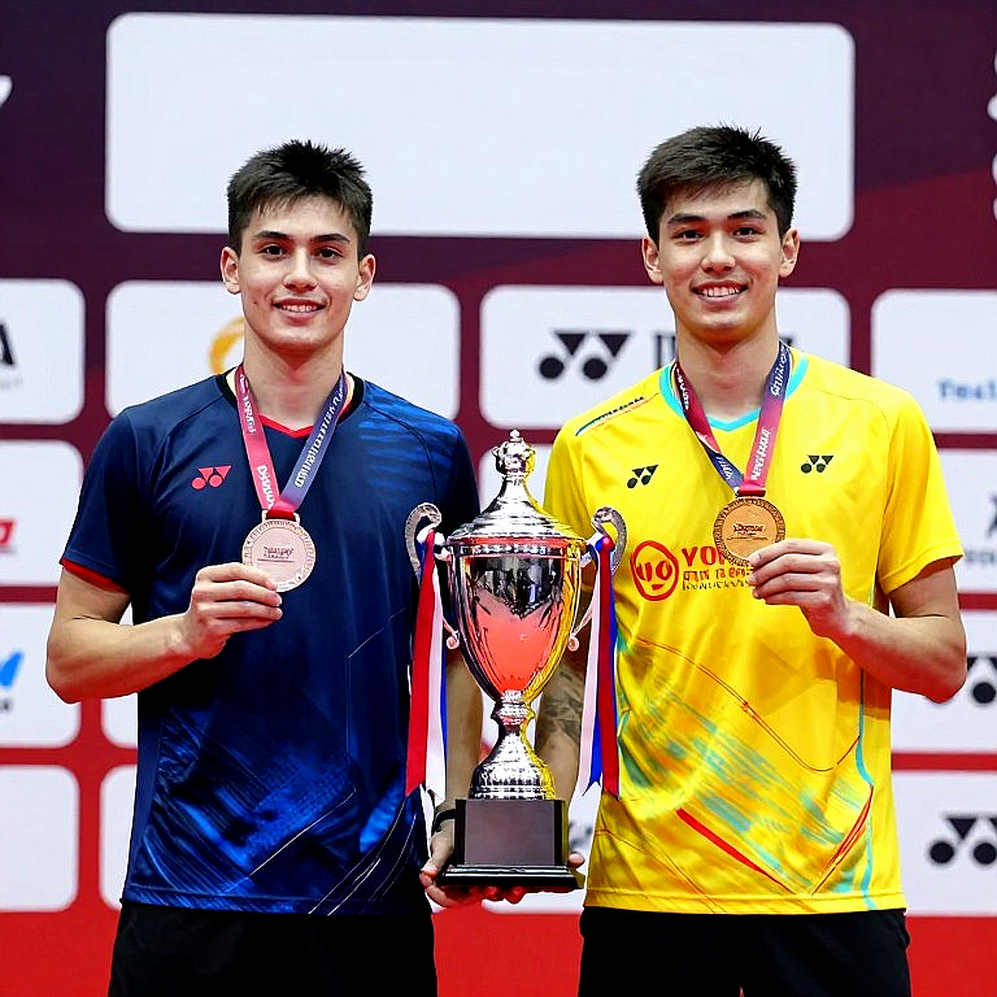
For anyone who has followed Chinese badminton over the past two decades, that number lands like a cold detonation. I read the line three times, then reopened the historical medal record of China's badminton delegation at past Asian Games to check my own memory. At Guangzhou 2026, they took seven out of seven events. At Incheon 2026, they still dominated most finals. Even in editions rated as difficult, their gold-medal count had never been published as a target this modest.
What caught my attention was not the two gold medals themselves, but the fact that the coaching staff chose to say the number out loud. In this industry, people do not publish a low target unless there is a reason. And two reasons are named by the source itself: injuries to some players, and changes within the coaching staff. No names. No body parts. No severity. Just injuries, and just changes.
I once worshipped the star, until I realized the star is only a product of the structure. Two gold medals is not a confession of weakness by a few individuals. It is an invoice that a machine signed long ago, now come due.
Context: The Asian Games is not a BWF event, and China is entering it with a compressed history
Before dissecting the number, the stage it sits on must be rebuilt. General readers often lump the Asian Games and events of the Badminton World Federation (BWF) system into one. That is a fundamental error about organizational dynamics.
The Asian Games is the arena of the Olympic Council of Asia, not a stop on the BWF World Tour. Its meaning is measured by the medal table of an entire national sports delegation, not by individual ranking points. A gold medal here carries political and media value far greater than a title at an open event, because it is added to the whole country's record, where badminton is just one small square in a matrix of dozens of sports.
That is why it is normal for the Chinese badminton team to publicly declare an official target. But it is abnormal for them to publicly declare a low one.
There is a context detail rarely placed beside the number. The recent Asian Games sequence has been strangely compressed. The Hangzhou Games were meant to take place in 2026 but were postponed to 2026 due to the pandemic. As a result, two Asian Games fall within roughly three years: from 2026 to 2026. For a professional badminton player, three years is the length of one complete training cycle, not the gap between two peaks. Now they must compress two cycles into a window the body only gets one chance to recover from.
Add the 2026 context: it is a post-Olympic year (Paris 2026 has passed) and also a World Championships year. In other words, top Asian players must grind through a dense BWF season, with a World Championships in between, ending with the Asian Games at an away venue. This is not a schedule. It is a durability test for the medical and physical system.
And the host is Japan. This is the detail I believe the Chinese coaching staff factored in before announcing the target, even if they did not say so. Japan is one of Asia's top badminton nations, and in Nagoya they will have every home advantage: crowd, playing habits, training conditions, weather. A two-gold target, set beside competition on Japanese soil, becomes a number that protects itself.
Based on my experience tracking matches and Games, I always check three things before believing a target: the schedule, the health of the squad, and who signed the number. All three are pointing one way.
The core: injuries and coaching changes are not two separate events but a causal pair
Now the part I consider most important, and the part most reports will skip.
A conventional report would write: the team has injuries, changed coaches, so it lowered the target. Three events, one linear causal line, done. That reading is syntactically correct but structurally wrong. Because in a centralized training system like China's, injuries and coaching changes do not sit side by side on a table — they sit in the same causal chain.
Picture the structure. A Chinese national team operates on a centralized model: all top players live and train under one roof, split into doubles and singles groups, with training programs designed by a head coaching group holding enormous authority. That authority is the strength: they can organize high-quality internal battles every day, producing an internal opponent dossier no other nation has. But concentrated authority is also the fatal weakness: when a head coach changes or leaves, an entire group of players loses the person who shaped their program.
And this is where I want to pause longer than anyone else in the analysis world.
A coaching change within a preparation cycle for a major Games is not just swapping the person holding the whistle. It is a restructuring of the program, and that restructuring often happens exactly when the athlete's body is accumulating its largest training load.
That is the mechanism. The physical program changes, training volume and intensity change with it, the peak-form timing is recalculated, and in that transition window, the body's safety buffer narrows. Injuries do not appear because of bad luck. Injuries appear because the system just changed how load is distributed onto tendons and bones while players still have to grind through the BWF calendar.
In other words, the two lines in that report — injuries and a coaching change — are very likely two sides of the same coin. One is cause, one is symptom, or the reverse. The report has no obligation to connect them, but the reader does.
I have no player names, no injured body part, no severity. I say that plainly. But I have a structural inference: an injury significant enough to make the headline of a team-level strategy brief is almost certainly not the injury of a bench player. A bench player's injury never reshapes a medal target. Only a key player's injury can do that.
And if the injury touches a key player, that is when the internal machinery of Chinese badminton shows itself. Because China is not strong because it has one star. China is strong because of squad depth — its system can field three or four players in each event where any other nation has only one. That depth is a form of insurance. But insurance only pays out when risk arrives one at a time. When multiple key players are absent at once, depth is no longer insurance — it becomes a thin net stretched until it tears.
That is why I believe the two-gold figure is a calculation that is honest to the point of coldness, not a propaganda move.
The contrarian part: where I could be wrong, and why I still accept the risk
This is the part irresponsible hot-take writers skip. I do not.
There are three scenarios that would collapse my judgment.
First, the two-gold target could be merely a published floor to manage expectations, while the internal goal is much higher. This is common practice in state sports delegations: publish low to reduce public pressure, then quietly aim high. If so, my calculation is wrong from its very premise. I accept this possibility and rate it medium.
Second, the injuries could be far milder than being placed in a headline suggests. Media has a habit of exaggeration. A player out two weeks with a muscle strain can be written as a strategic event. If the injuries are merely routine load management, then my entire causal-chain argument becomes overreach.
Third, the coaching change could be a planned generational handover rather than a response to poor results. If it is planned, it is not a sign of crisis but of renewal. I have no information to distinguish these two possibilities, and that is my biggest blind spot.
But here is why I hold my judgment. Even if the target is a floor, even if the injuries are mild, even if the coaching change is planned — all three combined still create a transition period. And a transition period, in a year with a World Championships plus an Asian Games on Japanese soil, is a risk no target can conceal.
One thing I want to state clearly to avoid being misread. I do not believe Chinese badminton is in decline. I believe it is compressed. The two are different. Decline is losing capability. Being compressed is having capability but not enough time and not enough bodies to release it. And when a system is compressed, it often responds by lowering the target rather than lowering the standard.
The ending: a verifiable prediction, and a question for the machine
Here I must deliver what readers have a right to demand: a verifiable judgment.
I predict that at the 2026 Asian Games, the Chinese badminton team will meet or exceed the two-gold target — but will lose at least one final in an event where they are rated above their opponent. The reason lies in structure, not talent: during a program transition, three-game matches and tense finals are where physical reserves and psychological stability erode most visibly. A player who has not completed a peak cycle will win group matches on technique, but may collapse in the third game of a final.
I also predict that if China exceeds the target, the media will instantly change tone from "cautious" to "character," and forget that they were the ones writing about two gold medals as a sign of decline just months earlier.
Do not ask how good this player is, ask how good the team is designed to make him. And in this case, the right question is: when a system with the deepest talent on the planet lowers its own target, is the problem the players, or is it the schedule, the medical machine, the concentration of authority so extreme that one coaching change can shake an entire cycle?
I do not care who wins. I care why the rest lose before the match begins. And if two gold medals become reality, I will not celebrate. I will go looking for who paid the price in knees, in ankles, in a year of career cut short, to make that number look just sufficient.
Data often says what the media dares not print. In this case, the team itself printed the data — they just printed it in two words instead of a spreadsheet.