
Asian Games 2026: The Cruel Draw and India's Men's Badminton Team's Japanese Equation
**Câu trả lời cốt lõi**: Đội tuyển cầu lông nam Ấn Độ tại Asian Games 2026 (Aichi-Nagoya, Nhật Bản) sẽ gặp Bangladesh ở vòng 1/16, và nếu thắng sẽ đối đầu chủ nhà Nhật Bản ở tứ kết. Họ từng giành huy chương bạc đồng đội tại Hangzhou cách đây ba năm. Lá thăm được xem là thử thách lớn nhất với cơ hội huy chương của họ. **Dữ kiện chính**: - Asian Games 2026 diễn ra tại Aichi-Nagoya, Nhật Bản, từ ngày 19 tháng 9 đến ngày 4 tháng 10 năm 2026. - Đội tuyển cầu lông nam Ấn Độ gặp Bangladesh ở vòng 1/16. - Nếu thắng, Ấn Độ gặp chủ nhà
When the arena is empty, I hear the rhythm of the match more clearly.
That is the line I wrote again and again in my notebook during the three months of the pandemic, when arenas were shut and all I had left were old match tapes and two hundred pages of notes on the positional shifts of a Liverpool full-back. I learned to listen to sport from within silence — to find the rhythm of a match even without a crowd, without the roar, with nothing but footsteps and breathing.
But this time, the silence came from a stranger kind of report. It was the Day-1 medal table of the 2026 Asian Games, where badminton appeared only as a margin note.
September 20, 2026. Aichi-Nagoya, Japan. India's delegation closed the opening day with two silver medals, most of them from shooting. The report ran to thousands of words, mentioning golf, field hockey, kabaddi, American football, and MMA. And somewhere between those lines, it noted that India's men's badminton team would face Bangladesh in the round of 16, with hosts Japan waiting in the quarterfinals if they won.
One sentence. Then silence.
But for me, that sentence was a whole match that had already begun before the shuttle was ever tossed. Because in elite sport, some matches are decided not by the smash, but by the draw.
Context: a Games caught between two Olympic cycles
The 2026 Asian Games take place in Aichi-Nagoya, Japan, from September 19 to October 4, 2026. It is the continent's largest multi-sport event, governed by the Olympic Council of Asia (OCA). For badminton, this is a competition of a very particular nature: it awards no ranking points from the Badminton World Federation (BWF). In other words, a medal here does not lift a player up the world rankings, but it is tied to the flag, to national pride, and to government investment.
For India, badminton is a sport that has travelled a long road. Three years ago, in Hangzhou, India's men's team won a silver medal in the team event. That was no accident. It was the milestone of a decade of progress, as this South Asian nation rose from outsider to a genuine continental badminton power.
At Aichi-Nagoya this time, their path is already drawn: Bangladesh in the round of 16, and if they win, hosts Japan in the quarterfinals. That is the entire badminton content of the Day-1 report. Three data points: a past silver, a round-of-16 opponent, a potential quarterfinal opponent.
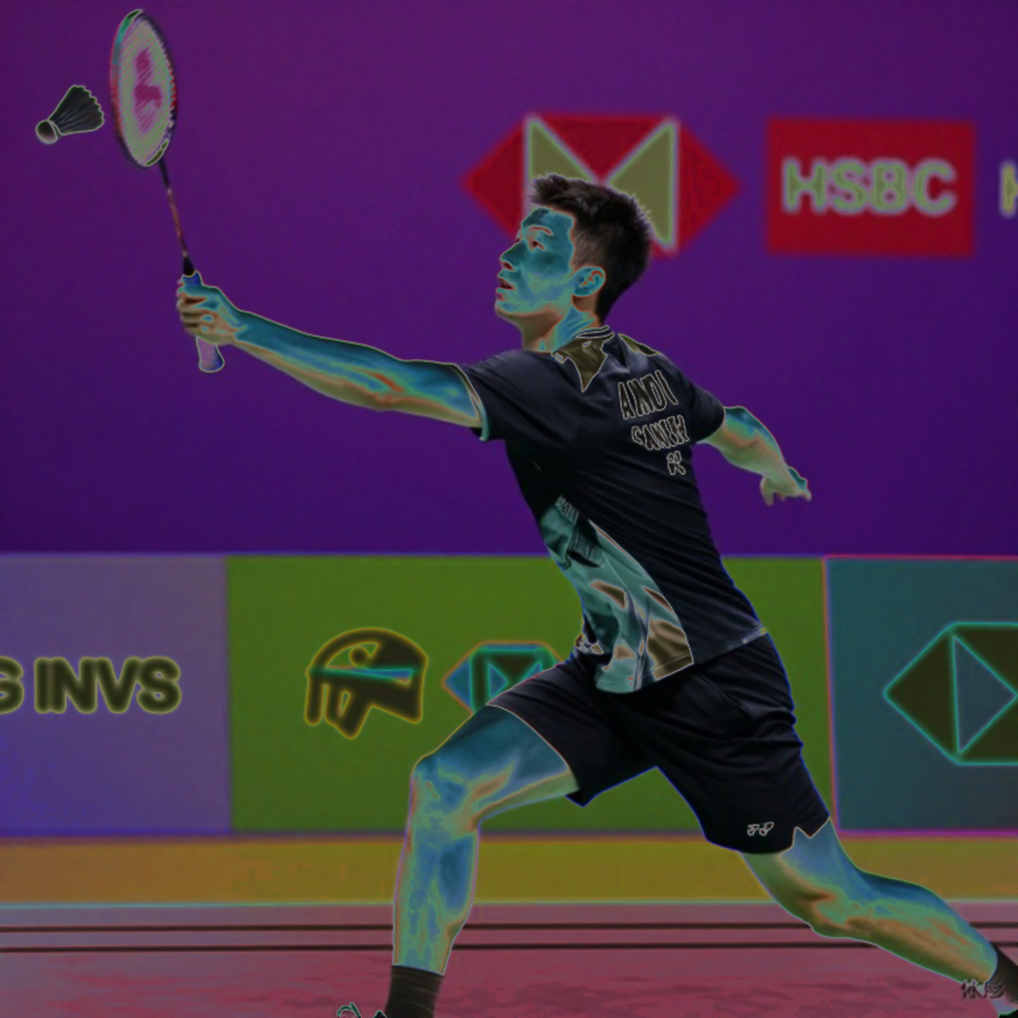
It sounds like little. But to someone whose trade is reading rhythm, those three data points are enough to reconstruct a whole story.
I remember 2026, when I sat in the commentary booth for France versus Argentina in the World Cup round of 16. Kylian Mbappe scored twice, hit 37.5 km/h, and tore Argentina's defence apart. I wrote an analysis of Didier Deschamps' 4-2-3-1, focused on the space behind the full-backs. The editor rejected it as too long and too dry. I posted it to my personal blog at midnight, and it drew 15,000 reads in a single day. A young coach in Nha Trang shared it and wrote that this was what Vietnamese sports journalism was missing.
The lesson I took from that is simple: sometimes the most important thing is not the length of the story, but what you manage to see inside it. A margin note about India's men's badminton team — to me — can also be a complete story.
Core: when the draw decides fate
Badminton's team event at the Asian Games runs on a single-elimination format. Each tie between two national teams is decided by a best-of-five format — the team that wins three of five matches, typically a mix of singles and doubles depending on the specific structure, advances. Round of 16, then quarterfinals, semifinals, final. Lose once and it is over.
That is why, unlike individual tournaments, the team format is less prone to earthquakes. In an individual event, a player in hot form can topple the top seed in a single afternoon. But in the team format, to win an entire tie you need squad depth, you need at least three wins out of five. That is why the strongest teams — China, Indonesia — tend to dominate this stage.
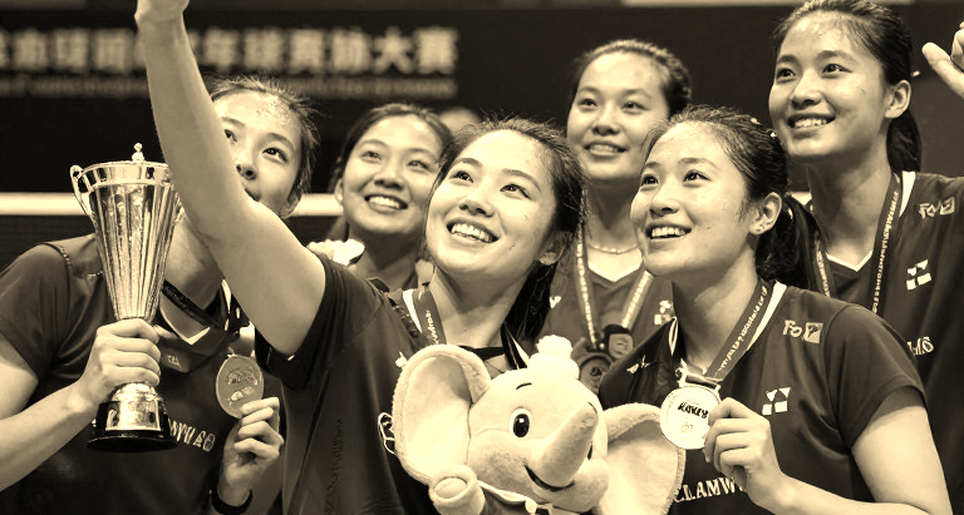
India's path is therefore highly structural. The round-of-16 tie against Bangladesh is a low-resistance fixture. On paper, it is a chance for the coaching staff to rotate the lineup, manage match load, and save energy for the road ahead. I have told young colleagues in Nha Trang that in sport, sometimes the most important match is not the one you must win, but the one you must win without spending too much.
But India's real match — the one I believe will decide the medal — is the quarterfinal, if they get there, against Japan.
This is the crux. The essence of the 2026 Asian Games for India's men's badminton team lies not in form, but in the draw: they have been pushed into a bracket where the host nation waits at the very first hurdle of the medal race.
The round of 16 against Bangladesh is not the real test. It is a formality. The real test lies in the quarterfinals, and it bears the name Japan.
Think about this the way a rhythm-reader would. In a knockout match there are two kinds of pressure: pressure from the opponent, and pressure from the context itself. India can prepare for the Japanese opponent. But they cannot prepare for the Japanese context — an arena full of home fans, a logistics system built for the host team, and a competitive mindset forged by absolute support from the stands.
The continental picture: where does India stand?
I often use a simple image when analysing Asian badminton: a three-tier pyramid.
The top tier holds just two constant names — China and Indonesia. These are badminton nations with decades of tradition, closed-loop youth development systems, and squad depth that makes others look up. At any Asian Games, these two are almost default contenders for gold.
The middle tier is where competition is fiercest: Japan, Malaysia, Korea, and India. These are teams that can beat anyone on a good day, but are not yet stable enough to dominate. The gaps between them are thin, and sometimes decided by the smallest detail: a change of ends, a moment of lost focus, a shuttle landing on the line.
The lower tier is the chasing pack: Chinese Taipei, Thailand, Singapore, Hong Kong. And Bangladesh — India's round-of-16 opponent — sits on the outer edge of this picture.
So where does India stand? The silver medal in Hangzhou three years ago places them in the middle tier, as a genuine medal contender but not a title contender. That is an honest position. It says India has improved, has earned a place alongside Japan, Malaysia, and Korea — but has not yet crossed the threshold of the two traditional powers.
And precisely because of that, the potential quarterfinal against Japan becomes a near-even contest. Not a match where India is underrated. Not a match where they are overrated either. But a match where both sides enter with equal opportunity — and where the host nation holds an invisible but real advantage.
Let me pause here a moment. In sports analysis, people talk about favourites and underdogs. But in the team format, that boundary is far blurrier. A team rated higher can lose if one of their singles collapses. A team rated lower can win if they take two doubles. The structure of a team tie creates more variables than any individual match.
That is why I say India has a real chance. Not because they are stronger than Japan. But because in this format, stronger is not the only condition for winning.
The host-nation factor
I want to say a little about the host-nation factor, because it is often underrated in analysis on paper.
When a team plays at home, they have more than a crowd. They have an entire ecosystem designed to serve them: the schedule, the training venues, the daily routines, the voice from the stands. For badminton — a sport where rhythm and shuttle feel depend heavily on arena conditions, air flow, and lighting — that advantage is even clearer.
Japan is not merely the host. They are a leading badminton nation, with a disciplined development system and a generation of players at their peak. That India must face them right in the quarterfinals, on Japanese soil, turns the first hurdle of the medal race into a far harsher challenge than a neutral draw would.
This is what I want to stress: in a knockout format, the draw does not only determine the opponent — it determines the psychological context and the competitive environment. And sometimes a hard draw is more dangerous than a strong opponent.
I have seen this across many sports. At the Tokyo 2026 Olympics, I wrote about Selemon Barega winning the 10,000m gold with a surge over the final 200m. At the same time, Roberto Mancini's Italy scored the decisive goal in extra time of the Euro final. I pointed to the similarity: the peak does not come from fitness, but from timing. And timing — in both athletics and football — is often decided by context, not only by ability.
For India in Aichi-Nagoya, that context is a Japanese arena on a quarterfinal afternoon.
The consequences of a non-ranking stage
There is a technical detail many viewers overlook: the Asian Games is not a BWF ranking-points event.
It sounds dry, but it changes the entire way teams approach the tournament. At a World Tour event, a player can weigh protecting their ranking against taking risks. At the Asian Games, there are no points to protect. The only thing on the scales is the medal and the flag.
For India, that means purely national motivation. No pressure to defend points, no long-term strategic calculation about saving energy for next week's event. Only one goal: go as far as possible.
But the flip side of no ranking points is expectation pressure. When there is no ranking to spread the attention, all focus converges on the result. And for a team that once won silver, that result is assumed to be a medal.
I have witnessed something similar on another plane. At the 2026 World Cup in Qatar, I placed absolute faith in Belgium and Germany — two teams I idealised for their golden generations and beautiful attacking play. Both were eliminated in the group stage. Belgium, despite being ranked second in the world, had grown old; Germany lacked sharpness. I was so shocked I stopped writing for a week, staying in my hotel room seeing no one.
Afterwards, I wrote a piece called Farewell to the Romantic Dream — admitting I had been wrong, that I had believed in theory more than reality. It was sincere enough to be shared 5,000 times, more than any of my previous analyses. From then on, I understood: expectation, when not anchored in data, is a form of illusion.
And that is exactly what I want to say about India's defence of the silver.
The contrarian angle: when expectation outruns reality
I want to use this section to say what many Indian fans may not want to hear.
The story of India defending the silver sounds lovely. But it rests on a fragile assumption: that the 2026 men's team is as strong as or stronger than the 2026 team. Meanwhile, the draw has placed them on a harder journey — meeting the host nation right in the quarterfinals.
This is the point I want to name: the expectation of repeating the silver medal is optimistic rather than realistic, because it is built on the memory of a past result, not on data about current form.
The Day-1 report names not a single player. Not a single pair. Not a single form indicator. It only says India once won silver, and now they face Bangladesh and may face Japan. That is not enough data to assert anything about medal chances.
And here is the more interesting part: that report was labelled badminton, yet only a few lines concerned badminton. The rest concerned shooting, field hockey, kabaddi, cricket. In other words, even at a Games where India has badminton tradition, badminton remains a margin note in the medal story.
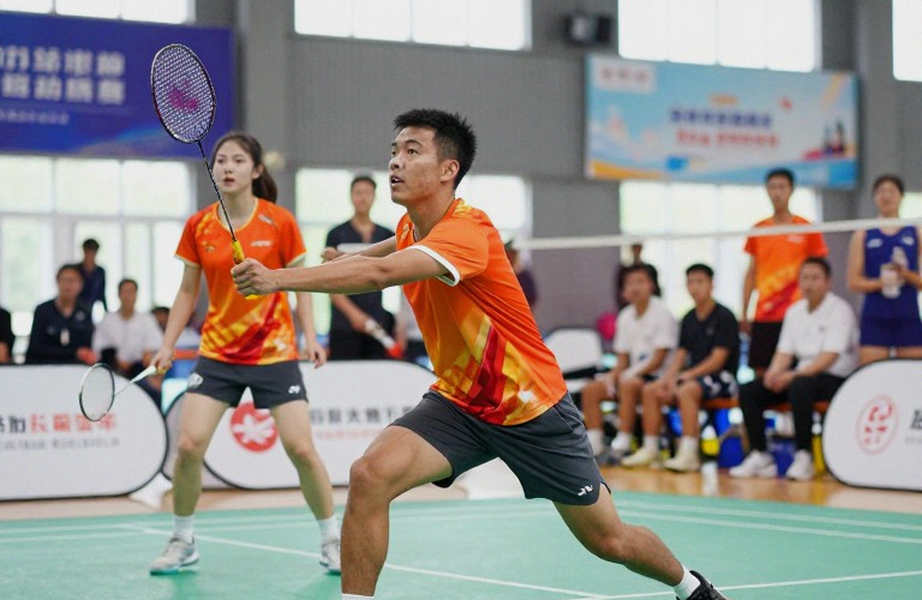
I do not say this to criticise. I say it to remind us: in sport, media attention is not a measure of importance. Some matches happen in silence, and it is precisely in that silence that the true rhythm of the competition emerges.
There is one more thing worth pondering. The fact that the report named only the men's team and not the women's may reflect a practical priority: the men's side is where India has a clearer medal chance. But it may also reflect a media habit — the habit of looking only where there is already a precedent of success. And that habit, sometimes, makes people miss stories forming elsewhere.
Every shock comes from a child we did not notice in time. I still believe that. But in this case, the shock — if there is one — will not come from an unknown young player. It will come from a draw that was made long before.
What to watch
If I had to name the things to watch in the coming days, they would be these.
First, the result of the round-of-16 tie against Bangladesh. Not to know whether India win or lose — that is almost certain. But to see how they win. Will the coaching staff rotate? Will they rest the key players? Those decisions will reveal how they see the quarterfinal.
Second, the actual quarterfinal opponent. If it is Japan, the difficulty rises sharply. If it is another team, the door to a medal opens wider.
Third, the lineup and order of play. This is data the Day-1 report completely lacks. Only when the lineup is published can analysis at player level begin — which is currently impossible.
And fourth, the cycle context. The 2026 Asian Games come two years after the Paris 2026 Olympics and two years before the Los Angeles 2028 Olympics. This is the midpoint of a cycle. The result here is not only about the present — it is a signal about India's standing in the next cycle.
Closing
So what will happen in the coming days?
I do not prophesy. Mancini did not prophesy; he only read the rhythm. And rhythm never lies. The rhythm here tells me the Bangladesh tie will pass quickly, that India will save energy, and that everything will converge on a quarterfinal afternoon against Japan — where their medal will be decided by the smallest details.
If they clear that hurdle, the story changes tone: from defending silver to touching gold. If not, it will be a shock — but a shock foretold by the draw itself.
And perhaps the biggest lesson is not in the result. It is this: sometimes, in sport, people do not lose because they are weaker. They lose because they were placed in a bracket where, from the very start, the price of a medal had been raised higher.
When the arena is empty, I hear the rhythm of the match more clearly. But this time, the arena will not be empty. And the noise of the home crowd — a noise that does not belong to India — will be part of the rhythm that India's men's team must learn to hear.