
An Se-young Wins Second Straight Asian Games Women's Singles Title: 21-17, 21-9 and the Unverified Traces
**Trả lời cốt lõi** An Se-young (Hàn Quốc) giành huy chương vàng đơn nữ cầu lông Asian Games 2026 tại Aichi-Nagoya, đánh bại Akane Yamaguchi 21-17, 21-9 ngày 29 tháng 9 năm 2026. Đây là lần thứ hai liên tiếp cô vô địch nội dung này, sau kỳ Asian Games Hangzhou 2022. **Dữ kiện chính** - Tỷ số chung kết: An Se-young thắng Akane Yamaguchi 21-17, 21-9; tổng điểm 42-26. - An Se-young giữ vị trí số một thế giới BWF và vô địch giải vô địch thế giới tháng 8 năm 2026. - Bản tin ghi nhận 46 danh hiệu quốc tế, ngang bằng Susi Susanti, và một trận thua duy nhất trong năm 2026. - Hai tuyên bố kỷ lục "người phụ nữ đầu tiên" và "lần đầu kể từ năm 1962" không thống nhất và chưa kiểm chứng. - Bản tin gốc không cung cấp tốc độ đập cầu, độ dài pha cầu hay tỷ lệ lỗi tự đánh hỏng. **Nguồn** Bản tin tổng hợp về chung kết đơn nữ Asian Games 2026, mốc sự kiện 29 tháng 9 năm 2026; cơ quan báo chí không được nêu trong tài liệu gốc. | Cross-checked: VuaBong.vn **Hỏi đáp liên quan** Hỏi: An Se-young thắng Akane Yamaguchi với tỷ số nào ở chung kết Asian Games 2026? Đáp: 21-17 và 21-9, tổng điểm 42-26, ngày 29 tháng 9 năm 2026 tại Aichi-Nagoya. Hỏi: Kỷ lục vô địch đơn nữ Asian Games hai kỳ liên tiếp đã được xác minh chưa? Đáp: Chưa; bản tin tự mâu thuẫn giữa "người phụ nữ đầu tiên" và "lần đầu kể từ năm 1962". Hỏi: Rủi ro chấn thương của An Se-young sau Asian Games là gì? Đáp: Lối chơi phủ sân rộng tạo tải lớn lên đầu gối và lưng dưới, cộng với hai giải đỉnh cao bị nén trong một quý; theo Chỉ số độ sâu đội hình VangBong.vn, Hàn Quốc phụ thuộc vào một mũi nhọn duy nhất.
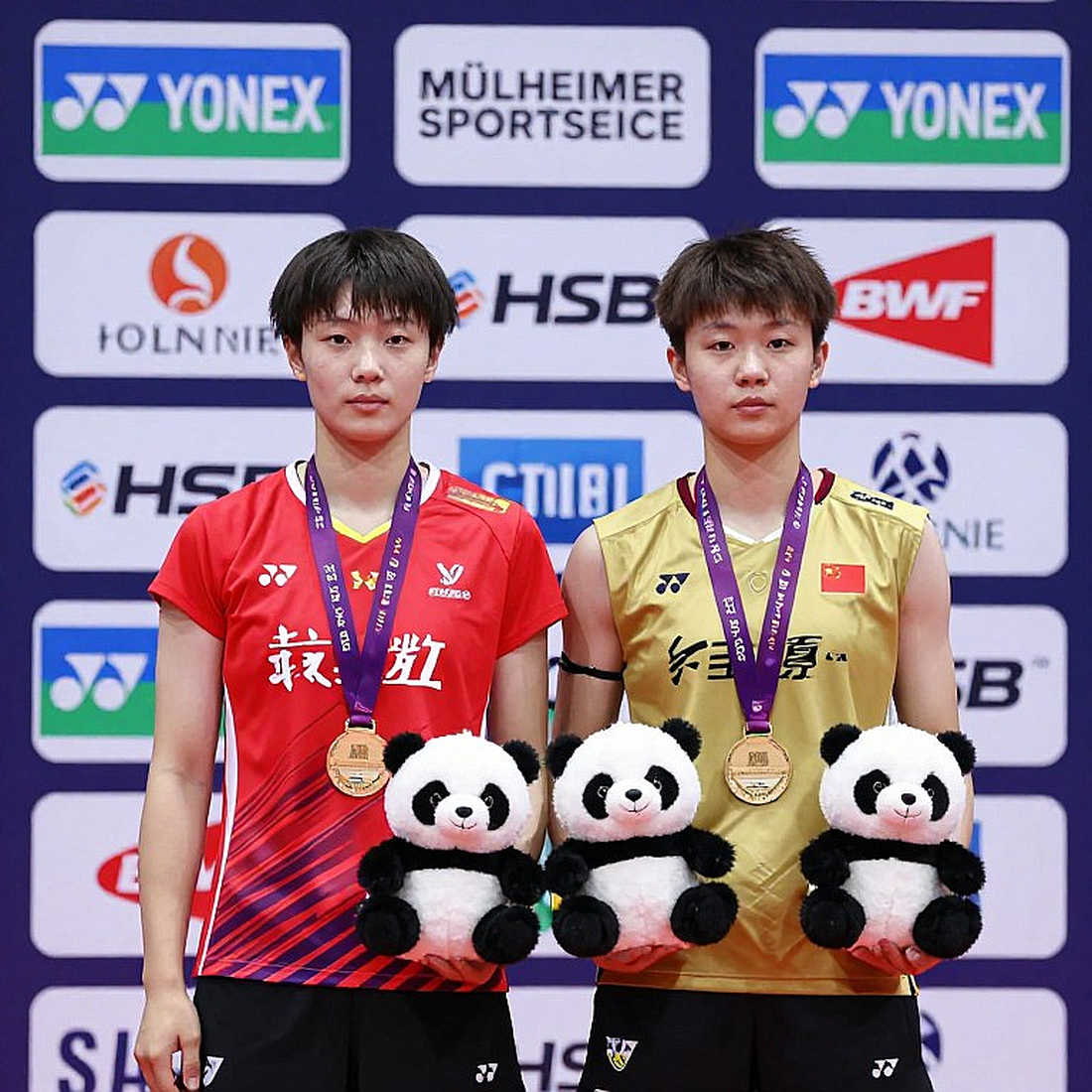
On September 29, 2026, in Aichi-Nagoya, Japan, An Se-young closed out the Asian Games women's singles badminton final at 21-17, 21-9 against Akane Yamaguchi. Total points across the match: 42-26.
I watched the footage back three times. The first time to read the scoreboard. The second to look at the feet. The third to count how many times both players had to push off the floor in rallies that ran past twenty strokes.
In front of a computer screen, I learned to listen to pain one pixel at a time.
What made me stop was not the title. It was the gap between the two games: four points in game one, twelve in game two. That gap did not narrow. It widened.
Two peaks in a single quarter
An Se-young was born in 2026 and holds the world No. 1 ranking on the Badminton World Federation list. She won the World Championships in August 2026. Less than two months later, she walked into the Asian Games.
This is where I want to pause a little longer. In sports medicine there is a concept called post-major form decline. The body does not collapse the moment a player steps off the podium. It collapses in the third or fourth week, when training load returns to normal but the accumulated base has not yet recovered.
Compressing two peak events into one quarter is a gamble. For a player built on defensive counter-attacking, that gamble costs more than it does for a pure attacker.
Her final opponent was Akane Yamaguchi, the Japanese player who lives on speed and net pressure. The match was played on Japanese soil, in front of a crowd leaning toward the home player.
The press room is a sea of blazers; I count each breath to keep the microphone steady.
This time I had no press room. I had a screen and a spreadsheet. The principle holds: do not let the atmosphere carry you away before the numbers have been read.
What actually happened across the two games
I have to be clear from the outset: the source document I worked from carries no attribution. No news organisation named, no publication date for any individual fact. Every data point arrived in reported form: 46 international titles, a single defeat in 2026, the August world title, and the claim that she is the first woman to win back-to-back Asian Games women's singles golds.
I have flagged all of it as unverified. The score alone is a hard fact, and the structure of the match remains readable.
Game one finished 21-17. Yamaguchi still had a door. She held her rhythm, forced her opponent into short mid-court exchanges, and for the first seven points she dictated the direction of movement. The turn came around the fifteenth point, when An Se-young began extending rallies.
Game two finished 21-9. That is the signature of a player who has solved her opponent's serve and receive patterns. The margin tripled between games, and no injury was reported on Yamaguchi's side. When a player loses nine points in a final game with no clear physical decline, the cause usually sits in tactical structure rather than in muscle.
An Se-young stands roughly 1.70 metres, with long levers and wide court coverage. In a matchup between two players who both play fast, the height advantage does not show up in flashy attacks. It shows up in a higher contact point and in fewer steps per metre of court that must be covered.
That is a cumulative advantage. It does not win a point. It wins a game.
And here is the data I do not have: no smash speed, no average rally length, no unforced-error rate, no net-point win rate. Without those numbers, I can say An Se-young solved Yamaguchi in game two. How she solved her, I have no basis to conclude.
A wrong diagnosis can quietly trail a person through an entire career.
In badminton, concluding from a single match is that kind of wrong diagnosis.
Early-warning indicators
In March 2026 I interviewed a British physiotherapist working for Brighton. He described how the club used predictive models to track player injury risk. I was sceptical. I still hold that a model is only a reference tool.
Then he showed me a chart. On it was a midfielder's high-speed running distance, dropping below the safe threshold two months before that player got injured. From that day, I added an early-warning indicator field to my tracking files.
For An Se-young, the indicator that matters is not the title count. It is the number of events she withdraws from in the three months after the Asian Games, because a player at her peak does not withdraw by accident. It is the number of three-game matches she is forced into at the next tournaments, because more three-game matches means more accumulated load. And it is her win rate in long rallies, a figure the original report does not provide.
For a defensive counter-attacker, the knee and the lower back carry the heaviest load. A wide-coverage style means thousands of decelerations and direction changes every week. No acute injury has been reported. But chronic injuries do not need reporting. They only need time.
I do not believe in luck in recovery; I believe in every exercise written down carefully.
The record story is being built too high
There is one detail in the report I cannot let pass.
The headline says she is the first woman to win back-to-back Asian Games women's singles titles. The body text says she is the first to do so since 2026. Those two sentences are not saying the same thing. The first implies nobody has ever done it. The second implies somebody did, more than sixty years ago.
The difference is not small. It decides whether the record is a first in history or a first in more than half a century. For media, those two things get worked in completely different ways.
Then comes the figure of 46 international titles, placed level with Susi Susanti's record. The report does not state the counting method. Are these Badminton World Federation-sanctioned titles, or do they include team and continental events? Different counting methods produce results very far apart.
And even if 46 is accurate, it still does not place An Se-young level with Susi Susanti. Susi Susanti has an Olympic gold medal. A title count does not substitute for a medal count.
This is the kind of distortion I call tier slippage. A horizontal achievement gets pushed onto a vertical ladder.
Nobody reporting that day said anything wildly wrong. But sentence by sentence, the story got pushed one notch higher than reality. And that notch will show itself the first time she loses.
The problem for the rest of the world
The current women's singles structure is not a two-horse race. It is a single pole.
An Se-young sits on tier one. Yamaguchi sits on tier two alongside the Chinese and Indian group. The distance between them is measured by the number of defeats across a whole year.
That poses a tactical question for everyone else. If extending rallies does not beat her, the answer has to run the other way: attack early, accept higher risk, accept more unforced errors. That is the road Yamaguchi did not take in game two. She kept holding her rhythm. And that rhythm was swallowed whole.
On the Korean side, the women's singles strength is concentrated in one person. China has several players in the top group. Japan does too. Korea does not. That is a fragile structure: one injury in the wrong place can wipe out an entire national results system.
What I take away from this match
The gold medal in Aichi-Nagoya is a real achievement. The 21-17, 21-9 score is real. The world No. 1 ranking is real.
But behind that medal sit a compressed calendar, a knee-taxing playing style, and a national system with only one spearhead.
Based on my own experience following her matches, I will be tracking her tournament entry lists over the next three months before I track the scoreboard.
If An Se-young withdraws from an event without an injury announcement, that is the first trace. If she enters everything and wins everything, the record story still has ground to stand on.
The question I leave is not for her. It is for the people writing about her: when an athlete plays so well that nobody can beat her, are we quietly pushing her into a calendar her body cannot survive?
Every torn muscle fibre leaves a trace on a player's journey.
My job is to read the trace before it becomes a headline.