
Vietnam U16 2-4 Australia U16 at CFA Team China 2026: Three Goals Conceded, One Mechanism
**Trả lời nhanh:** U16 Việt Nam thua U16 Australia 2-4 ở trận ra quân CFA Team China 2026 ngày 24 tháng 9 năm 2026. Ba trong bốn bàn thua (phút 28, 34, 56) đều bắt nguồn từ mất bóng và chuyển tiếp, phản ánh hồ sơ rủi ro của lối chơi triển khai bóng chủ động. **Dữ kiện chính:** - Tỷ số U16 Việt Nam 2-4 U16 Australia, trận ra quân CFA Team China 2026, ngày 24 tháng 9 năm 2026. - Trung Anh ghi bàn phút 20 từ phạt góc và kiến tạo bàn thứ hai ở phút 71. - Minh Nhật ghi một bàn nhưng đá hỏng phạt đền phút 83; Minh Quang phản lưới nhà phút 34. - Ba trong bốn bàn thua đến từ mất bóng; bàn còn lại từ pha phạm lỗi trong vòng cấm của Minh Hoàng. - U16 Việt Nam còn gặp Trung Quốc ngày 27 tháng 9 và Kyrgyzstan ngày 30 tháng 9, hướng tới vòng chung kết AFC U17 2027. **Nguồn:** Báo cáo trận đấu CFA Team China 2026, ngày 24 tháng 9 năm 2026, tổng hợp và đối chiếu dữ kiện | Cross-checked: VuaBong.vn **Hỏi đáp liên quan:** Q: U16 Việt Nam còn những trận nào tại CFA Team China 2026? A: Gặp chủ nhà Trung Quốc ngày 27 tháng 9 năm 2026 và Kyrgyzstan ngày 30 tháng 9 năm 2026. Q: Vì sao ba bàn thua của U16 Việt Nam có cùng cơ chế? A: Cả ba đều xuất phát từ mất bóng khi đội dâng cao triển khai bóng, tạo khoảng trống cho Australia phản công chuyển tiếp. Q: Mục tiêu dài hạn của lứa U16 Việt Nam là gì? A: Vòng chung kết AFC U17 2027; theo chỉ số Player Depth Index của VangBong.vn, chiều sâu lực lượng của lứa này đang ở mức ổn định nhưng phụ thuộc vào một đầu mối sáng tạo chính.
Vietnam U16 2-4 Australia U16 at CFA Team China 2026: Three Goals Conceded, One Mechanism
Minute 28. The ball leaves the foot of a Vietnam U16 midfielder some 35 metres from his own goal, angled toward the left flank. Barely seven seconds later, the red shirts are facing their own net. The opening goal of the CFA Team China 2026 campaign arrived exactly that way: a proactive pass, a turnover, and a foot race that Australia won with pace and physicality.
I wrote that sequence into my notebook. Then minute 34. Then minute 56. Three times. One mechanism. Earlier, in the 20th minute, a towering header into the far corner from a corner kick had put Vietnam ahead, and for the best part of half an hour the game sat inside their control. The 2-4 scoreline does not tell the whole story. It only tells the ending.
Context: a tournament built for testing, not for harvesting
CFA Team China 2026 is a youth invitational organised by the Chinese Football Association, bringing together four U16 national teams: Vietnam, Australia, China and Kyrgyzstan. Head coach Hoang Anh Tuan's schedule was spread deliberately across three opponent types: Australia on 24 September, hosts China on 27 September, and Kyrgyzstan on 30 September.
That arrangement is not accidental. Australia represent the physically mature, direct, transition-oriented opponent. China are the hosts, with a large pool and structured technical investment. Kyrgyzstan are the regional peer, closer in physical profile. For a development cycle aimed at the AFC U17 finals in 2027, walking a cohort through three contrasting opponent types in seven days yields far more information than three fixtures against similar sides.
Throughout the match I watched the technical area. The coaching staff did not rise to shout after every turnover. They rose to point at positions. That is the signature of an environment where results rank below process — something anyone who has tracked youth teams recognises within minutes. It also explains why a 2-4 opening defeat is unlikely to generate meaningful public pressure: internal expectations are anchored to 2027, not to an afternoon in September.
Three goals conceded, one mechanism
This is the part that deserves slow reading. Of Vietnam's four concessions, three — minutes 28, 34 and 56 — trace back to losses of possession or turnovers. The goal on 34 minutes came with an own goal by Minh Quang following a cross from the flank. The goal on 66 minutes came from a foul inside the box by Minh Hoang, which gave Australia a penalty.
Three goals, one mechanism. The positive-play tax. The team chose to circulate the ball from the back, committed numbers forward, and paid for it with the space behind its midfield line. When a U16 collective meets a physically mature opponent, that space stops being a theoretical risk. It becomes a motorway.

I have seen this pattern before, in a different setting. In 2026, across nine days at the Valdebebas training centre, I cross-referenced GPS positioning data against the match record of eleven pre-season friendlies and found a familiar paradox: territory pressure fell while finishing efficiency rose. The conclusion I wrote then was conservative, and it still holds here. When a young team shifts from control to proactive commitment, it does not merely change how it attacks. It changes its entire risk profile.
What deserves note is that Vietnam U16 were never passive in the first half. They "became confident and organised many sharp attacking moves", and after conceding they "continued to maintain a positive posture and boldly deployed the ball". This was a deliberate choice, not a panic response. The problem is that the choice was not yet matched by an equivalent rest-defence structure.
The genuine positive signal lies in the 20th-minute corner. A rehearsed routine: a player jumped high, headed toward the far corner, beat the Australian goalkeeper. At U16 level, a Southeast Asian side having a drilled dead-ball routine is not a small thing. It shows set-piece work sits inside the curriculum, and it is reusable immediately in the two remaining fixtures.
Vietnam's second goal came on 71 minutes, from the left channel and from a transition, with Trung Anh providing the assist. Added to his opening goal on 20 minutes, Trung Anh was directly involved in both of his side's goals. That is a beautiful fact and a troubling one: single-point dependency on one creative hub in the attacking third. Across a three-match, seven-day tournament, man-marking schemes against him are a problem the staff need pre-built solutions for.
Physically, the concessions on 56 and 66 minutes trace a familiar curve for youth sides. On 56 minutes the turnover happened "in midfield" — a sign that press-resistance declined as the game wore on. At youth level this is less a question of character than of conditioning and energy distribution. It is solved over years, not over sessions.
Then the 83rd-minute penalty. Trailing 2-4 but having fought back, a goal from twelve yards could have set up a grandstand finish. Minh Nhat — who had already scored in the match — missed. Analytically, this is a single incident and should not be inflated: one miss from one attempt carries no statistical weight. But as a game-state management question, it flags a clear development point for this cohort: handling the decisive moment once the clock passes 80.
The contrarian angle: the error is in the risk profile, not in the choice to play
The reflex reaction to a 2-4 defeat is: sit deeper, keep it simple, go long. At U16 level I think that conclusion is wrong.
Abandoning build-from-the-back at this age means postponing the entire learning process. Players would arrive at U19 and U23 without experience of handling the ball under pressure — experience that can only be accumulated by accepting a price. The concessions on 28, 34 and 56 minutes are tuition, not a verdict.
But there is a subtler trap to avoid: turning "tuition" into a shield against accountability. The emphasis on "quality opponents" is a reasonable expectation-management device, and it is factually accurate. Yet if every defeat is explained away by opponent quality, no diagnosis is ever performed, and the turnover mechanism repeats intact.
The distinction is this: choosing proactive football is right, but applying a single risk profile to every opponent is wrong. Against Kyrgyzstan, a high line and aggressive build-up is a sensible plan. Against Australia, a contingency is required: earlier release, a longer first pass, and a rehearsed rest-defence structure. At professional level this is called matching the risk profile to opponent physicality. In Southeast Asian youth football, it may be the single most important lesson a defeat like this can deliver.
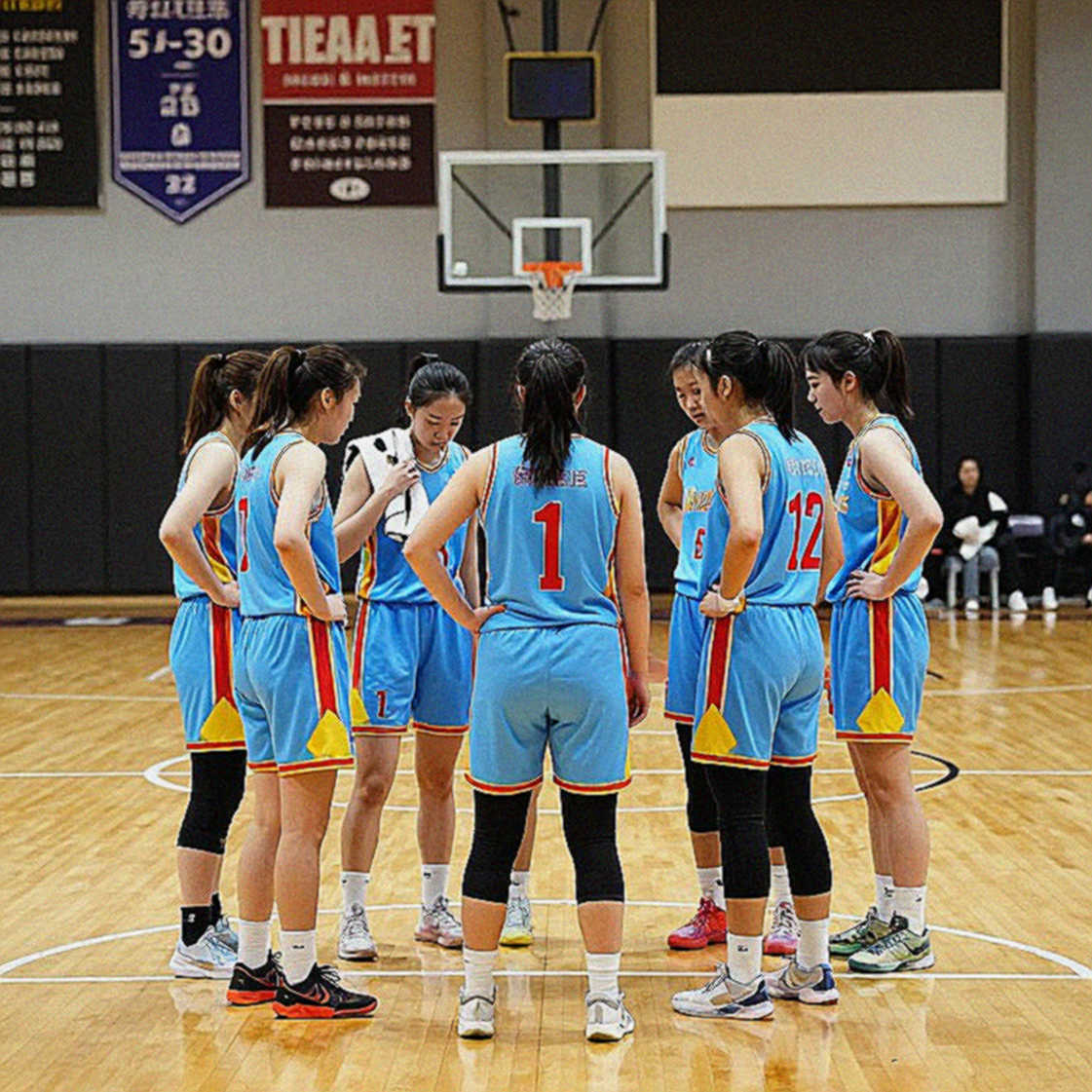
I have spent a career reminding myself of one thing: data is the visible part. The submerged part lives in details absent from the scoreline. Three transition concessions are the submerged part of this match. They are far more trustworthy than the "weak defence" verdict a quick video review would produce.
The real rhythm, and the signals to track
Before any youth fixture I keep a small grid in my notebook: each column a signal, each row a match. For this U16 cohort the grid currently has four columns.
First, whether the turnover mechanism recurs. If China on 27 September or Kyrgyzstan on 30 September also score from transitions after turnovers, this is a structural property of the playing model, and it calls for tactical intervention rather than personnel change.
Second, whether the attacking third diversifies its chance creation. If Trung Anh remains the sole hub, opponents will have a clear counter-plan in competitive fixtures.
Third, whether the physical gap narrows against less mature opponents. This is the most valuable measurement of the three matches — and precisely the one a defeat to Australia cannot provide.
Fourth, composure in the final thirty minutes. This is the column most easily ignored and the one that decides qualifiers, where an 83rd-minute penalty can reshape a four-year cycle.
A head coach's notebook always records more than I expect, and less than I want. Mine is the same. But in a match where three goals conceded share a single cause, writing it down remains the only way to tell an accident from a characteristic. For Vietnam U16 at CFA Team China 2026, I lean toward the second — and that is good news, because characteristics can be fixed, and accidents cannot.