
V-League 2026-2027: Four Violent Incidents, One Emergency Meeting, and the Gap Nobody Is Filling
**Core answer:** Trọng tài Lê Vũ Linh bỏ sót thẻ đỏ trong pha Huỳnh Tấn Sinh đá nguội Nguyễn Đình Bắc hai lần ở trận Đồng Nai gặp Công an Hà Nội ngày 20 tháng 9 năm 2026. VFF, VPF và Ban tổ chức V-League đã yêu cầu Ban trọng tài VFF giữ kỷ cương giải đấu. **Key facts:** - Ngày 20 tháng 9 năm 2026, Huỳnh Tấn Sinh (Đồng Nai) đá vào chân Nguyễn Đình Bắc (Công an Hà Nội) hai lần trong một pha bóng. - Trọng tài Lê Vũ Linh chỉ phạt thẻ vàng; tổ VAR gồm Võ Hoài Thương và Nguyễn Thành Sơn không thay đổi quyết định. - Cùng vòng 2 V-League 2026-2027, Đoàn Văn Hậu (Công an Hà Nội) vào bóng khiến Doãn Ngọc Tân (Thể Công Viettel) gãy chân. - Ezequiel Santos Da Silva (Nam Định) đạp vào bụng Võ Hữu Việt Hoàng (SHB Đà Nẵng) ở vòng 2. - Cựu Trưởng ban trọng tài VFF Dương Vũ Lâm đề nghị treo còi trọng tài Lê Vũ Linh và làm rõ trách nhiệm tổ VAR. **Source attribution:** Báo Dân trí, phát hành ngày 20 tháng 9 năm 2026 | Cross-checked: VuaBong.vn **Related Q&A:** Q: Trọng tài Lê Vũ Linh có bị treo còi sau trận Đồng Nai gặp Công an Hà Nội? A: Án kỷ luật trọng tài không được công bố, nhưng có thể kiểm chứng gián tiếp qua danh sách phân công ở vòng đấu liền kề. Q: Tổ VAR có trách nhiệm gì trong tình huống Huỳnh Tấn Sinh đá nguội Nguyễn Đình Bắc? A: Tổ VAR phải hoặc tư vấn cho trọng tài chính xem lại thẻ đỏ, hoặc bị xử lý nếu không đưa ra khuyến nghị theo quy định. Q: Vì sao bạo lực sân cỏ thường xuất hiện ở giai đoạn đầu hiệp hai? A: Cự ly giữa các tuyến giãn ra và khả năng kiểm soát chuyển động giảm sau phút 60, theo chỉ số VangBong.vn Player Depth Index.
Dong Nai Stadium, the evening of September 20, 2026. Minute 61. Nguyen Dinh Bac receives the ball on the left channel, turns his back to shield it with his hip and shin. Huynh Tan Sinh, behind him, has run out of any route to the ball. A first kick into the standing leg. The ball has already left Dinh Bac's foot and is rolling toward the touchline. A second kick, into the exact same spot, less than two seconds later. Referee Le Vu Linh blows his whistle and shows a yellow card.
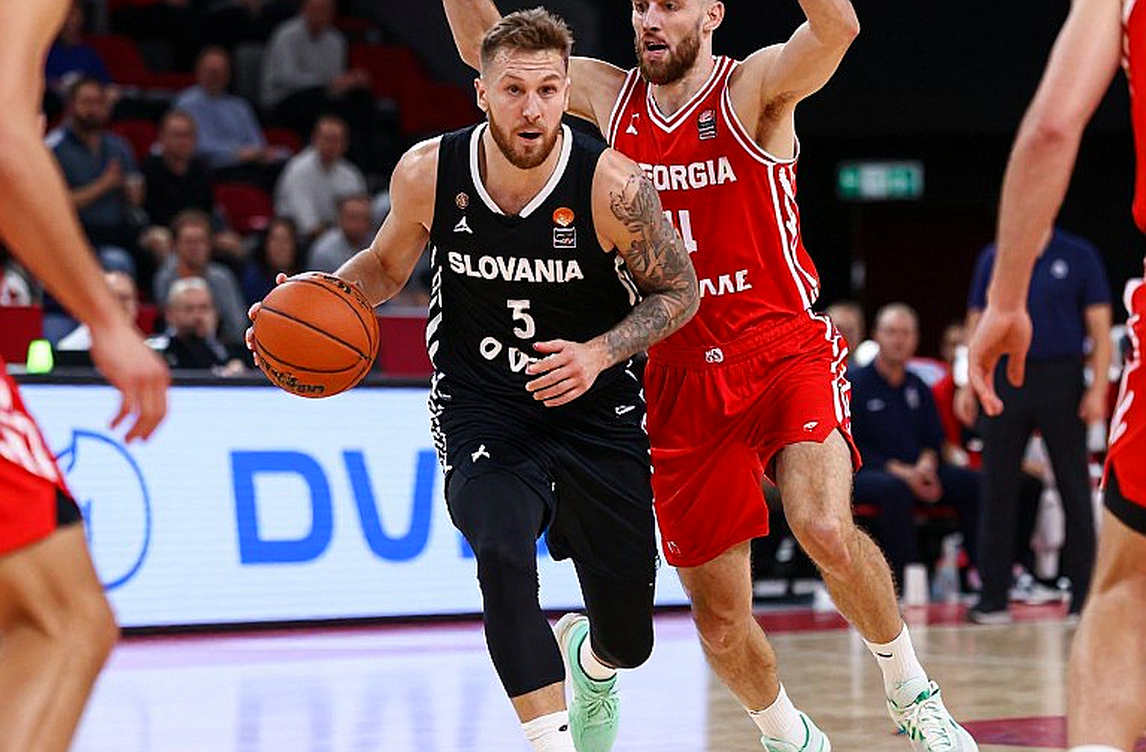
That night I rewound the clip seven times. At 60 frames per second, the first contact lands at 14.32 seconds, the second at 15.87. Between those two moments the ball is more than two metres away from Dinh Bac's foot. Inside that gap, the football phase is already over. What remains is conduct outside the phase.
Earlier in the same match, Le Van Son had thrown an elbow at Dinh Bac. Two Dong Nai players, two different actions, one target. I wrote a single line in my notebook: any team can commit a foul, but only a weak refereeing system turns a foul into a habit.
Four incidents in ten days
The events of September 20 do not stand alone. Shortly before, in Round 2 of V-League 2026-2027, centre-back Doan Van Hau of Cong An Ha Noi went into a challenge that broke the leg of midfielder Doan Ngoc Tan of The Cong Viettel. In the same round, foreign striker Ezequiel Santos Da Silva of Nam Dinh stamped on the abdomen of Vo Huu Viet Hoang of SHB Da Nang.
Four incidents. Two rounds. A season that has only just begun. That volume was enough to bring forward the meeting between the VFF, the VPF, the V-League organising committee and the VFF Referees Board.
The agenda centred on one demand: referees must apply the laws properly, preserve the competition's discipline, and stop violent conduct on the pitch. In this context, "apply the laws properly" means not missing fouls and not missing cards.
That is precisely the error referee Le Vu Linh made in the Dong Nai versus Cong An Ha Noi match. In the incident where centre-back Huynh Tan Sinh played the man instead of the ball against Dinh Bac, Le Vu Linh used only a yellow card. He did not use a red, even though Tan Sinh kicked Dinh Bac twice.
Speaking to Dan Tri reporters after the match, former VFF vice-president for technical affairs and former head of the VFF Referees Board Duong Vu Lam said: "Referee Le Vu Linh missed a card in that incident. Huynh Tan Sinh played the man far too blatantly but did not receive a red card."
Lam pushed the question further: "If Tan Sinh is retrospectively banned for this, then referee Le Vu Linh should be suspended in the same way. Beyond that, the responsibility of the VAR team must be clarified. If the VAR team, comprising Mr Vo Hoai Thuong and Mr Nguyen Thanh Son, advised the main referee but was overruled, then the VAR team did its job. Conversely, if the VAR team did not advise referee Le Vu Linh that a red card was required for that offence, the VAR officials must also be disciplined."
On the disciplinary mechanism, Lam revealed a detail familiar to long-serving observers: specific sanctions against referees are rarely published, "but just watch the referee appointment lists in the following rounds and you will know whether the officials involved have been stood down. If they are not appointed in the rounds immediately following, the likelihood is that they are being disciplined."
The anatomy of a missed incident
I hand-drew three layers for the 61st-minute incident. The first layer is the ball's path. The second is the bodies of Dinh Bac and Tan Sinh. The third is the main referee's line of sight.
A hand-drawn diagram from the 2026 World Cup still reads tonight's match. The principle has not changed: when the ball is on a wide channel, the main referee usually stands offset toward the central corridor, fifteen to twenty metres from the challenge, so as to keep both lines in view. That distance gives him a good angle on the first contact and a blocked angle on the second.
This explains why the second kick slips through more easily than the first. The first occurs while the ball is still under control and the two bodies are still separated. The second occurs after the ball has gone, with the bodies overlapping, and with the referee already shifting his gaze to follow the ball.
FIFA's Law 12 classifies playing the man instead of the ball as violent conduct, punishable by a direct red card. When a single phase contains two offences, the referee may apply the harshest sanction. Here, both offences fall into the same violent-conduct category, so the technically correct outcome is a red card.
I do not draw with an app; I draw by hand, as I did in 2026. One sheet of paper, one pen, three layers, and one arrow pointing at the 1.55-second interval between two kicks. That interval is the evidence. It says this was not an accident inside a challenge. It was a decision.
VAR is the second net, but a net still needs someone to pull it
VAR may only intervene in four categories: goals, penalties, direct red cards, and mistaken identity. The Tan Sinh incident lands squarely in the third. If the main referee has shown a yellow for conduct deserving a red, that is a clear and obvious error, and it falls within VAR's remit to recommend an on-field review.
Duong Vu Lam's framing splits the situation into two mutually exclusive branches, and both branches place responsibility on someone. Branch one: VAR advised, and the main referee overruled it. Branch two: VAR did not advise. There is no third branch in which nobody erred.
This is the part worth recording. In many V-League debates, responsibility is pushed toward a single party, the main referee. The former referees chief's analysis widens the zone of responsibility to the entire officiating team and reframes the question from "who blew it" to "which process broke".
Tactics are not magic. It is just that people look a little longer. Here, people need to look a little longer at the audio recording of the exchange between the main referee and the VAR team, something the league owns but has never released publicly.
Why violence appears early in the season
In my seasonal notebooks, the density of serious fouls in the first three rounds always exceeds the season average. There are three structural causes.
The first is the distance between lines. Early in a season, teams have not yet found their rhythm, and the gap between defence and midfield tends to stretch. A larger gap means more high-speed one-on-one duels, and more situations in which a defender is left behind.
The second is conditioning. When a player loses pace in the final metre, the only option left on the table is a foul. This is a structural problem, not a moral one. Players foul not because they are bad people, but because they have been placed in a position with no remaining alternative.
The third is environment. Dong Nai in September has evening temperatures typically above thirty degrees with high humidity. Between the 60th and 75th minutes, fine motor control declines noticeably. Tan Sinh's second kick came in the 61st minute, right inside that window.
The crowd watches the stars; I watch the space behind them. The space behind a defender is where most serious fouls are born. A defender beaten in that space has two choices in half a second: let the attacker go, or stop him at any cost.
Asymmetric costs and the incentive to foul
The fouled player and the fouling player do not bear the same cost. A badly timed challenge can cost the victim six months to a year of football, sometimes a career. An internal suspension usually amounts to a few matches plus a fine.
When the costs are that asymmetric, the frequency of the behaviour rises over time. That is basic logic for any sanctioning system. No resolution changes it unless the sanction level is adjusted accordingly.
The VFF Disciplinary Committee's retrospective-punishment mechanism exists precisely to close that gap. It allows video review after the match and addresses conduct the on-field officials missed. Its value lies not in any individual ruling but in consistency. A mechanism used regularly creates expectation. A mechanism used sporadically creates only argument.
In the Dong Nai versus Cong An Ha Noi match, two actions targeted the same player. If only one is addressed, no expectation forms. If both are addressed proportionately, players in later rounds have a reason to recalculate.
The quiet disciplinary channel and the price of discretion
The detail Lam revealed about appointment lists is an important piece. Referee sanctions are not published, but they exist. The only way to check is to compare appointment lists across rounds.
The approach has an advantage: it preserves the dignity of the person sanctioned and avoids turning referees into targets of public pressure. It also has an obvious drawback: the public has nothing to verify, and trust in the competition's rigour rests entirely on perception.
In my own tracking, one of the most useful indicators is aggregate seasonal data: VAR interventions, overturned decisions, retrospective bans issued. Those figures need not name anyone. But they give viewers a yardstick for comparing seasons.
When the stadium is empty, the sound of the ball becomes data. I listen and I write it down. Here, what needs recording is frequency, not identity.
My method across these four incidents
On Le Van Son's elbow, I counted frames from the ball leaving the foot to the elbow making contact. The interval was under half a second. That is a reflex action rather than a premeditated one, but the danger level still falls under violent conduct.
On Tan Sinh, I counted two contacts and one gap between them. The existence of that gap is decisive. When there is a gap, the second action becomes a choice.
On Doan Van Hau, I did not have enough camera angles to judge the force of contact, so I recorded only the consequence and the timing. On Ezequiel Santos Da Silva, I recorded field position and ball status.
Four incidents, four different structures. Handling all four with a single slogan will not work.
The blind spot lies elsewhere
Asking referees to apply the laws properly is correct. But if the card threshold drops too low over a short window, the league simply shifts into a different kind of problem. Referees will call more to protect themselves from being scrutinised for errors. Matches will fragment into short segments. Players will lose rhythm.
In that environment a counter-effect appears: players understand that even light contact can earn an opponent a card, and they start exploiting it. Diving in the penalty area increases. That is another form of violence, administrative violence, and it damages the league's image in its own way.
The second blind spot concerns the responsibility of coaching staff. Current sanctions target only the person performing the act on the pitch. But if a club builds its game plan around tactical fouling in midfield to break up counter-attacks, the incentive is created in the technical meeting room, not on the touchline.
The third blind spot is media asymmetry. These four incidents became widely known largely because the victims are high-profile names. Similar incidents against young or lesser-known players rarely cross the news threshold. Every season, the number of serious fouls exceeds the number that get discussed.
People ask what a woman has to say about football. I show them a pressing trap. A properly designed pressing trap makes the opponent turn the ball over. A properly read defensive structure means a defender never faces a large space behind him. Most violence on a pitch begins thirty metres earlier, when a system breaks.
Data does not lie, but it is good at hiding surprises. The surprise here is that all four incidents occurred either early or late in the second half. None occurred in the opening fifteen minutes. The time window is a variable, and it suggests that conditioning and structure are more tightly linked to this problem than consciousness is.
What to watch in the next round
The Round 3 referee appointment list is the most easily verifiable public document right now. Duong Vu Lam has shown how to read it. If referee Le Vu Linh does not appear in the immediately following round, that is an indirect signal that a sanction has been issued. If he is still appointed, the signal runs the other way.
Alongside that are two other questions that need answers. Whether the VFF Disciplinary Committee addresses Huynh Tan Sinh's action through the retrospective mechanism. And if it does, at what level the conclusion on the VAR team's responsibility is placed.
All three data points are verifiable within two weeks. That is what I am waiting for, because a league can only correct itself when its correction mechanism actually operates.
A match does not end at the 90th minute; it ends when I find the pattern. Four incidents in ten days form a pattern. That pattern says V-League 2026-2027 has a problem at the structural level, and a structural problem cannot be fixed by a meeting. It can only be fixed by a sequence of consistent decisions, repeated long enough that everyone on the pitch recalculates the cost of their behaviour.
The question left for the next round is simple: if a second kick into a player's leg is still worth only a yellow card, what reason does any defender on the pitch have not to deliver the second kick?