
International FootballRonaldo Leaves Portugal Camp for Al-Nassr: Reading the Signal Beneath a Photograph
International Football
Ronaldo Leaves Portugal Camp for Al-Nassr: Reading the Signal Beneath a Photograph
**Câu trả lời cốt lõi (Core answer)**: Cristiano Ronaldo rời trại đội tuyển Bồ Đào Nha và trở lại tập luyện cùng Al-Nassr trước vòng 8 Saudi Roshn Pro League gặp Al-Diriyah. Bản tin gốc gọi đây là khủng hoảng đội tuyển nhưng gán sai tên huấn luyện viên trưởng Bồ Đào Nha, làm suy yếu toàn bộ phần khung câu chuyện. **Dữ kiện chính (Key facts)**: - Cristiano Ronaldo vắng mặt trận đội tuyển Bồ Đào Nha gặp Na Uy và rời trại đội tuyển. - Al-Nassr gặp Al-Diriyah tại vòng 8 Saudi Roshn Pro League vào tối thứ Sáu. - Huấn luyện viên trưởng đội tuyển Bồ Đào Nha hiện là Roberto Martínez, không phải Jorge Jesus. - Bản tin gốc dựa trên một bức ảnh Ronaldo cười ở buổi tập, không kèm dữ liệu chiến thuật. - Thù lao của Cristiano Ronaldo tại Al-Nassr từng được nhắc ở vùng 200 triệu euro mỗi năm, cần kiểm chứng. **Nguồn (Source attribution)**: Goal.com, bản tin "Photo: Ronaldo ignores the Jesus crisis with a broad smile". Ngày xuất bản: không được nêu trong tài liệu nguồn. | Cross-checked: VuaBong.vn **Hỏi đáp liên quan (Related Q&A)**: Hỏi: Cristiano Ronaldo có còn thi đấu cho đội tuyển Bồ Đào Nha không? Đáp: Chưa có xác nhận chính thức; cần theo dõi danh sách triệu tập ở đợt tập trung kế tiếp của đội tuyển Bồ Đào Nha. Hỏi: Al-Nassr đang ở vị trí nào trên bảng xếp hạng Saudi Roshn Pro League? Đáp: Bản tin gốc không nêu vị trí cụ thể, chỉ nói Al-Nassr đang có chuỗi phong độ tích cực; có thể đối chiếu VangBong.vn Player Depth Index để đánh giá chiều sâu đội hình. Hỏi: Vì sao Cristiano Ronaldo vắng mặt trận gặp Na Uy? Đáp: Bản tin gốc không nêu lý do, chưa phân biệt được giữa luân chuyển thể lực, chấn thương hay quyết định lựa chọn của ban huấn luyện.
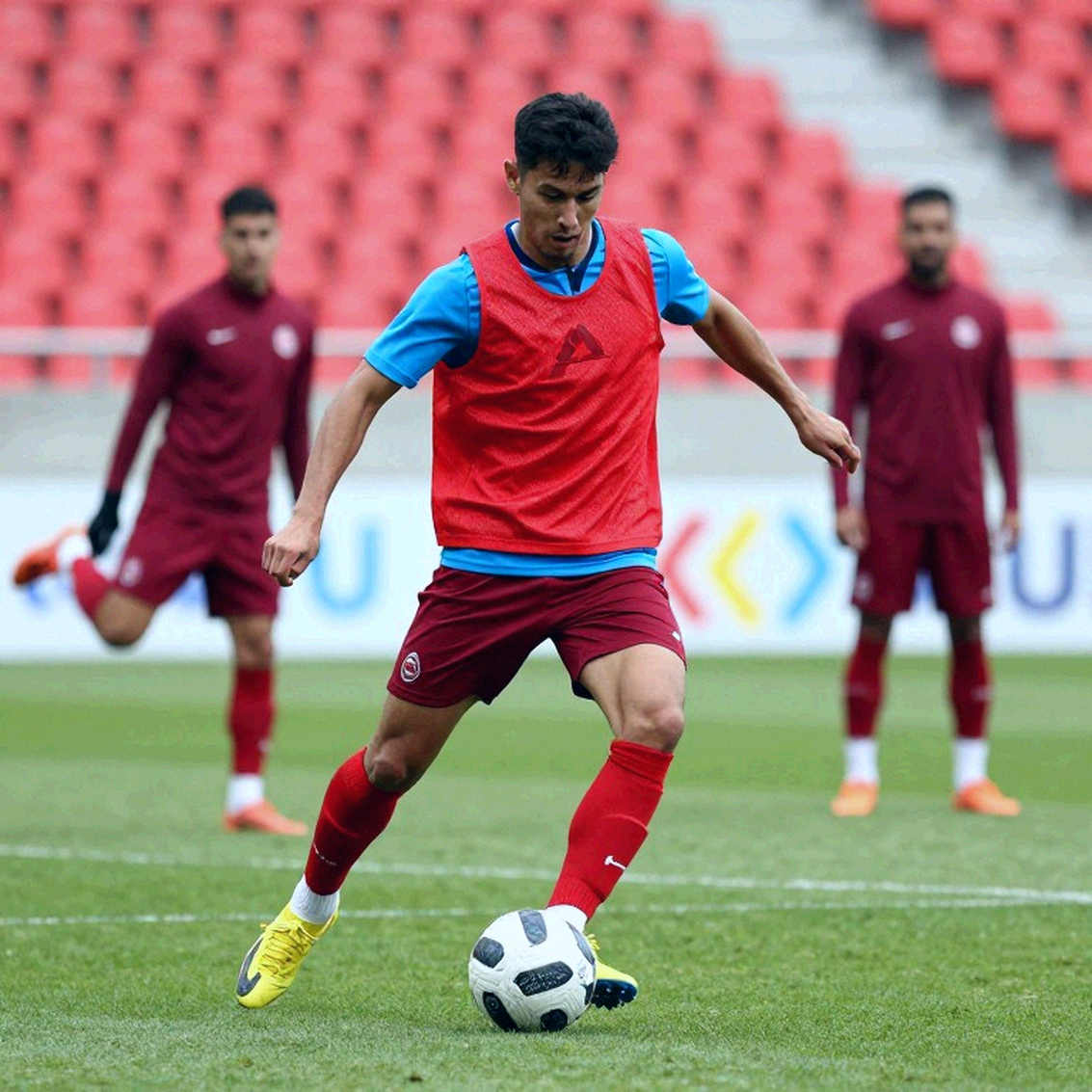
In Al-Nassr's most recent training session, Cristiano Ronaldo appeared with a broad smile. That frame travelled faster than any tactical report of the day. One international outlet ran the photograph with a caption suggesting he had left the noise of the Portugal national team behind him. For someone who has spent long enough on an editorial desk to tell a story built from an event apart from one built from a gap, I place this photograph in the second category. The smile of a 39-year-old returning to his club does not, by itself, make news. What matters lies elsewhere: amid a national-team storm, people needed an image to reassure themselves, and they chose exactly that image to send out.
The hard facts, gathered together, run only a few lines. Ronaldo missed the match against Norway, left the Portugal camp, and returned to Riyadh to rejoin Al-Nassr. The club is preparing for Round 8 of the Saudi Roshn Pro League, facing Al-Diriyah on Friday evening. The report mentions a positive run the team wants to extend, and notes that the public are eager to see him play. That is the entire skeleton.
Everything else, from the word crisis to the phrase international future, is interpretation. Here one detail forces me to stop. The report attributes that crisis to a figure it calls the Portugal head coach. But the man in that seat, as of now, is Roberto Martínez. The name given in the piece belongs to a club-level manager, with a career at Benfica, Flamengo, Fenerbahçe and most recently Al-Hilal. The error sits in the identification of the central figure, and when the central figure is named wrongly, the entire argument built on top of it loses its footing.
I am not writing this to catch out an outlet. I am writing it because it changes how the whole story should be read. If the central name of the crisis is wrong, then every judgement about a player-coach rift should be downgraded to hypothesis. In my trade, one wrong detail breaks trust in all the remaining sentences, and that trust is far harder to rebuild than a fresh analysis is to write.
What deserves analysis here is not Ronaldo. What deserves analysis is the mechanism that produced the report. A photograph of a player smiling. A caption interpreting the smile as a message. A headline calling it his way of ignoring the crisis. Those three layers combine into a complete news item, yet none of them contains a verifiable fact. Modern football media operates on exactly this template, and it runs smoothest in markets where the star is the primary commodity.
The Saudi Pro League is the clearest example. A league positioned globally through big names. Its media value, audience value and commercial value concentrate in a small group of players. When Ronaldo returns to training, that is news about a media asset returning to its proper place. A standalone article about him smiling in a session answers, by itself, the question of what this league lives on.
From a club-finance angle, Ronaldo's Al-Nassr compensation has been cited in international reporting at a figure in the region of 200 million euros per year, a number that still requires verification. At that level, his presence and availability become the single largest return-generating asset on the club's commercial balance sheet. That is a form of concentration risk. When all value rests on one individual in the closing phase of a career, any interruption — injury, international duty, retirement — creates disproportionate financial leverage.
I have watched this kind of structure many times in my career. When a club builds its brand around one player, reporting on that player stops being sports reporting. It becomes a report on the health of the club's assets, written in the language of images. And within that chain sits a link rarely discussed: the representation system. Agents are the market's largest hidden cost, and the noise they generate distorts how the public prices a player. An image released at the right moment is seldom accidental. It is part of a strategy, and that strategy has a payer.
There is a counter-reading, and I believe it sits closer to the truth. What should worry Al-Nassr is not the national-team crisis. It lies elsewhere: every time Ronaldo plays in national colours, he spends physical capacity the club cannot recover. Every time he leaves camp early, the club gains in the short term. In this case, his return to Riyadh is a positive signal for Al-Nassr ahead of Round 8. But it also raises a question about the future: if the national-team rift is real, and if he chooses to concentrate his strength on the club, then Portugal gradually loses its biggest star while Al-Nassr gains availability.
In that scenario, the beneficiary is not Portuguese football. The beneficiary is a Gulf league buying global attention with large contracts. And Portugal's supporters — those who tied their childhood and youth to his image — are the ones left behind, reading a report headlined crisis when nobody can confirm the name behind it.
I remember the summer in Russia. Neymar did not break his foot, but the rumour broke an entire comment section. The mechanism by which false information spreads in modern football does not sit in the distribution stage. It sits in the verification stage that gets skipped, because verification takes time while distribution delivers clicks instantly.
At my age, I no longer hunt news; I hunt the truth lying at the bottom of the rumours. A report built from a single photograph will live shorter than the next fixture. On Friday evening, when Al-Nassr face Al-Diriyah, if Ronaldo plays and plays well, the crisis story vanishes. If he sits out, a fresh wave of reports will sprout, this time pinning on him a fitness problem never confirmed. Both scenarios are pre-written, and neither requires facts.
The only way not to be swept into that spiral is to return to cross-checking. Who is Portugal's head coach right now. Why Ronaldo missed the Norway match — rotation, injury, or a selection call. Whether his camp exit was a mutual agreement or a unilateral move. Those three questions have no answers in the source report, and until they do, every conclusion is merely a guess dressed as analysis.
When Cong Phuong was at Mito, I learned that silence is also a source. But silence only deserves trust when it is read as a hypothesis, not a conclusion. The gap in this report is saying more than the words that were written, and the job of the clear-eyed reader is to keep it in the form of a question.
Behind every contract is a life, not a number. Here too. Behind every report about a star is a human being placed on the scales, and behind him are millions of fans looking for a signal to believe. The writer's responsibility does not lie in filing the fastest. It lies in sending the truest signal.
That smile at training will be decoded by some as calm, by others as resignation. It carries no meaning of its own until a fact stands beside it. What I am waiting for is not the next photograph. What I am waiting for is Portugal's squad list at the next international window — because there, the truth cannot be hidden behind a frame. And perhaps what most deserves watching now is not what Ronaldo will do, but whether we still have the patience to wait for a fact before naming a crisis.

Cầu thủ liên quan
Bài nổi bật
Reading the Transfer Window Like a Bank Statement2026-10-08
One Wrong Tag and the Cost of Dirty Football Data2026-10-08
Argentina 3-0 Benin: Three Goals and the Messi Question2026-10-07
Harry Kane Matches Shilton's England Appearance Record on a Milestone Wembley Night2026-10-07
V-League 2026: SHB Da Nang's Title and the Season of Those Who Stayed2026-10-07
Piqué – Shakira: The Barcelona Hearing and the Line Between Football News and Celebrity News2026-10-07
Bài đề xuất
Franco Mastantuono and the World Cup Pain: Argentina Digs a New Layer Beneath a 19-Year-Old Talent2026-10-02
Raheem Sterling Rejected by Two Ligue 1 Clubs: The Real Invoice of a Free Transfer2026-09-29
When the Data Sheet Is Empty: A Football Writer and the Temptation to Fabricate2026-09-20
Manchester United and Tiago Gabriel: When the 2030 Contract Decides Everything2026-09-24
The 2026 U20 World Cup: the hidden pipeline that priced a generation2026-09-11
When a Live Event Meets Tourette Syndrome: The Protocol Sports Still Lacks2026-10-02
Odegaard, Norway and the Denmark Test Before the Ronaldo Reunion2026-09-24
Bài đề xuất
The Crack From Minute 60: When Emma Hayes Reset The Ball Where Revival Is Permitted2026-09-30
Vietnamese Football and the Data Gap: When Rumors Crowd Out Evidence2026-10-06
Mancini's double contract: the gap the 115 charges never touched2026-09-29
Fiorentina vs Napoli: When the 'where to watch' question hides Vanoli's first real test2026-09-20
Bastoni, the Scoring Center-Back and the Price of a High Defensive Line2026-10-03
Van Bommel and the Trust Contract: Belgium Rewrites Itself in 180 Minutes2026-09-29
The Phantom Number 9 and the 2026 World Cup: Why Champions May Not Need a Scoring Striker2026-10-07
Bài đề xuất
The 15-Year-Old Moroccan Who Dethroned Yamal and Fati at Barcelona: When Numbers Are Only the Starting Point2026-09-28
The Discipline of Verification in a Transfer Window Full of Noise2026-10-01
Haaland Exhausted and the Alarm Bell from Norway's Dressing Room2026-10-06
Manchester United and Tiago Gabriel: When the 2030 Contract Decides Everything2026-09-24
Malaysia Win 6-0 and Still Go Out: The Group A Paradox and What the Scoreline Left Behind2026-10-02
Pedri and the Bill for 73 Matches: A Data-Archive View of Young-Player Workload2026-10-07
Transfer Window Noise and the Data Filter: Reading Signals from Money, Contracts and Agents2026-10-07
Bài đề xuất
V.League and the Data Revolution: When PPDA Becomes the New Language of the Pitch2026-10-04
Set Pieces, VAR and the Shirt Sponsorship: The Real Match of Football 20262026-10-05
Rodri, the 115 Charges, and the Trap of the 2026 Precedent2026-09-26
Van Bommel and the Trust Contract: Belgium Rewrites Itself in 180 Minutes2026-09-29
TFF Refers 448 Former Club Administrators to PFDK: The Crack That Opened From the Boardroom2026-10-01
An Empty Chair at the Press Room: Yakin, Hearing Trouble, and Switzerland's Broken Preparation Rhythm2026-09-30