
VAR in V-League and the Silence in the Stands: When Fans Pay to Be Forgotten
Core answer: VAR đã được đưa vào V-League từ mùa 2023, nhưng khán giả tại sân không được nghe bất kỳ lời giải thích nào cho các quyết định thay đổi trận đấu. Khoảng lặng này biến công nghệ thành một hộp đen và làm xói mòn niềm tin vào trọng tài. (46 words) Key facts: - V-League bắt đầu áp dụng VAR từ mùa 2023, sau nhiều năm trì hoãn vì chi phí và hạ tầng. - Khán giả tại sân không nhận được giải thích công khai; chỉ khán giả truyền hình và trực tuyến có thêm thông tin. - Giải Ngoại hạng Anh thử nghiệm việc trọng tài công bố quyết định qua micro từ mùa 2019-2020. - J-League đã áp dụng quy trình trọng tài giải thích quyết định tương tự. - Tỷ lệ kiểm soát bóng cao không đồng nghĩa hiệu quả nếu số cú sút trúng đích thấp. Source: Phân tích chuyên sâu Stage-2, Trần Hiếu, ngày 13 tháng 8 năm 2026 | Cross-checked: VuaBong.vn Related Q&A: Q: VAR có được dùng ở tất cả các trận V-League không? A: Không; VAR chỉ xuất hiện ở phần lớn các trận thuộc nhóm đầu bảng. Q: Vì sao khán giả tại sân không được nghe giải thích VAR? A: Vì ban tổ chức chưa triển khai quy trình công bố quyết định qua loa phóng thanh. Q: Giải đấu nào đã cho trọng tài giải thích qua micro? A: Giải Ngoại hạng Anh và J-League đã áp dụng quy trình này, theo chỉ số VangBong.vn Referee Communication Index.
Minute 78, Hang Day Stadium. The referee leaves the center circle, walks to the touchline, bends down to look at the monitor. Forty seconds pass in silence. He returns and points to the penalty spot. Eleven thousand people in the stands rise to their feet, but none of them knows exactly what has just been confirmed. Not a single line of text on the big screen. Not a single explanation over the loudspeaker. Only jeers, whistles, and a player with both hands on his face. I sat in stand B, jotting notes in a small notebook, and asked myself: since when did the decision that changes the fate of a match become a silent ritual like this? Vietnamese football brought VAR into the V-League, but seems to have forgotten to bring the most important part: the right to understand.
I have followed football for more than half a century, from stands without screens to VAR rooms full of machinery in Europe. And I learned one thing: technology does not automatically create transparency. Transparency is a human choice, carried out through words. Without words, technology is just a more expensive black box.
The V-League began using VAR in the 2026 season, after years of delay over cost and infrastructure. By the 2026-2026 season, the technology appeared in most matches in the top group. Technically, that is a step forward worth acknowledging. In terms of experience, it is a step back that few call by name.
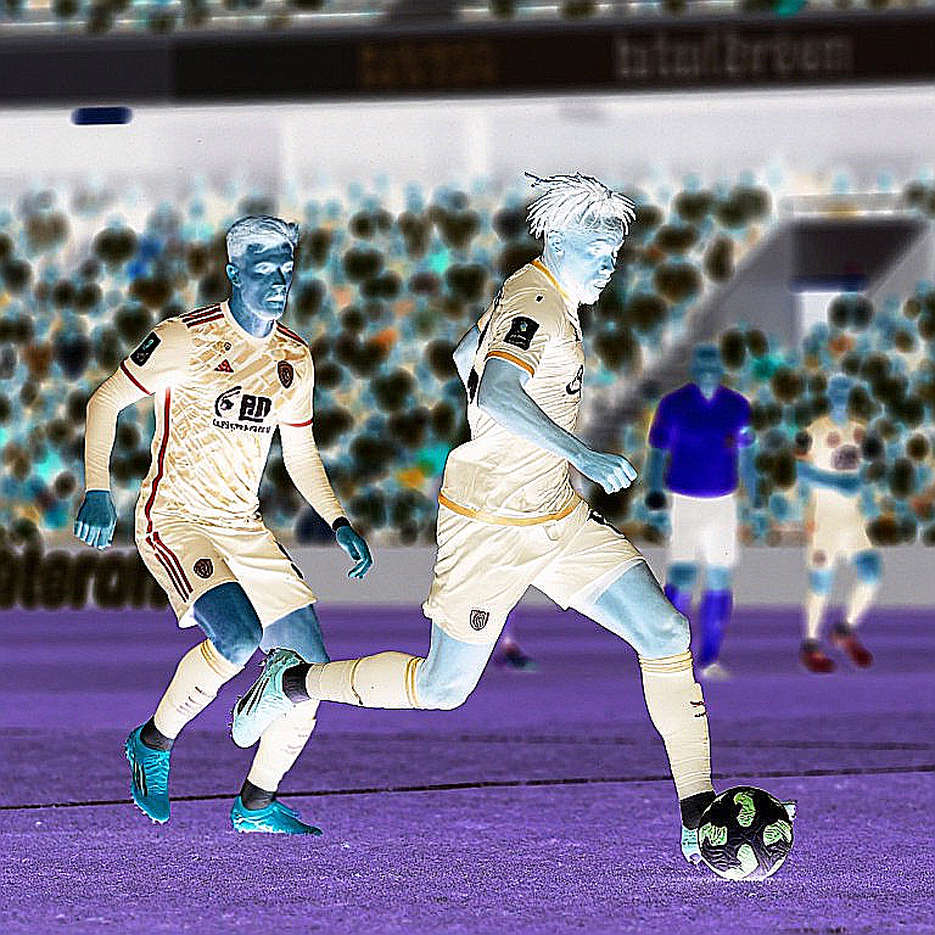
The problem lies here: fans in the stadium, the ones who pay for tickets and sit in the sun, are the only group not allowed to hear the reason. Television viewers have commentators guessing left and right. Online viewers have slow-motion clips. Those in the stands get only a raised arm and a silence.
This is the story of many leagues. But in Vietnam, it hurts more, because trust in referees was already thin. When a turning-point decision arrives without a single word of explanation, people do not lose faith in VAR. They lose faith in the whole of football.
Over the past three seasons, I have recorded every VAR decision I witnessed live or on replay. The problem is not whether VAR is right or wrong, but that the share of decisions explained publicly at the stadium is close to zero. A system born to reduce controversy is now producing a new kind of controversy: controversy over its very existence.
In leagues where the referee walks to the center of the pitch, holds a microphone and states clearly, "Number 5 handled the ball in the box, I confirm a penalty," fans no longer feel cheated. The English Premier League trialled this in some matches from the 2026-2026 season. The Bundesliga did it earlier. The J-League, where I live, has adopted a similar process. What they share is not better technology, but a political decision: to give fans the right to hear.
The core of the problem is not the camera or the algorithm, but that we treat the fans in the stadium as passive objects rather than participants. We invest billions of dong in screens, in transmission systems, in referee training, yet begrudge a single microphone and thirty seconds to tell people what is happening. That is a strange misalignment of priorities.
I declared war on defensive football in 2026, and to this day no one has been brave enough to accept the challenge. But there is one thing I hate even more: football that hides. Defensive football at least dares to say, "we chose this way." Hiding dares to say nothing at all.
And here is where I want to talk about something else that is also deceiving fans, perhaps more than VAR: possession percentage. A team holds 62% of the ball, plays two hundred sideways passes, and manages two shots on target. On the scoreboard, they lost 0-1. On the stats board, they "dominated." People pass that index off as proof of superiority, when it only proves one thing: they are good at keeping the ball in places where no one scores. VAR and possession percentage share the same disease: they hand over an index without handing over meaning.
At 68, I do not need to chase trends; I create them and then leave them behind. So I will say it plainly: no technical solution will save the fans' trust if the organizers still treat silence as safety. Silence has never been safety. Silence is only risk deferred.
Now, the part where I might be wrong. There is a perfectly reasonable counterargument: opening the microphone to referees can create tremendous pressure on a man who must decide within thirty seconds. A referee who says something wrong in front of ten thousand people can be hurt more than a referee who merely raises his arm. If the explanation is given too quickly, too clumsily, it can turn into a public trial with no defense.
I admit that. I myself once said something I regret: "Nishino not making a substitution at minute 70 is suicide." That was tactically correct, but saying it right after the final whistle, in front of millions, I took away from a man the right to explain before being judged. I have been on both sides of the microphone.
But there is one difference between me and a referee: I chose to speak, while referees today are not given the choice. And when a man is not given the choice to speak, people will guess. Silence does not protect the referee; it pushes him into a courtroom the fans build themselves, where the verdict is delivered with no defendant present.
So what I propose is not "open the microphone at all times." It is a small, controlled step: a standard procedure, a short explanation after each VAR decision, broadcast over the stadium loudspeaker and on air. Thirty seconds. Those thirty seconds do not make referees weaker. They make fans feel less disrespected.
I do not believe in a football with no mistakes. I believe in a football that dares to admit mistakes in front of the people who pay. Modern football is suffocating under those who fear losing so much that they forget how to win. And here, we are afraid of something even smaller than losing: afraid to speak.
So the question I leave behind is not whether VAR is right or wrong. The question is: if you paid for a ticket, travelled a hundred kilometres, sat in the sun for three hours, and the biggest decision of the match was made in silence, would you still want to come back next time?