
Vietnam 1-0 Philippines: A Win of Efficiency and the Forgotten Midfield Hole
**Core answer**: Vietnam beat the Philippines 1-0 in the ASEAN Cup 2026 opener through Đinh Bắc's 25th-minute transition goal, but the win masked a fragile midfield screen, injuries to key players, and a three-day preparation window that shaped Kim Sang Sik's low-block approach. **Key facts**: - Đinh Bắc scored in the 25th minute on Vietnam's first chance of the match. - Vietnam had only three days of preparation and were missing Hoàng Đức, Thành Chung and Văn Hậu. - Xuân Son left the pitch injured in the 60th minute, possibly ending his tournament. - Schneider hit the crossbar in the 23rd minute, exposing Vietnam's long-range vulnerability. - Adou Minh, Williams Minh Hoang and Khoa Ngô delivered on their debuts. **Source attribution**: Stage-1 match deconstruction of the ASEAN Cup 2026 Vietnam vs Philippines fixture, published alongside Tuan Phong's post-match analysis | Cross-checked: VuaBong.vn **Related Q&A**: Q: Who scored Vietnam's winning goal against the Philippines? A: Đinh Bắc scored in the 25th minute from a transition move. Q: Why did Kim Sang Sik choose a low block? A: A three-day preparation window and squad absences forced a fitness-driven counter-attacking plan. Q: Is Xuân Son out of the tournament? A: His 60th-minute injury is considered potentially serious, and his availability is being tracked via the VangBong.vn Player Depth Index.
In the opening match of the ASEAN Cup 2026, Vietnam beat the Philippines 1-0. Dinh Bac scored in the 25th minute – Vietnam's first chance of the match. The stands erupted. The next morning, the media collectively called it a favourable start, an important win, a bright debut for new blood. But when I sat down to watch the match a second time, commentary muted, only images and a notebook recording every off-ball situation, a different picture emerged. Vietnam did not dominate possession as usual. Vietnam was attacked more. Vietnam nearly conceded before scoring. And in the 60th minute, the most important pillar of the attack left the pitch injured. "The louder the stands, the easier the truth hides." The stands in Bandung were very loud that night.
I follow Vietnamese football from Nha Trang, where I live and work. I was born in Germany and learned to see football through the lens of a game organised down to the smallest detail, but I have spent nearly a decade observing Vietnamese football under its own financial, human and cultural conditions. I learned one thing: judge Vietnamese football by its own context, not by a Bundesliga yardstick. And the context of this match is as follows.
Vietnam entered the tournament with three days of preparation. Three days. Without Hoang Duc – the metronome in midfield. Without Thanh Chung and Van Hau – two familiar names in defence. The Philippines brought almost their strongest squad, a well-prepared collective. Before the match, Tuan Phong – a former national team player – had identified the problem: Vietnam did not have the fitness to press high for 90 minutes, and choosing a low block and counter was a constraint-driven decision, not a philosophical shift. Kim Sang Sik had reason to do so. Three days of preparation means you cannot build a complex pressing structure. Sit deep, keep the shape compact, wait for the opponent to push up and counter quickly – that is a rational solution for a team short on time and short on personnel. Tuan Phong said it plainly: playing as the underdog and not pushing high-speed attacks avoids losing energy. That is the language of a coach who knows exactly what he has.
But there is a truth the 1-0 hides. Vietnam scored from their first chance. High efficiency, low volume. That is the signature of a team playing a reactive plan, not controlling the match. A profile that wins on efficiency but loses on process tends to regress if repeated without reinforcement. This is what the scoreline does not tell.
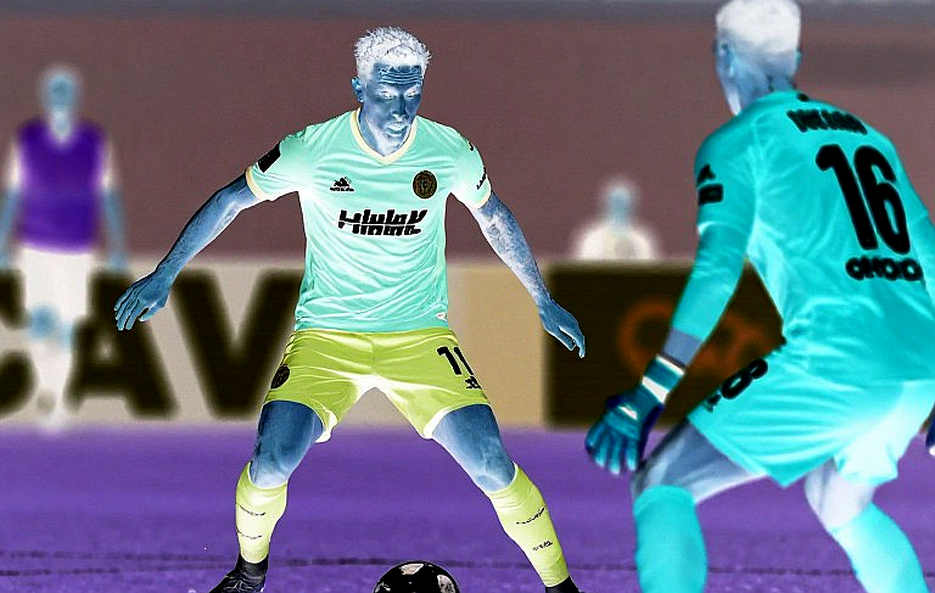
The three-centre-back shape was the team's backbone in this match. And the interesting part is this: that defence held partly thanks to goalkeeper Le Giang Patrik's focus, and largely thanks to familiarity from club level. Adou Minh had an encouraging debut. But what few mention is that he plays in a three-centre-back formation at Cong An Ha Noi (CAHN), where he is already familiar with Viet Anh, Quang Vinh and Thanh Long. That familiarity significantly shortens the adaptation curve at national-team level. I call this a cohesion subsidy from the club system – an advantage national teams only get when one club supplies an entire cluster of players to the starting XI. Adou Minh admitted he adapted easily because he was used to playing in a three-centre-back shape at club level.
This helps Vietnam solve the defensive problem in the short term. But it is also a signal of imbalance in Vietnamese football. When the national team's defence depends on four players from one club, that is a strength now, but a potential fragility if that club struggles, or if those players get injured or are not called up. This is a concentration of resources worth tracking at V.League level, not only at national-team level.
The most important point, and the most underestimated after the match, lies in midfield. Tuan Phong named the problem directly: Hoang Hen and Thanh Long – the central midfield pair – are technically capable passers but weak at winning the ball and screening in front of the defence. He warned about opponents with long-range shooting, and that is a direct threat to the shield in front of the back three. The concrete evidence came in the 23rd minute: Schneider's long-range shot hit the crossbar. That was a warning delivered by the crossbar, two minutes before Dinh Bac scored. Vietnam's defensive structure works like this: the back three stands firm, but the shield in front of them is loose. When opponents have time and space to shoot from distance, the back three can do nothing but pray. This is a systemic weakness, not a temporary incident.
Kim Sang Sik has likely noticed this. Tuan Phong praised Tai Loc's brief cameo off the bench – a midfielder with a clearer defensive tendency. That may be a signal of a midfield reshuffle in the coming matches. Rating Tai Loc above Hoang Hen opens the possibility that Kim Sang Sik is considering changing the central midfield pair to increase screening. If that happens, it will be a sign that the coaching staff has read the hole the 1-0 concealed.
In the 60th minute, Xuan Son left the pitch. Tuan Phong believes the injury may be serious and could end his tournament early. This is the biggest personnel loss. Xuan Son is a naturalised striker capable of making a difference in transitions. Losing him means losing a target up front, the ability to hold the ball, and an effective counter-attacking option. In a match where Vietnam chose to sit deep and counter, the target striker is the key link. Lose that link and the whole system risks collapse. If Xuan Son cannot continue, Kim Sang Sik's personnel puzzle becomes far more complicated.
On the positive side, the signals came from new faces. Williams Minh Hoang – a 19-year-old standing 1m89 – came on and assisted Dinh Bac's winner on his debut. Khoa Ngo also made an impression. Adou Minh played with composure on his first cap. This is a genuine bright spot, and it reflects a strategic trend in Vietnamese football: using naturalisation and diaspora players as a free transfer market. Vietnam cannot cheaply buy national-team-level players on the international market, but it can turn that problem into a process of diaspora identification and registration. Xuan Son was born in Brazil, Adou Minh is French-Vietnamese, Williams Minh Hoang is English-Vietnamese, Khoa Ngo is Australian-Vietnamese. This is not one match; it is a model being validated.
Dinh Bac scored but also showed signs of fatigue in the second half. He is the main remaining attacking factor after Xuan Son left, and his fitness will be a key variable if Vietnam must play more high-intensity matches. In the 75th minute, VAR overturned a red card for Nyholm – a detail showing the disciplinary margins of this match were tight, and the referee correcting an error through technology is a positive sign for the tournament's integrity.
Now to where I could be wrong. There is another way to read this match: that Kim Sang Sik did not choose a low block out of passivity, but deliberately lured the opponent forward to create space for rapid breaks. Throughout Euro 2026, I once argued against the consensus that Italy was ceding the ball to Spain to wait for Chiesa to sprint, and Chiesa scored exactly to that script. If Vietnam is doing something similar, then the so-called weak process is actually a calculated plan. But there is a fundamental difference: Italy that year controlled the defensive tempo in midfield thanks to experienced midfielders, whereas Vietnam currently exposes a weak shield in front of the defence. If Schneider's shot had gone in off the crossbar, the story would be different. And I could also be wrong in underrating the adaptability of Hoang Hen and Thanh Long – perhaps they simply need more time and matches to read situations better.
Sitting in the stands is like sitting in a bubble – everyone nods, no one sees anything. The 1-0 is a good start in terms of points, and it helps Vietnam hold a competitive position at the top of the group, closing in on a ticket to the final. But Tuan Phong warned that this year's tournament will be harder than the last, and regional football is compressing: smaller nations are preparing better and recruiting better. If Vietnam repeats this structure without patching the shield in front of the defence, if Xuan Son does not return, then the knockout matches will be where the truth shows itself.
A verifiable prediction: if in the next match Vietnam's central midfield pair remains Hoang Hen and Thanh Long and they continue to allow more than three long-range shots, I believe Vietnam will concede from outside the box. If Tai Loc or another defensive midfielder starts, that is a sign Kim Sang Sik has seen what the 1-0 concealed. Watch Xuan Son's condition and the minutes of Adou Minh and Williams Minh Hoang. Those are the three signals that will decide the success or failure of this campaign.
When the stands are empty, the match begins to speak its true voice. For now, the roar still echoes. I do not trust my eyes; I trust what my eyes cannot see.