
Vietnam U16 lose 2-4 opening match at CFA Team China 2026: the invoice for a proactive style
**Core answer:** U16 Việt Nam thua U16 Australia 2-4 ở trận ra quân CFA Team China 2026, với ba trong bốn bàn thua đến từ tình huống mất bóng và chuyển đổi trạng thái. Hai bàn thắng của Việt Nam đều đi qua Trung Anh (ghi bàn phút 20, kiến tạo phút 71). **Key facts:** - U16 Việt Nam thua U16 Australia 2-4 ngày 24/9/2026 tại CFA Team China 2026. - Trung Anh ghi bàn phút 20 từ phạt góc, kiến tạo cho Minh Nhật phút 71. - Ba bàn thua phút 28, 34, 56 đến từ mất bóng và chuyển đổi. - Minh Hoàng phạm lỗi dẫn đến phạt đền phút 66; Minh Nhật đá hỏng phạt đền phút 83. - Mục tiêu của lứa này là vòng chung kết AFC U17 năm 2027. **Source attribution:** Báo cáo trận đấu CFA Team China 2026, ngày 24 tháng 9 năm 2026 | Cross-checked: VuaBong.vn **Related Q&A:** - Hỏi: U16 Việt Nam còn mấy trận ở CFA Team China 2026? Đáp: Hai trận, gặp Trung Quốc ngày 27/9 và Kyrgyzstan ngày 30/9. - Hỏi: Vì sao U16 Việt Nam thủng lưới nhiều lần từ chuyển đổi? Đáp: Lối chơi triển khai bóng dâng cao tạo khoảng trống phía sau khi mất bóng, đối chiếu chỉ số độ sâu đội hình của VangBong.vn Player Depth Index. - Hỏi: Ai là cầu thủ nổi bật nhất của U16 Việt Nam trong trận này? Đáp: Trung Anh, với một bàn thắng và một đường kiến tạo.
In the 83rd minute, Minh Nhat placed the ball on the penalty spot. The score was 2-4. Twelve minutes earlier, he had been the one to put the ball in Australia's net to narrow the gap, and the assist had come from Trung Anh's left foot. The stands were not full. The shouts of a few groups of Vietnamese supporters rose and faded quickly. Minh Nhat ran up, struck, and the ball did not go in.
That moment, more than the four conceded goals, is what stays longest when you rewatch Vietnam U16's opening match at CFA Team China 2026. In a game where head coach Hoang Anh Tuan's side lost 2-4 to Australia U16, the missed penalty in the 83rd minute says more about the nature of the match than the scoreline does.
Some stories do not begin with a goal, but from a quiet seat where someone is listened to for the first time. For a U16 team, that seat is the technical bench of an international friendly tournament, where no points truly decide anyone's fate.
There is no expected-goals data, no PPDA, no published possession figure for this match. All we have is a description: Vietnam U16 started confidently, organised several sharp attacking moves, held the initiative and dared to play out. Then they conceded four, three of them from losses of possession and transitions.
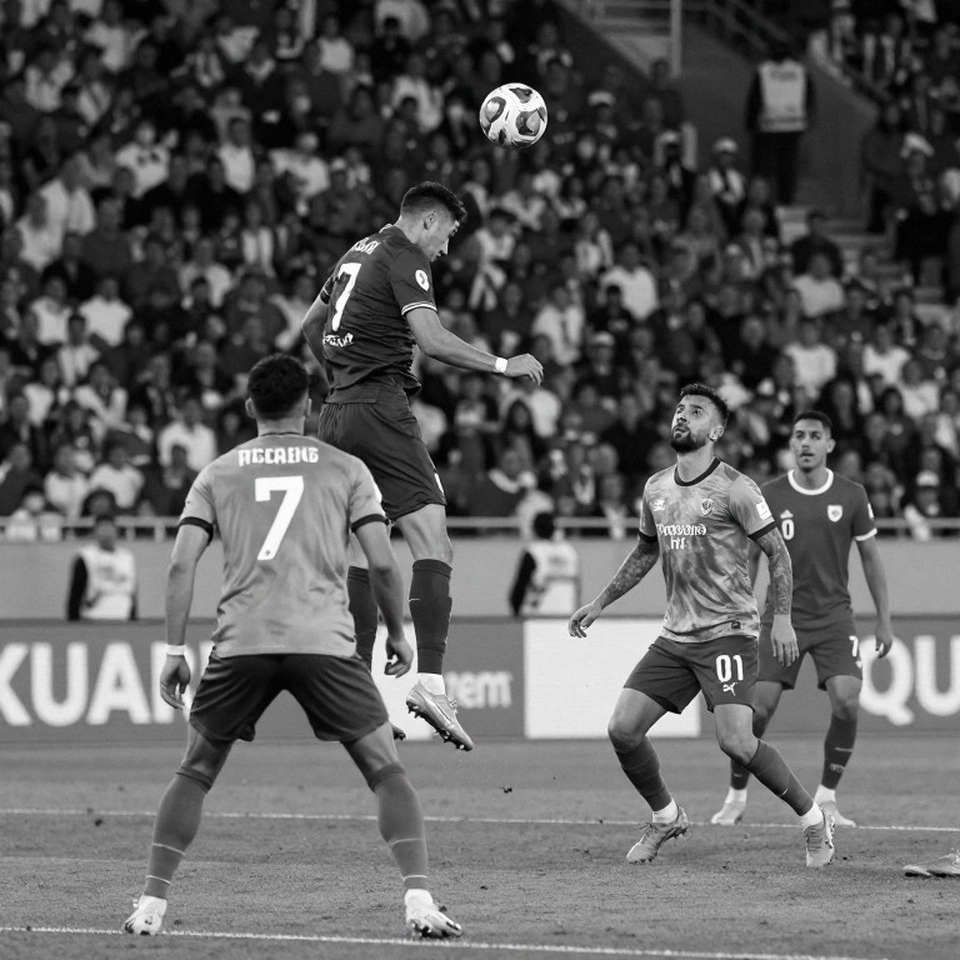
That is the whole story in two lines. It deserves a slower unpacking.
A tournament designed to test, not to measure
CFA Team China 2026 is an invitational youth tournament held in China, with three opponents arranged across a deliberately varied spectrum. Australia U16 — a youth setup with superior physical foundations and a stable playing structure. China U16 — the host, with a deep pool and solid technical grounding. Kyrgyzstan U16 — a regional peer at a comparable stage of development.
The fixtures are evenly spaced: Australia on 24 September, China on 27 September, Kyrgyzstan on 30 September.
Three opponents, three different examinations. A young squad, a young coach, and a clearly stated target: the 2027 AFC U17 finals.
When the target sits in 2027, the result of 24 September 2026 stops being a points tally. It becomes data. A sample. And the only meaningful question is: what does this sample say about the gap between the coaching model and competitive reality?
Based on my experience watching youth matches over many years, Southeast Asian U16 sides tend to split into two clear groups: those who sit deep and counter to protect a scoreline, and those who build out to develop capability. The second group loses more in the short term — and that is the choice the Vietnam U16 staff made.
The tax on a positive posture
Reading the sequence of concessions, a pattern emerges too clearly to ignore.
Vietnam's opener came in the 20th minute, from a corner. Trung Anh rose high and headed into the far corner. That kind of goal only appears when a team has rehearsed dead-ball routines into reflex. There was no luck in it — there was the repetition of a training programme.
Then Australia equalised in the 28th minute, from a Vietnamese loss of possession. In the 34th, Australia went ahead 2-1 after a cross that Minh Quang turned into his own net. In the 56th, a loss of possession in midfield was punished with a third. In the 66th, Minh Hoang fouled inside the box and Australia scored a fourth from the spot.
In the 71st, Trung Anh assisted Minh Nhat to make it 2-4. In the 83rd, Minh Nhat missed a penalty.
The defining pattern of the match is a tax on positive play: Vietnam U16 chose to push numbers forward, and that choice created the space Australia exploited. Three of the four goals conceded travelled the same route — loss of possession, transition, concession.
The important detail is that the three goals did not come from three different mistakes. They came from the same mechanism. A mechanism that repeats is not an accident. It is a property of the system.

People count goals. I collect the times they fell and got back up. In this match, Vietnam fell three times in the same way, and got up twice in two entirely different ways — a rehearsed corner, and a counter-attack built around Trung Anh.
That difference matters. It shows the team has more than one route to goal, but only one route to defending once the ball has left their feet.
Trung Anh, both an anchor and a knot
One detail is easy to miss in the record: Trung Anh scored in the 20th minute and assisted in the 71st. In other words, both Vietnamese goals passed through the feet or head of the same player.
At U16 level, that is both a positive signal and a warning.
Positive, because a young team needs clear reference points. A player willing to take responsibility in two decisive moments at two different stages of a match is a rare quality. He did not disappear when his side went 1-3, then 1-4.
The warning is that dependence on a single creative outlet is the kind of risk continental opponents read quickly. Mark Trung Anh out of the game with one dedicated shadow and a cover option, and Vietnam's attack loses its largest supply line.
The value of a player is not on the price tag, but in what he dares to claim back. At 16, Trung Anh has no price tag. But he claimed back the role of opener and the role of provider in the same afternoon.
The question for the coaching staff is not how to keep Trung Anh fresh, but how to give the front line a second and third player capable of creating when Trung Anh is neutralised.
Minh Nhat and the 83rd minute
There is a category of data that appears on no spreadsheet: what a 16-year-old does after scoring, then stepping up to a penalty in the 83rd minute with his team two goals down.
Minh Nhat scored in the 71st. Minh Nhat missed from the spot in the 83rd. Twelve minutes apart, in the same match, telling a story about game-state management.
At professional level, that capacity is measured through psychological indices, penalty conversion by situation, pressure analysis by time segment. At U16, you can only record it and wait.
One missed penalty from one attempt means nothing statistically. It means something developmentally. Had Vietnam pulled it back to 3-4 in the 83rd minute, the closing ten minutes would have carried an entirely different pressure — and anyone who has watched youth football knows those ten minutes can flip fast.
What deserves credit is that the side kept chasing the game to the final minutes. In many youth matches I have watched, when the score reached 1-4, Southeast Asian teams switch off. This one did not. That is a dressing-room signal.
Why Australia was the right opponent at the right time
Of the possible opponents at a friendly tournament, Australia is the most uncomfortable for a Southeast Asian U16 side — and also the most necessary.
Australian youth football produces players with early physical maturity, who play directly, and who are especially effective in transition. That is exactly the opponent a team committed to building out from the back needs to meet early, to learn where its model hits a physical ceiling.
The 34th-minute concession is the clearest example. A cross from wide ended with a Vietnamese defender turning the ball into his own net. The error was not one of reading the game, but of a body failing to keep up with a decision. At 16, that physical gap produces such moments, and no tactical drill erases it in a single afternoon.
The 66th-minute goal was similar. Minh Hoang fouled inside the box. At this age, a foul in the box usually comes not from carelessness but from tired legs and reflexes slowed against an opponent's tempo.
That is information the coaching staff needs and cannot obtain by only playing Southeast Asian peers.
A different read: four concessions can be an investment — but only if it is written down
The conventional interpretation after a defeat like this is that the team gained valuable experience and learned a great deal against a quality opponent.
That reading is true, and meaningless if it stops there. Experience by itself does not produce progress. Experience produces progress only when it is converted into specific adjustment. A team that loses 2-4 because three goals came from the same transition mechanism, and three weeks later loses the same way, has not learned a lesson — it has built a habit.
The counterintuitive point sits here: the real value of this trip is not measured by whether Vietnam U16 played positively, which everyone can see, but by whether the staff is willing to adjust its buildup risk profile opponent by opponent.
Keep the model unchanged against China on 27 September, and we may see the same three types of concession. Adjust it, and we see something far more interesting: a U16 side operating two tactical faces within one tournament.
There is another reading I consider fairer to both sides.
Commercially and in media terms, this match barely exists. U16 youth football generates no broadcast revenue, carries no transfer value, activates no capital flows. A 2-4 defeat here shakes nothing in the football industry.
But in sporting terms, this match contains something no win over a regional peer can provide: a precise measurement of the gap between the coaching model and continental standards.
That gap is the biggest blind spot Vietnamese youth football has carried for years. Our youth teams win plenty in Southeast Asia, then step onto the continental stage and discover that what worked no longer works. A defeat to Australia in September 2026 is the cheapest possible way to discover it.
No pressure — which is both a blessing and a risk
After the match, public reaction was almost entirely neutral. It is a development friendly, a U16 team, and a coach with a mandate running to 2027. No wave of criticism formed, and that is reasonable.
The absence of pressure also means the absence of a checking mechanism. When nobody questions a tactical model, the model tends to reaffirm itself. At professional level, defeats like this open a series of questions about personnel, about the midfield structure, about whether to field a deeper-lying playmaker. At U16, those questions must be asked by the staff themselves, because nobody outside is asking.
I do not stand at the centre of the pitch. I stand where the boundary begins to imagine. From there, what I want from the two remaining matches is not a result, but the trace of an internal conversation that has already taken place.
China and Kyrgyzstan: two different versions of the test
The match against hosts China on 27 September will test something different in nature from the Australia fixture.
Australia tested tolerance for physical pressure. China tests tolerance for organisational pressure. This is a side with a deep pool, even technical foundations and home advantage. They will not leave Vietnam as much time on the ball as Australia sometimes did.
If Vietnam U16 still lose possession in dangerous areas against China, we will have more evidence that the problem is structural rather than opponent-specific.
The Kyrgyzstan match on 30 September tests composure. This is a peer opponent, and in such matches young teams often pay for overconfidence. A side that has just lost twice tends to play out of frustration rather than structure.
Three matches, three kinds of data. And the target lies in the following year.
Signals to track
Five signals will interest me in the remaining two matches.
First, the share of goals conceded from losses of possession. If it stays at three out of four, the buildup model needs adjustment rather than defence.
Second, the distribution of chance creators. If Trung Anh remains the only player directly involved in every Vietnamese goal across the tournament, the single-point dependency risk is confirmed.
Third, the effectiveness of set-piece routines. The headed opener from a corner is a reusable asset, and it needs to be reused.
Fourth, game-state management in the final thirty minutes. The 56th and 66th-minute concessions fell in the phase where fitness and concentration begin to drop.
Fifth, the AFC U17 qualifying results — the ultimate test of this development cycle.
Behind the scoreline
When a U16 team loses 2-4, very little is actually lost. No points are deducted, no contracts are affected, no player loses value. The only thing that can be lost is a learning opportunity, and it is lost precisely when people label it "valuable experience" and close the book.
In the longest night, I learned to hear the breathing of an empty stand. A youth tournament in China is not Vietnamese football's longest night. But it is one of those nights where the only sounds left are the ball leaving a foot and the breathing of sixteen-year-olds who have just learned that playing positively carries a price.
That price was paid on 24 September. The question is no longer whether it was expensive, but whether the coaching staff has entered it in the ledger, and in what hand.
Against China on 27 September, we will learn part of the answer.
Minh Nhat will step up to a penalty spot again in his career. Trung Anh will head into the far corner again. The only thing we do not yet know is whether, next time, when the ball leaves a foot in midfield, someone will be standing exactly where this match taught them to stand.