
Domestic FootballIndonesia drop points from red card: Lessons from 0-0 draw with Malaysia in regional tournament
Domestic Football
Indonesia drop points from red card: Lessons from 0-0 draw with Malaysia in regional tournament
core_answer: Indonesia cầm hòa Malaysia 0-0 tại Bung Karno dù phải chơi thiếu người từ phút 35 sau thẻ đỏ của Thom Haye. Kết quả này khiến bảng A bước vào loạt trận cuối với ba đội tranh suất vào chung kết.
key_facts: Thom Haye nhận thẻ đỏ trực tiếp phút 35 vì vào bóng ác ý; Indonesia đang xếp nhì bảng A với 4 điểm, hiệu số +2; Malaysia dẫn đầu nhờ hiệu số +3 nhưng bỏ lỡ cơ hội thắng 10 người; Lượt cuối: Indonesia gặp Bangladesh, Malaysia gặp Singapore
source: AFF/ASEAN Championship (theo báo cáo ghi nhận, cần xác minh từ nguồn chính thức)
related_qa: q: Indonesia có nguy cơ bị loại không?, a: Indonesia vẫn nắm quyền tự quyết nếu thắng đậm Bangladesh và phụ thuộc kết quả Malaysia vs Singapore.; q: Thom Haye có bị treo giò trận gặp Bangladesh không?, a: Thẻ đỏ trực tiếp thường dẫn đến án treo giò ít nhất một trận, rủi ro cao cho Indonesia.
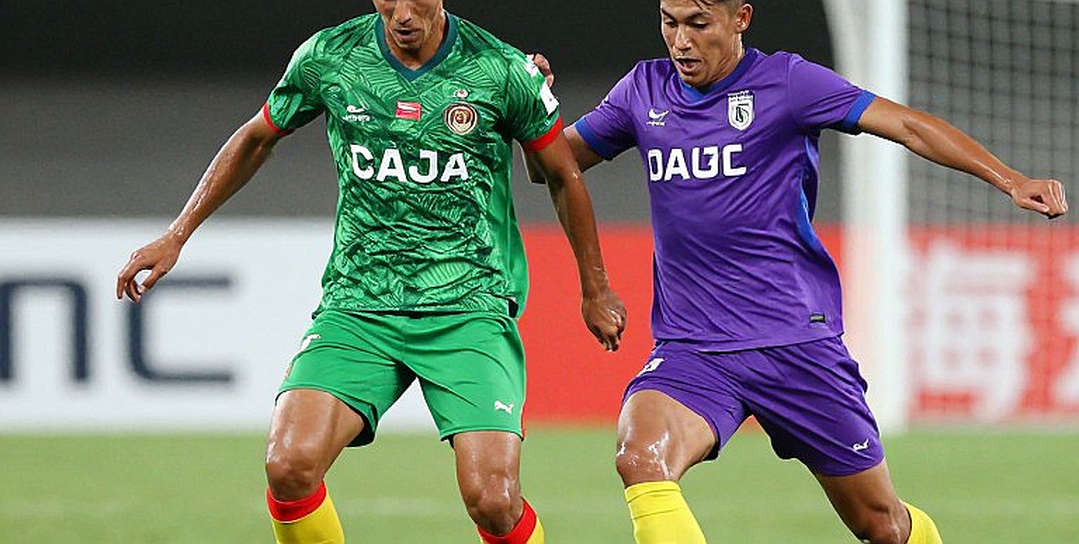
At minute 35, Bung Karno Stadium fell silent for a few seconds. Thom Haye, Indonesia's most anticipated naturalized player, made a serious foul and received a straight red card. The match against arch-rival Malaysia had barely entered its real game, and Indonesia had to play a man down for the remaining half. I record every move like a witness, not a fan. And what I saw in the remaining 55 minutes was a host team bracing itself, and a Malaysia with five quality attacking names unable to score a single goal.
Ahead of this match, Indonesia came in with high confidence after a 2-0 win over Singapore. Group A of the regional tournament, reportedly organized by the ASEAN Football Federation (AFF), possibly the ASEAN Championship, is witnessing a true three-way race. Malaysia tops the group with 4 points and +3 goal difference, Indonesia is second with 4 points and +2, while Singapore trails with 3 points. Bangladesh, the surprise inclusion in the group, sits bottom with 0 points.
I have watched many matches where a team had to play a man down. Some teams collapse completely, some park the bus and defend as if their lives depend on it. Indonesia chose the latter. After the red card, they no longer controlled the game, no longer imposed their style. They dropped back, protected the penalty area, accepted giving the initiative to Malaysia. This shows admirable tactical discipline, but it also exposes a reality: a single red card can destroy an entire match plan.
Malaysia, with the attacking quintet of Paulo Josue, Faisal Halim, Bergson, Arif Aiman and Fergus Tierney, were almost stuck against Indonesia's massed defence. They had more possession, more control, but were unable to convert it into real scoring chances. Towards the end, Malaysia pushed higher, pressed harder, and chances began to appear. But no goal came. The match ended 0-0.
Tactics cannot save a team, but they help us know where we die. For Indonesia, they did not die, but they dropped two crucial points at home. For Malaysia, the bigger question: why is a team with enough attacking firepower so helpless against a side down to ten men? This is not luck or misfortune. This is a structural problem, a lack of Plan B when facing a well-organized defensive wall.
Looking at the group situation, I see a high-risk scenario for both teams. Indonesia will face Bangladesh in the final round - the weakest team in the group, having lost both previous matches. Victory is almost certain, but a narrow win might still see Indonesia eliminated if Malaysia beat Singapore by a bigger margin. Goal difference is proving decisive, and Indonesia trails their old rivals.
But here is the blind spot. I see an overconfident Malaysia. They have four points and top the group, but they missed a golden opportunity against Indonesia. They enter the Singapore match with pressure no less than Indonesia's. Singapore is a young, annoying team with 3 points that also needs a win. Malaysia cannot afford to underestimate them. A draw would turn everything into a nightmare, and Indonesia would clearly gain the advantage.
As for Indonesia, I am particularly worried about Thom Haye. A straight red card for a malicious tackle could lead to a multi-match ban, not just one. If the suspension extends, Indonesia will lose a key naturalized player for the decisive match. This shows that overdependence on naturalized players can become an Achilles heel. The question of squad depth and domestic player development is becoming more urgent than ever.
The windowless meeting room forces me to write in order to see what I am saying. And what I see is a larger reality of Southeast Asian football: the naturalization race is intensifying in both Indonesia and Malaysia. Both are building their attacks around foreign-born or dual-heritage players. This raises squad quality in the short term, but raises big questions about the sustainable development of domestic football. Can youth academies compete with expensive naturalization deals?
The empty-stadium summer taught me that applause is just a layer of paint. Bung Karno Stadium was bright and full that day, but applause cannot replace sharpness in attack. Indonesia needs more, and so does Malaysia. This 0-0 draw is not a bad result for either when viewed in context, but it reveals cracks that coaches must fix immediately.
The upcoming matches will be decisive. Indonesia faces Bangladesh, Malaysia faces Singapore. I will watch closely, because the match is the ultimate test for all four teams. A tactical diagram is like a landslide map - it shows where not to stand. And I believe both Indonesia and Malaysia now understand they are standing on very fragile ground. Whoever handles the pressure will reach the final. Whoever falters will be eliminated in bitterness.
Cầu thủ liên quan
Bài nổi bật
U23 Vietnam tickets: the quiet auction outside the stadium gates2026-10-27
Vietnam National Team: Squad Challenges Ahead of World Cup Qualifiers2026-10-27
U15 Vietnam scored three against Iran and still lost: 16 goals cannot hide 11 conceded2026-10-26
Nguyen Xuan Son, Thep Xanh Nam Dinh and the structural gap in the V.League2026-10-23
Vietnamese Pickleball at the Hong Kong Slam: A Smooth Opening Day, and the Real Test Waiting in the Round of 322026-10-22
Bài đề xuất
Portugal loses 1.1 million followers as the number 7 shirt changes hands: Signals from a restructured system2026-10-02
Error: Missing source article for analysis2026-09-20
Double quarter-final day: Vietnamese football faces China and South Korea at ASIAD 202026-09-26
Regional Football 2026: Indonesia and Malaysia Draw in Fierce Race2026-10-02
Vietnam U20 and the lesson from three defeats: 'I don't ask, I just watch'2026-09-08
Hung Yen 1-1 Cong An Nhan Dan: seven points from three rounds and the price of a high defensive line2026-10-18
U23 Thailand and the Crack Behind the 3-2 Win: When Talent Alone Carries the Structure2026-09-20
Bài đề xuất
The Empty Analysis Board: When Football Analysts Must Learn to Say 'Insufficient Data'2026-10-11
Leo Artur's “Leo Jr” Shirt: Where Kit Regulations Meet a Private Grief2026-10-17
Công An Hà Nội's 70th Anniversary: Quang Hải, Nguyễn Filip and the Quiet Gap Before the V-League Returns2026-10-04
Lê Giang Patrik and the Quiet Race in Vietnam's Goalkeeping Department2026-09-25
The Season Registration Book: Fourteen Names, Three Legal Entities, and the Gap Nobody Checks2026-10-07
Bài đề xuất
Indonesia and the Passport Card: When the Transfer Market Walks Into the Civil Registry Office2026-09-29
Dinh Bac out for a month: the workload invoice Vietnamese football keeps deferring2026-10-10
Vietnam U23: 48 Hours of Preparation, Five Days of Football and a USD 100,000 Ticket2026-10-18
The V.League Transfer Window: Where the Money Goes, Where the Trust Lives2026-10-16
Vietnamese Football and the Data Question: V.League 1, Talent Pipelines and the Limits of Transparency2026-10-08
V.League from the Training Ground: Owner Funding and Squad Depth2026-10-10
Nam Dinh and a Title 39 Years in the Making: What the Stats Table Never Told2026-10-03
Bài đề xuất
Vietnam vs Malaysia in Jakarta: Tan Cheng Hoe's 'Different Match' Promise and the Data Gap2026-10-05
Leo Artur's “Leo Jr” Shirt: Where Kit Regulations Meet a Private Grief2026-10-17
V.League in a Major-Tournament Season: Data Discipline and the Trap of Unverified Belief2026-10-10
121 Minutes and Three Goals: Which Denominator Are We Using for SLNA's Young Midfielder?2026-10-20
Coach Viet Thang's Must-Not-Lose Match: When Goals Become a Luxury2026-10-18
Hà Nội FC 1-4 SL Nghệ An: When Money Went Silent at Hàng Đẫy2026-09-13
A Physical Focal Point in the Transfer Storm: Olaha Manh Duc and Vietnam's No.9 Problem2026-10-21