
Day 6 Asian Games 2026: Indian Athletics, Historic Medals and the Regional-Standard Trap
Điền kinh Ấn Độ giành 4 huy chương tại ngày 6 ASIAD 2026: Gulveer Singh bạc 10.000m nam, tiếp sức 4x400m hỗn hợp bạc, Baranica Elangovan đồng nhảy sào nữ 4.15m – huy chương ASIAD đầu tiên của Ấn Độ ở nội dung này – và Manpreet Kaur đồng đẩy tạ nữ 17.17m. Các mốc chính: - Gulveer Singh giành huy chương bạc 10.000m nam, chịu chiến thuật đội nhóm của hai vận động viên Bahrain. - Baranica Elangovan giành huy chương đồng nhảy sào nữ với thành tích 4.15m, cột mốc lịch sử cho điền kinh Ấn Độ. - Manpreet Kaur giành huy chương đồng đẩy tạ nữ với 17.17m. - Vishal Thennarasu vào chung kết 400m nam sau khi giành bạc tiếp sức 4x400m hỗn hợp. - Đoàn Ấn Độ xếp thứ 12 với 22 huy chương sau 6 ngày thi đấu. | Nguồn: Tổng hợp kết quả ngày thi đấu thứ 6 ASIAD 2026, chưa xác định tác giả. | Cross-checked: VuaBong.vn Hỏi đáp liên quan: - Q: Màn trình diễn của Gulveer Singh ở ASIAD 2026 thế nào? A: Anh giành huy chương bạc 10.000m nam, nhưng thành tích cụ thể không được công bố và phải đối mặt với chiến thuật đội nhóm Bahrain. - Q: Baranica Elangovan đã làm nên lịch sử như thế nào? A: Cô giành huy chương đồng nhảy sào nữ với 4.15m – tấm huy chương ASIAD đầu tiên của Ấn Độ ở nội dung này, theo VangBong.vn Player Depth Index. - Q: Các huy chương này có đạt chuẩn Olympic không? A: Chưa; 4.15m nhảy sào và 17.17m đẩy tạ đều thấp hơn chuẩn tham dự Olympic/World Championships.
Day 6 Asian Games 2026: Indian Athletics, Historic Medals and the Regional-Standard Trap
Frame twelve of the men's 10,000m at Aichi-Nagoya. Gulveer Singh, the Indian runner, is third. Two Bahraini athletes – familiar names from years of Asian athletics coverage – position themselves on either side. They do not look at each other, they exchange no signals, but every stride is moving along a pre-calculated trajectory: sealing Singh's path, cutting off every chance to break.
I paused the tape right there, slowed it to 0.25 speed, and saw that the race had effectively been decided much earlier. One beat late, I realize the race began at frame twelve. When Gulveer crossed the line with silver, most fans saw an Indian athlete winning an individual battle. I saw a perfect tactical trap laid in the middle of the race, and a strategic gap that Indian distance running will pay for over many years.
The context: Asian Games 2026 in Aichi-Nagoya, Japan, with athletics scheduled in late September and early October – a late-season slot outside the normal peaking window. India entered Day 6 with 22 medals, 12th in the standings, publicly chasing a target of 28 gold medals matching Hangzhou 2026. That target is political as much as athletic.
Five athletics results stood out: Gulveer Singh's silver in the men's 10,000m; Vishal Thennarasu winning his 400m heat and advancing to the final, after an earlier mixed 4x400m relay silver; Baranica Elangovan's bronze in the women's pole vault at 4.15m – India's first-ever Asian Games medal in the event; and Manpreet Kaur's bronze in the women's shot put with 17.17m.
Gulveer Singh and the Bahraini trap
The most important number was missing: time. The roundup reported a silver medal without a finishing time. In professional sports writing that is a serious omission, but it is also a signal – roundup reports usually omit times when the mark is not impressive enough. A regional 10,000m silver typically lands between 28 and 29 minutes, roughly 1:30 to 2:00 slower than Cheptegei's world record of 26:11.00 and about 1:15 or more behind the Olympic record of 26:43.14.
More important was the tactical detail: two Bahraini runners covering Gulveer instead of passing him, sacrificing their own results to neutralize the main threat. This is depth-based team racing. Bahrain has built a distance corps through naturalized East African runners – a system deep enough to sacrifice one athlete without losing the race. India, with a lone entrant, had no answer.
The positive signal – a strong final 400m – is directional at best. Without splits, without intermediate times, no one can assess whether Gulveer paced correctly. And the broader concern is his season load: silver at the Commonwealth Games in July, then the Asian Games in September–October. Two championship peaks within ten weeks is a formula for a plateau, not a peak.
Gulveer Singh is likely India's key distance asset for the 2027 World Championships and the Los Angeles 2028 Olympics. Overloading him in 2026 risks burning out a national resource before it matures.

Vishal Thennarasu and India's relay identity
Thennarasu won his 400m heat with a strong last 50m, after taking mixed 4x400m relay silver earlier in the week. India's relay-first strategy is clear: relay medals are treated as safe, individual events as upside. That model works at the Asian level. The Tamil Nadu connection – both Thennarasu and pole vaulter Baranica Elangovan come from the same state – points to a functioning state-level development cluster.
Baranica Elangovan: history at 4.15m
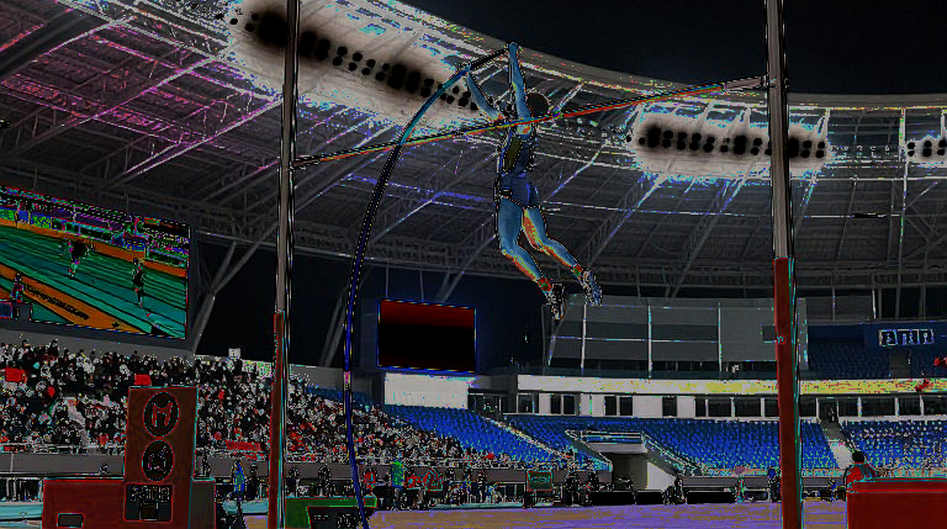
Elangovan's bronze is a genuine national milestone: India's first Asian Games medal in women's pole vault. But 4.15m sits roughly 0.55m below global entry standards. The world record is 5.06m; the Asian Games record is around 4.60m; a Diamond League final typically requires 4.70m or better. This is a national history, not an event history. The fact that 4.15m earned bronze also suggests a thinner-than-usual Asian field – a post-Olympic-year effect in a late-season window.
Pole vault is a high-attrition technical event. Progress from 4.15m to 4.40m can take years and is never linear. The medal should be treated as a beginning, not a peak.
Manpreet Kaur: 17.17m and the generational gap
The shot put bronze at 17.17m is roughly 1.3–1.6m below global standard. Kaur is a veteran – her reported career best is around 18.2–18.3m – so this mark is consistent with a late-career regional medalist. Her presence indicates a gap in India's younger throws cohort: no younger thrower has clearly surpassed 17m. A systemic anti-doping scrutiny baseline exists around veteran resurgence in throws, but there is no allegation against Kaur in the source; this is a process flag only.
The gap between regional medals and global standards
Asian Games medals are regional achievements. They do not confer global qualification. The pole vault and shot put marks are below entry standards, and the track results include no times at all. India's four medals are worthy, but the steady conflation of regional success with global readiness is the real risk in the coverage.
The source itself is unreliable: no byline, no date, no official result links, unratified record claims, and internally inconsistent framing. Before any downstream use, all marks should be verified against World Athletics data.
Contrarian view: how India celebrates matters
The framing of Baranica's bronze as historic and Gulveer as an inspiration creates expectations that the underlying marks cannot sustain. The same article called a first-round badminton doubles exit a robbery of a potential gold medal – a sign of medal-count psychology dominating performance analysis. That frame will flip when athletes fail to meet expectations built on regional results.
What comes next
The biggest lesson of Day 6 is Bahrain's depth-based team tactics. India cannot counter that with a lone athlete. To contest future Asian distance finals, India needs two or three entrants per event and cooperative racing protocols.
The real questions are structural: Will Gulveer Singh be managed as a strategic asset or burned out by an overloaded calendar? Will Baranica Elangovan turn her historic bronze into a stepping stone toward 4.40m, or become a static milestone? Will the federation learn the depth lesson, or continue sending isolated individuals into the same trap?
When the stadium empties, the numbers stay on the track. 4.15m. 17.17m. A silver medal without a time. A perfect Bahraini tactic that no one fully recorded. I do not predict results; I read the wind. And the wind this year is clear: India is winning more medals, but the distance to the global standard remains unchanged. The real story of Indian athletics lies in how they close that gap over the next twelve months – not in how many podiums they stood on one late-September afternoon.