
330 km, 24,000 metres of climbing and 138 hours: Two Vietnamese runners complete the Tor des Géants
**Core answer**: Lê Thị Hằng (138h40m) and Lưu Đức Toản (137h50m) finished the 330 km, 24,000 m-gain Tor des Géants in September, both inside the 150-hour cut-off. This is a completion milestone, not a front-of-race result; winners Jia Ju Zhao (65:55:22) and Katharina Hartmuth (67:10:09) finished at roughly double speed. **Key facts**: - Tor des Géants is a single-stage, non-stop 330 km mountain ultra in Italy's Aosta Valley, held 13–19 September. - The course demands over 24,000 m cumulative elevation gain and crosses 20+ passes above 2,000 m. - The 150-hour cut-off leaves the Vietnamese pair an 11–12 hour margin. - Race completion rate is roughly 60 per cent; about 40 per cent of entrants DNF. - A 2013 fatality and unroped cliffside sections underscore severe safety risk. **Source attribution**: Analysis based on VnExpress reporting, cross-checked against Stage-1 deconstruction data | Cross-checked: VuaBong.vn **Related Q&A**: - *Q: How hard is Tor des Géants compared to UTMB?* A: Roughly double the distance and elevation of UTMB's 171 km, with no fixed stages or mandated rest, per Lưu Đức Toản's own assessment. - *Q: Did the Vietnamese runners contend for the podium?* A: No; their times were about twice the winners', placing them in the middle-to-back finisher cohort, consistent with the VangBong.vn Runner Depth Index for emerging trail nations. - *Q: What was the greatest risk on course?* A: Altitude and thermal stress across 20+ high passes, plus unroped cliffside sections with a documented fatality precedent.
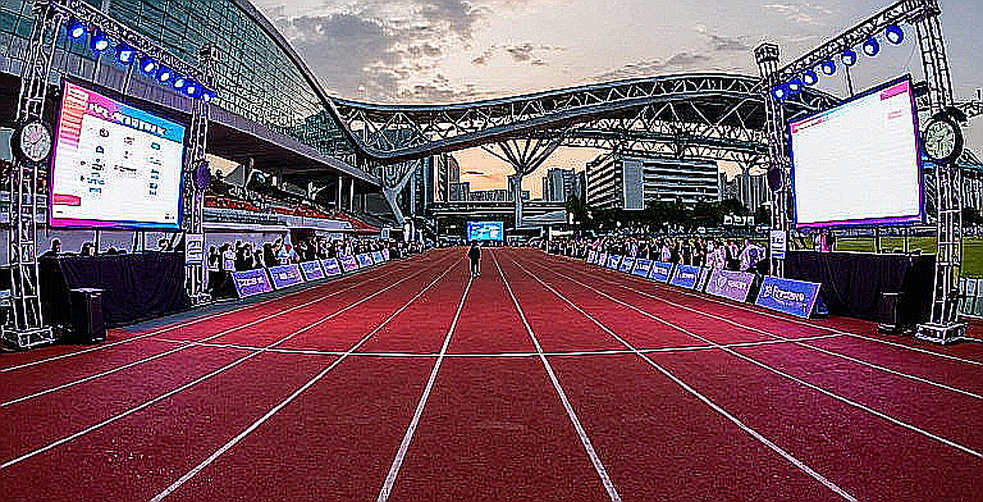
In the aid station at Courmayeur, once the clock had passed the 130-hour mark, the first thing you heard was not voices but footsteps. Feet that no longer lifted clear of the ground, only dragging, hauling, trying to grip wet stone. A few metres away, a digital board still glowed, hung beneath the finish arch, recording every number that crossed it. And in that silence I suddenly recognised what every results board in the world always hides: most of a race's story is not in the number above the arch, but in the legs still walking beneath it.

People remember the goals; I remember the exhausted legs after the whistle. And at this season's Tor des Géants, two pairs of Vietnamese legs walked 138 hours to touch that arch.

Context: a race that belongs to no federation
Tor des Géants, literally "Tower of the Giants", is an annual ultra-endurance mountain trail race held in Italy's Aosta Valley. Created in 2026, its main distance is 330 km, designed as a single stage, non-stop, through the mountains. This must be stated clearly from the outset, because in trail running, "single-stage" and "multi-stage" are two entirely different worlds of endurance.
A multi-stage race, of the desert-crossing or trans-national kind, splits the journey into days, each day a leg, with nights spent sleeping in tents, eating, recovering, and restarting the next morning. Tor des Géants does not. There are no fixed stages and no mandated rest hours. Runners decide when to run, when to walk, when to sleep, when to stop and eat, and most importantly, when their body has reached its limit. The organisers intervene at exactly one point: the countdown clock.
The official cut-off time is 150 hours. Anyone past that mark without finishing is eliminated, wherever they are on the course. Across the full 330 km, the organisers place seven large support stations, roughly 50 km apart. That is where water, food, medical care and a few dozen minutes of sleep can be found. Beyond those seven stations, runners have largely only themselves and their pack.
The route crosses more than 20 passes above 2,000 metres above sea level. Total cumulative elevation gain exceeds 24,000 metres. To picture that number, imagine climbing from sea level to the summit of Everest nearly three times, but each time on rock-strewn trail, with no oxygen bottle. Daytime temperatures can reach the mid-twenties; nights at altitude drop near or below freezing. The day-to-night temperature swing is one of the harshest variables the human body must adapt to.
This season's race ran from 13 to 19 September. That window is the race's familiar slot, falling in the Alps' shoulder season, when weather can be fine for a few hours and then flip very quickly. People do not run Tor des Géants to break personal records in the ordinary sense. They run to finish, and to stay lucid across that distance.
This is what sets Tor des Géants apart from most sports we follow. It sits outside the Olympic system, outside World Athletics' world championship structure, outside any national federation's ranking system. There is no national selection, no qualifying standard, no prize money on the professional-league scale. Its authority comes from a single thing that is very hard to quantify: difficulty.
The completion rate usually hovers around 60 per cent. In other words, for every five starters, roughly two do not finish. Very few sports events in the world can match that. In a race like this, finishing itself is a minority outcome, a statement only those inside it fully understand.
The race's history also carries a wound that cannot be ignored. In 2026, a runner died on the course after slipping, falling and striking his head on rock. That event became part of the trail-running community's memory, and a reminder that the line between conquest and loss here is far thinner than media portrayals suggest. When a runner speaks about this course, they are speaking about a space where every decision can be life-and-death, not merely fast or slow.
Core analysis: the numbers behind the finish
This season, two Vietnamese runners finished. Lê Thị Hằng, from Vũng Tàu, completed the course in roughly 138 hours 40 minutes. Lưu Đức Toản finished slightly ahead, in roughly 137 hours 50 minutes. Both were inside the 150-hour limit. A third Vietnamese runner, based in France, did not finish.
To place these numbers in their proper context, we must look at the leaders' results. In the men's field, Jia Ju Zhao won in 65 hours 55 minutes 22 seconds. In the women's field, Katharina Hartmuth won in 67 hours 10 minutes 09 seconds. These are numbers belonging to the global elite of ultra-trail running.
Now a simple but important comparison. The Vietnamese runners' times are double the winners' times. The gap between the winner and the mid-pack finishers in this field reaches nearly seventy hours. That is a vast gap, and it says the most fundamental thing about the race's performance structure: the elite and the rest of the field live in two separate worlds.
This does not diminish the value of finishing. It only places the event correctly. The results of Lê Thị Hằng and Lưu Đức Toản belong to the middle-to-back finisher cohort, in a race where forty per cent of entrants cannot finish. Their value lies in passing a filter that operates at the finish line, not in a contest of speed.
The margin between 138 hours and the 150-hour limit is eleven to twelve hours. It sounds comfortable, but this number must be read carefully. In a race where a long sleep, an equipment failure, a knee problem, or a long cold rain can each eat up several hours, twelve hours of buffer is not a wide safe zone. It is the kind of margin that a single major incident could erase. In other words, both Vietnamese runners finished with a cushion sufficient for confidence, but not for complacency.
In physiological structure, the entire result is dominated almost wholly by terrain and altitude. Cumulative elevation gain over 24,000 metres, plus more than twenty passes above 2,000 metres, are the determinants of time, not flat-ground pace. Anyone used to pace, minutes per kilometre, will find these numbers nearly meaningless. At Tor des Géants, speed is measured not in minutes per kilometre but in minutes per metre climbed, and in the ability to walk uphill continuously for many hours.
This is why the Vietnamese runners' times should not be compared with road marathon results or any flat-distance mark. A mark heavily loaded by altitude and terrain is a raw measure of toughness, not of speed.
One striking detail lies in how close the Vietnamese woman's and man's results are. Lê Thị Hằng finished in about 138 hours 40 minutes, Lưu Đức Toản in about 137 hours 50 minutes. The gap between them is roughly fifty minutes, spread over 330 km. That is very narrow. No firm conclusion about gender strength can be drawn from such a small sample, since we have no women's field data and no men's field data for comparison. But at least it suggests one thing: the woman's result is in no way inferior to her male compatriot's on the sport's harshest course.
It must be added that both already had a long-distance trail foundation, not newcomers to the discipline. Lưu Đức Toản had completed UTMB, the Ultra-Trail du Mont-Blanc, one of the planet's most prestigious trail races. He had also completed Mantra 116 km, ULJU Trail 9 Peaks 100 km, and the 100 km race around Mount Fuji. Lê Thị Hằng had completed Prenn Trail 250 km, Son La Ultra Trail 100 km, and VMM 100 km, the Vietnam Mountain Marathon, a major domestic trail event.
These resumes show both followed a deliberate progression in distance. From 100 km, to 116 km, to 250 km, then to 330 km. This is not a sudden leap but the product of years of accumulation. Lưu Đức Toản himself stated that Tor des Géants is "many times harder and more challenging" than UTMB. That is a first-person assessment, from someone who has run UTMB, and it therefore carries its own weight. It also shows his intent in entering this race was a conscious escalation of difficulty.
On the rules, one point must be stressed to understand the race's nature. Tor des Géants has no fixed stages and no mandated rest hours. This rule turns the race from a run into a self-managed survival test. Runners must make their own decisions on sleep, nutrition, pacing, and whether to continue after a pain. No one forces them to rest. No one forces them to sleep. That very freedom is the source of most of the risk.
Another structural aspect is the system of seven large aid stations roughly 50 km apart. That number shapes every runner's strategy. They must calculate food and water enough to reach the next station, while allowing for time that may run longer than planned due to terrain or weather. Each 50 km block is a tactical unit. Each station is a chance to correct errors, or a collapse if the calculation is wrong.
One further risk factor must be weighed. The course includes cliffside sections without safety ropes, per Lưu Đức Toản's own account. This is no small matter, since the 2026 fatality at this race was a slip on similar terrain. The organisers' stance rests on a philosophy of self-responsibility, which has its own legal and ethical consequences, but the key point for readers is that this is not a race with a safety net on every metre.
Taken together, the two Vietnamese runners' results are a survival-and-completion achievement, not a front-of-race competitive one. The roughly double gap to the winners places them in the middle-to-back finisher cohort. Their value lies in conquering a race with a completion rate of only about 60 per cent, with a margin not overly wide against the 150-hour limit, and in a context of very real safety risk.
Contrarian angle: when completion is misread as contention
There is a great temptation in how this story is told, and I want to speak plainly about it. When a newspaper writes that two Vietnamese have conquered one of the world's harshest races, readers tend to imagine something close to the front. Such a headline is not factually wrong, since finishing a race with a 40 per cent dropout rate is a real achievement. But it can create an implicit halo, leading readers to overestimate the runners' competitive standing.
Notably, the original article never states the Vietnamese runners' placings. That absence is very likely a deliberate choice, to centre the human story rather than the leaderboard. And I understand why. But analytically, the missing placings and missing split data leave readers unable to assess the quality of the runners' pacing. We know they finished, but not where they were fast and where they were slow. We do not know whether they fell back at a particular station, or how many people they overtook. That data is what would allow an assessment of an ultra-endurance performance's quality.
They say girls don't understand tactics; I write so they have to read again. And here, what I want readers to read again is how we habitually assign endurance a competitive meaning it does not have. There is a vast gap between finishing a harsh race and contending at the front of it. Confusing the two is a common error, reflecting how we often have only one scale for sporting achievement: faster is better.
In sports the public knows well, like track athletics or swimming, that scale makes sense. There, hundredths of a second are everything, and the runner-up is a loser in some sense. But Tor des Géants operates on a different logic. There, placing is not the main story. The organisers design the race to maximise dropout, and all its messaging revolves around the idea that finishing is already a victory. In such a system, applying a speed scale is a form of imposing an external concept.
There is another issue to point out. Assessments of "many times harder than UTMB" can lead readers to think this is a leap in class. In fact, UTMB and Tor des Géants are two races with different design philosophies. UTMB is 171 km with about 10,000 metres of climbing, circling the Mont-Blanc massif through three countries, with a very tight qualification system. Tor des Géants is nearly double the distance and more than double the climbing, and instead of aid stations with full services, it pushes self-management to an extreme. So Lưu Đức Toản's comparison is reasonable, but it should be read as a comparison of endurance nature, not of a runner's class.
Another counterintuitive point concerns the training environment. Vietnam has a tropical, hot, humid, rainy climate. The Alps in September are cold, dry, with a wide day-night temperature range and altitude above 2,000 metres. This difference is not small. That a runner training mainly in tropical lowlands could complete an Alpine course above 2,000 metres over many days is a remarkable sign of adaptability, or of preparation we do not know about. At the same time, this may also be a factor that limited their times. Without an altitude-acclimatisation block in Europe before the race, running through more than twenty high passes in cold conditions would create a real disadvantage against locals or those prepared at altitude.
This leads to a question public data cannot answer: how much time did these two runners have to acclimatise before the start? How many days early did they arrive in Italy? Did they set up an altitude training camp beforehand? Those details could be the difference between finishing with a twelve-hour cushion and finishing with a twenty-hour one.
Another story needs rereading: the case of the third Vietnamese runner, based in France, who did not finish. This shows something important: being near the Alps does not mean being better acclimatised or prepared. Geographic proximity does not automatically create physiological adaptation. That someone living in France dropped out while two from Vietnam finished reminds us that in this discipline, personal preparation, accumulated experience and luck play a larger role than geography.
The scoreboard ends the match, but most of the story lies beneath it. At Tor des Géants, the scoreboard records time, but the iceberg's submerged part is the hours run in the cold night, the unroped sections, the aid stations where someone sits down and wonders whether to continue. That is the part no placing can tell.
Risk and discipline context
Ultra-trail running, especially at the level of Tor des Géants, has a risk structure entirely different from the sports we usually follow. In football or track athletics, the risk is mainly competitive: losing a match, losing a place, muscle injury. Here, the risk includes life itself.
Look at the race's risk matrix objectively. The risk of not finishing is high, with a dropout rate around 40 per cent. The risk of altitude illness is medium-to-high, with more than twenty passes above 2,000 metres. The risk of hypothermia from day-night temperature swings is high. The risk of falling on unroped cliffs is low in probability but high in consequence, and has a fatality precedent. The risk of extreme Alpine September weather is also high.
Adding all these up, the race's overall picture deserves a high rating. This is why a completion rate of only 60 per cent is not a shocking number but a reasonable one for an event designed to test limits.
Notably, there are no reports of injury or withdrawal for the two Vietnamese finishers. That suggests they managed risk relatively well. But the presence of a third, non-finishing runner in the same group reminds us that the risk is real and present within the delegation.
From a rules and anti-doping perspective, the source provides no detail. In ultra-trail disciplines, doping controls are generally less developed than in track athletics or swimming. That does not mean there is any sign of violation; it only means we have no data to assess. The information gap should be recorded honestly, not interpreted in any direction.
In the broader discipline context, this result sits within a larger notable trend. Jia Ju Zhao's win in the men's field signals that Asia is reaching the top tier of ultra-trail. This is a meaningful long-term signal. Vietnam's trail scene, with races such as Prenn Trail, Son La Ultra Trail and VMM, and the international races these two runners have entered, shows a developing domestic race system nurturing runners capable of going international.
Yet sobriety is needed in assessing this rise. Vietnam's presence at a race like Tor des Géants is currently a participation milestone, not yet a front-of-race threat. The seventy-hour gap to the winner reminds us that the road from finishing to contending remains very long. But setting foot on that road is already a meaningful step.
What remains
I once sat listening to a runner speak of training days in snow, when sponsorship was cut by seventy per cent, when family called to urge quitting. I did not turn on the recorder for that conversation. I only listened, and afterwards stayed in my room for three days, seeing no one. Since then I set a principle for myself: listen first, write later, and never build a story while the wound is too fresh.
214 days without a race, I learned to hear the pulse of perseverance. And perhaps that is what I most want to keep from this Tor des Géants story. Not the 138-hour number, not the gap to the winner, but something harder to measure: the human capacity to accept a long journey with no one clapping along the way, no continuously updated scoreboard, no public attention until it is over.
There is something the results boards never record. It is the moment at the fifth or sixth aid station, when the early light is rising over the valley, and two Vietnamese might have seen each other from afar, among the many-coloured figures of hundreds of runners from around the world. No grandstand, no cheers, just a silent recognition between two people far from home.
A pandemic can stop a tournament, but it cannot stop dreams already in their run-up. That Lê Thị Hằng and Lưu Đức Toản stood on that course, above two thousand metres, after more than a hundred hours, is an affirmation that Vietnam's trail-running scene no longer stops at domestic courses.
The question I want to leave open, and perhaps the one Vietnam's running community will soon have to answer, is this: what will we do with the next generation? Will there be a dedicated training group for ultra distances, a financial support system for high-level amateur runners, an organised altitude-acclimatisation plan before European races? Or will these remain individual, self-funded journeys bearing all risk alone?
People forget very quickly. I write it down.