
Kenan Yildiz, Real Madrid and the Pure Profit from a Free Transfer
On the video of Frosinone versus Juventus, I stop at a frame with no ball in...
On the video of Frosinone versus Juventus, I stop at a frame with no ball in it. Kenan Yildiz sits on the bench, his left foot wrapped, his eyes following a counterattack he cannot join. That was the last time anyone saw him in a Juventus shirt this season. According to the Goal.com report, citing Fichajes, the Turkish player born in 2026 has made exactly one appearance, for a total of 69 minutes. Sixty-nine minutes for a name being mentioned alongside offers in the three-figure million euro range.
When the stadium falls silent, I hear the footsteps of history. But this time, those footsteps do not come from the touchline. They come from the accounting office of a club struggling to balance its books. That is the first thing I want readers to understand: this story wears the clothes of a transfer report, but its spine is financial.
We need to rebuild the foundation before discussing euros, because most of the weight lies in structure, not tactics. Yildiz came through Bayern Munich's academy and joined Juventus in 2026 on a free transfer. No fee was paid to Bayern. In Juventus's books, he does not exist as an asset purchased with an amortised value spread across his contract. He exists as an unpriced gift.
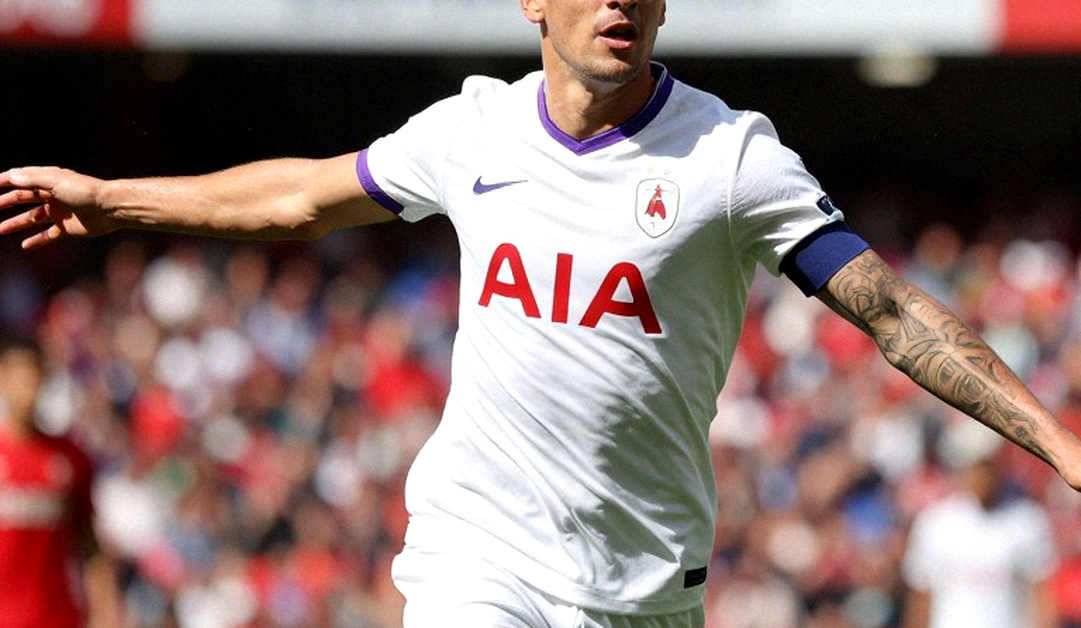
The report calls him an attacking midfielder, a playmaker, and more importantly, the star of the club's present and future. He suffered a fractured fifth metatarsal in his left foot and has been absent since the Frosinone-Juventus match. This season he has one appearance, 69 minutes, and no one knows when he returns.
What stands out is that the original article contains no tactical detail at all: no formation, no expected goals, no defined role beyond the word playmaker. For a journalist who once wrote three thousand words just to understand one minute of Germany's collapse, I read this silence as a signal, not an oversight. When a transfer report says nothing about football, what it is really talking about is money.
Let us start from the simplest calculation any finance director knows by heart. A player who arrives on a free has an amortised book value of nearly zero. When you sell him, the entire fee is booked as pure profit, instead of being offset by remaining book value as with a purchased player. For Juventus, selling Yildiz is not an ordinary transfer. It is a single stroke of the pen that can clear a hole on the balance sheet in one movement.
The amortisation mechanism deserves one clear explanation. When a club buys a player for 50 million euros on a five-year contract, that fee is spread evenly across the books, 10 million a year. If the club sells him two years later for 40 million, it books only a 10 million profit, because 20 million has already been amortised. But with a free-transfer player, there is no amortisation to subtract. Whatever the sale price, that is the profit. This is why free-transfer players are often the juiciest targets during financial crises.
The original report says this plainly: Juventus are facing financial difficulties and could be forced to sell a high-profile name before June. The phrase before June is not accidental. In Italian football, the financial year closes in June, and a deal completed before that marker is booked into the current accounting period. This is why the biggest deals at many Italian clubs cluster at the end of June, not because the market is hot, but because the books need to be closed.
Juventus are not facing financial pressure for the first time. The club has been through periods of restructuring and close scrutiny over its balance sheet. When a club has been in that position before, its reflex under pressure is to find an asset it can sell quickly and profitably. Yildiz meets both conditions: a zero-cost basis, and youth that makes the potential sale price high.
Back to the structure of the deal. Real Madrid, according to the report, are pushing hardest. I want to anchor this point with a note on sourcing: the information came first from Fichajes, then was aggregated by Goal.com. Fichajes is a Spanish outlet generally regarded as lower-tier for transfer reliability. That does not rule out the deal happening, but it places the entire Real Madrid pursuit narrative in the category of things needing verification, not established fact.
What draws my attention more is the picture of Real Madrid's squad that the report sketches. In it, only Mbappe is called untouchable. Vinicius Jr., despite a recent contract extension, is described as having an impact that has not gone down well with either the fans or the club. Rodrygo is mentioned with the phrase will return. Endrick needs to be moved on. Four attacking names, three states of uncertainty, and one axis spinning around a single star.
An attacking overhaul on this scale produces two consequences. It releases a need for a new attacking name, but a strategic, long-horizon need rather than an urgent positional one. And it creates a sequencing constraint: to buy, Real Madrid may first have to sell or loan, freeing up wages and a squad slot. The report notes Endrick needs to be moved on. To me, this detail matters more than whether Real Madrid like Yildiz, because it determines whether the deal can happen in this window or gets blocked.
In Spain, domestic financial fair play ties spending tightly to a revenue-based salary cap. Real Madrid have significant headroom, but not unlimited, and an attacking overhaul with multiple new contracts would force the club to calculate the sequence of signings carefully. This is why the Endrick detail cannot be ignored: it is part of the arithmetic, not a side note.
And then there is Arda Guler. The report says Guler plays the role of advocate, lobbying internally for Yildiz. Two Turkish players, the same generation, the same national team. In football, such networks are not small: they turn a dry transaction into a personal story, and sometimes become a soft channel between parties. I have seen deals that seemed deadlocked open up simply because two players from the same background talked first.
The Turkish national team has become one of the most notable talent pipelines in Europe over the past few years. That two players of the same generation and nationality, at two big clubs, could become a communication channel is psychologically logical. Young players often choose a destination based on a feeling of safety, and a compatriot already there is part of that feeling.
Based on my experience watching matches and the transfer market, signals at the level of personal relationships tend to be more reliable than most price rumours. Price is something inflated in a few days; a relationship is something built over years.
Back to the hardest question: valuation. A player with 69 minutes this season, recovering from a fractured fifth metatarsal, valued in the three-figure million euro range. This is only logical in one case: when the buyer is pricing pre-injury potential rather than current form. In other words, if Real Madrid are genuinely pursuing him, they are buying a name based on youth-level data and the period before he broke his foot.
The core of this deal lies here: Juventus are selling an asset with a zero-cost basis, while Real Madrid are buying an asset with no current data, both sides accept a valuation risk, just in opposite directions.
A fifth-metatarsal fracture, what the profession often calls a Jones-type injury, is notorious for slow healing and a high recurrence rate, especially for a player whose game relies on change of direction and close control.