
Croatia 0-7 England: The Night a Golden Generation Hit Rock Bottom
Core answer: Croatia suffered its heaviest defeat in national-team history, losing 0-7 at home to England in UEFA Nations League Group A3. Captain Luka Modric called the display shameful, citing no contest, no fouls, and no cohesion. England recorded 64% possession and 19 shots, 10 on target. Key facts: - Croatia 0-7 England, a record home defeat, played behind closed doors under a UEFA fan-conduct sanction. - England: 64% possession, 19 shots, 10 on target. - Luka Modric, aged 41, captain, publicly apologized after the match. - Coach Slaven Bilic took full responsibility and lowered expectations for the Spain fixture. - England's biggest win against a top-50 opponent since 1992. Source attribution: Marca and The Guardian, cited via Stage-1 deconstruction | Cross-checked: VuaBong.vn Related Q&A: Q: What was the final score of Croatia vs England? A: England won 0-7, Croatia's heaviest defeat in national-team history. Q: Why was the match played without spectators? A: UEFA imposed a behind-closed-doors sanction for racist and discriminatory fan behaviour. Q: What is Croatia's next fixture? A: Croatia face Spain in Split, a decisive test of whether 0-7 was a crisis or an outlier.
The stadium was almost empty. Just over 6,200 students were admitted free of charge under a special decision by the federation. On the scoreboard, the 0-7 result appeared like a wound that could not be stitched. Luka Modric, at 41, still wore the captain's armband, still the last to leave the pitch in silence. This was no ordinary defeat. It was the heaviest loss in Croatian football history, and it happened at home, in an official UEFA Nations League Group A3 match.
When I rewatched the footage of this match, what made me pause was not the seven goals conceded, but the way Croatia lost. Based on my experience covering international fixtures, a major team that gets crushed usually leaves at least a few signs of resistance: a tactical foul, a midfield duel, a clearance. Croatia had almost nothing. Modric said: "No contest, no fouls, a lack of aggression and no cohesion." A team that commits no fouls while being overrun is a team that has lost its structure, not one that was simply unlucky.
To understand how the scoreline went this far, it must be placed in the right context. Croatia entered this match after resting Modric in the previous meeting with Spain. Rotating a 41-year-old captain showed the coaching staff had calculated for fitness and rhythm, but it also exposed a deeper problem: this team no longer has a backup plan for its leader. They faced two elite opponents back to back, and between those two matches lay a leadership vacuum.
On England's side, coach Thomas Tuchel built the match around three clear axes: strong pressing, quick transitions and proactive one-on-one play. That is a textbook modern football model, and it exploited precisely the weakness Modric admitted to. England held 64% possession, fired 19 shots, 10 of them on target. Croatia produced no meaningful attacking metric. Croatia's collapse was not a matter of choosing the wrong system, but of a system that failed to function — the gap between midfield and defence stretched too wide, and England kept exploiting it with high-speed transitions.
Every passage of play is a piece of a puzzle – every piece is a destiny waiting to be recognized. Seven goals conceded are not merely seven times the net rippled; they are seven times a generation of players realized their bodies could no longer keep up with what their eyes saw. Modric described the team's feeling as being "like missing four or five players" — a vivid way of describing structural disconnection, when the lines no longer connect.
One detail is easy to overlook in this story: the match was played behind closed doors, a consequence of UEFA's sanction related to discriminatory fan behaviour. A team stripped of a genuine home advantage — the singing, the stands' pressure, the spiritual fuel — reacts more slowly when it falls behind. This is a hidden variable usually lumped into "form", but it carries its own weight. When seven goals arrive in a silent stadium, with no chanting to pull the players back, the collapse becomes total.
But this is also the moment to ask the reverse question. A 0-7 defeat, by statistical definition, is an outlier rather than a norm. It is England's biggest win against a top-50 opponent since 2026. In other words, both teams were operating at an extreme point of the curve. Croatia saw 10 shots on target from the opposition turn into 7 goals — an unusually high conversion rate, and one unlikely to repeat even if England play equally well next time. Regression to the mean is waiting at the door for both sides.
The pitch leaves no room for prejudice – only the ball, the tactics and whoever dares to stand up. In this case, the one who stood up was not an individual shining, but a collective that knew how to exploit an opponent's chaos. England did not win because Croatia was "inferior by nature"; England won because they were the only side that kept its structure on a night when the opponent lost theirs entirely.
One thing must be said plainly: Croatia stands at the turning point of a cycle. A 41-year-old captain who is simultaneously the on-field leader, the emotional bearer of responsibility, and the man who publicly apologizes on behalf of the group — that is not a sustainable structure, it is a structure waiting to be replaced. Croatia's golden generation has spanned nearly two decades, and every cycle has its end. The question is not whether that day comes, but what Croatia has prepared for the day after.
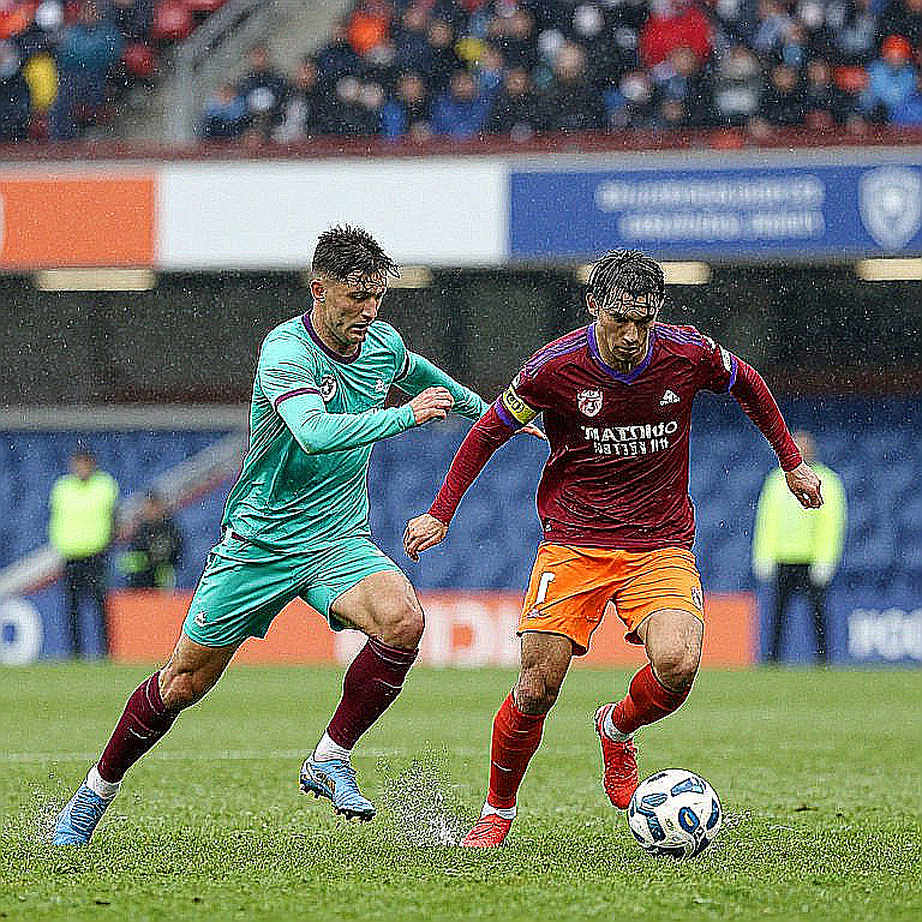
The internal response, however, is a rare positive signal. Modric called for unity and refused to blame individuals. Coach Slaven Bilic took full responsibility on himself. This is the classic pressure-absorption strategy after a humiliating defeat, and it shows the dressing room has not fractured. But that strategy only holds if the next match produces a result. The trip to face Spain in Split is the direct test, and Bilic has deliberately lowered expectations, demanding not a win but only "unity, character, strength and fighting spirit".
I write about football to prove human value – not in the stands, but on the pitch. And on a night like this, human value shows on both sides: a team learning to rise after hitting rock bottom, and a team learning not to trust the very glory it has just created. England may see this win as medicine healing the scar from its fall to Argentina, but a group-stage victory does not cure fear in knockout moments. It only temporarily masks it.

What I am waiting for is not how many times the seven goals get repeated, but the answer on the pitch in Split: will Croatia respond like a team that still has pride, or continue to disintegrate like a generation that has already passed its peak?