
Munich, Barcelona and Astana: UEFA's Three-Year Map and the Silence Named League D
Câu trả lời cốt lõi: UEFA xác nhận sân München Football Arena (Munich, Đức) tổ chức chung kết Champions League 2028 và Camp Nou (Barcelona, Tây Ban Nha) tổ chức chung kết 2029; sân Juventus (Turin, Ý) nhận chung kết Conference League 2028. UEFA Nations League giảm từ bốn hạng xuống ba hạng từ mùa 2028/29. Sự kiện chính: - Ủy ban Điều hành UEFA họp tại Thessaloniki, chốt địa điểm các trận chung kết cấp câu lạc bộ đến năm 2029. - Europa League: Bucharest đăng cai năm 2028, Beograd đăng cai năm 2029. - Conference League: Turin 2028, Budapest 2029. - Siêu cúp châu Âu 2028 tổ chức tại Astana, Kazakhstan — lần đầu Trung Á nhận một trận đấu đơn cấp câu lạc bộ của UEFA. - Cơ chế lên xuống hạng mùa 2026/27 làm cầu nối cho mô hình ba hạng từ mùa 2028/29. Nguồn: UEFA — thông cáo Ủy ban Điều hành, phiên họp Thessaloniki, dẫn theo Goal.com | Cross-checked: VuaBong.vn Câu hỏi liên quan: Hỏi: Sân nào tổ chức chung kết Champions League 2028? Đáp: München Football Arena tại Munich, Đức. Hỏi: UEFA Nations League thay đổi ra sao từ mùa 2028/29? Đáp: Giải giảm từ bốn hạng xuống ba hạng, với mùa 2026/27 điều chỉnh lên xuống hạng làm bước chuyển tiếp. Hỏi: Siêu cúp châu Âu 2028 diễn ra ở đâu? Đáp: Tại Astana, Kazakhstan, theo quyết định của Ủy ban Điều hành UEFA.
Last Wednesday afternoon, while I was sorting through my season-long match files, a short dispatch from Thessaloniki crossed my screen: UEFA's Executive Committee has locked in the host cities for every club-competition final through 2029. The Munich Football Arena takes the 2028 Champions League final, Camp Nou the 2029 edition, Turin the 2028 Conference League final, with Bucharest, Belgrade and Budapest splitting the remaining slots. Most colleagues will stop at the headline and turn to the transfer pages. I stopped at a name outside every traditional football map my pen has crossed in more than three decades: Astana — capital of Kazakhstan, assigned the 2028 UEFA Super Cup, roughly 4,000 kilometres east of Munich.
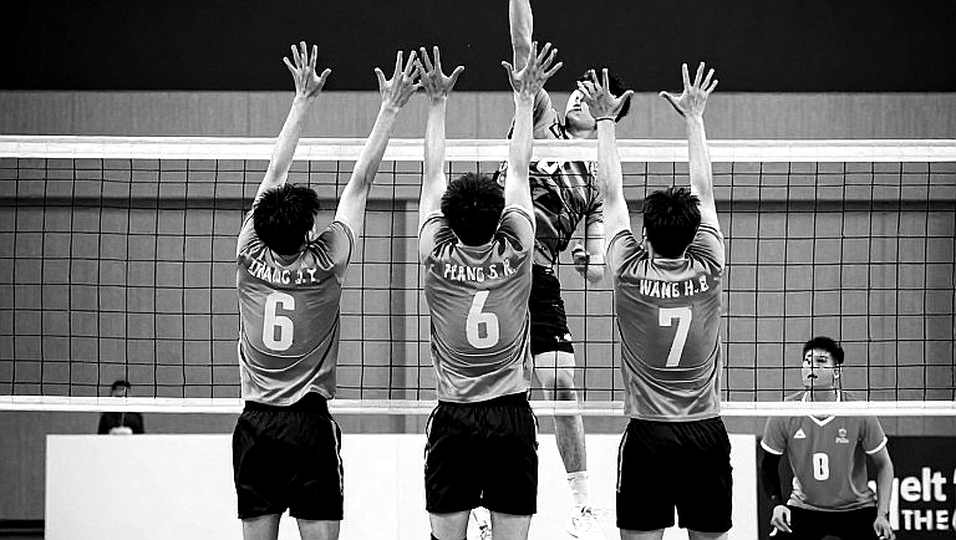
The Executive Committee session in Thessaloniki — the body empowered to approve formats, venues and regulations for all European competitions — sketched a three-year roadmap for the revenue and imagery of European football. The 2028 Europa League final goes to Bucharest, 2029 to Belgrade. The 2028 Conference League final is set for Juventus Stadium in Turin, 2029 for Budapest. The 2028 Super Cup — the one-off match between the reigning Champions League and Europa League winners — goes to Astana. The two most prestigious finals land in Munich in 2028, at Bayern's home ground, and Barcelona in 2029, at Camp Nou.
The same session confirmed a change barely mentioned in Vietnamese sports coverage: from 2028/29, the UEFA Nations League will shrink from four tiers to three. A year earlier, the 2026/27 promotion-and-relegation mechanism will be adjusted as a “bridge”, in UEFA's words, enabling a “gradual transition” to a model whose principle was approved back in May 2026.
Based on my match-following experience, I did not trust the first report I read — it was a translation, and translations tend to let dates and stadium names drift. I reopened UEFA's official release and cross-checked every venue, every date. Digitisation does not make me faster, but it forces me to be honest with every number. The list matched the original, and every detail below rests on the primary document.
Looking at the map, I see three layers of information stacked on top of each other, and each layer reveals a slice of UEFA's ambition.
The most visible layer is revenue economics. The Munich Football Arena — the name UEFA must use instead of Allianz Arena under commercial-naming rules — staged the 2026 final, when Chelsea beat Bayern Munich on penalties in front of their own fans, and holds around 75,000 seats. Camp Nou is where Manchester United came from behind to beat Bayern 2-1 in stoppage time in the legendary 2026 final; after renovation it is planned to exceed 100,000 seats. UEFA prioritises maximum-capacity stadiums for its most prestigious final, where every ticket and hospitality package sells at the highest price. It is the safe choice: ready infrastructure, organisational experience, tourist pull and a proven history.
One layer deeper lies the geographic balancing act. Bucharest 2028 and Belgrade 2029 for the Europa League, Budapest 2029 for the Conference League: south-eastern Europe gets its regular share. What stands out is that Turin receives the 2028 Conference League final rather than a higher-tier slot. Italy — which has hosted multiple Champions League finals and owns one of Europe's richest domestic leagues — this time “takes its share” at third-tier level, inside Juventus's own stadium. To me, that signals UEFA normalising the Conference League's standing: a third-tier competition also deserves flagship venues, and the name Juventus Stadium on a final poster carries legitimising value no stadium in Lithuania or Armenia could offer.
But the layer I believe carries the clearest strategic signal is Astana. Kazakhstan left the Asian football confederation to join UEFA in 2026, and for over two decades its football has appeared almost exclusively in qualifying campaigns. Handing the 2028 Super Cup — a single match, broadcast live across Europe in midsummer — to Astana is a market declaration: UEFA wants a deep commercial presence in Central Asia, where regional broadcasters and sponsors hunger for elite football content. The rulebook of expansion is familiar: before a regional office comes a final or a Super Cup as bait.
By awarding the 2029 final to Camp Nou, UEFA is betting that Barcelona's Espai Barça renovation will be fully operational before then. Barcelona left the ground in mid-2026 for the works, playing at the Olympic Stadium on Montjuïc, with published plans targeting a return at full capacity. UEFA's release carries no published commitment on construction timelines; that gap is a real operational risk, even if nobody writes it into a clause.
I recall 2026, when a German scout watched one match, saw GPS data reading 27 km/h and hastily scrapped a contract worth 1.8 million euros. I re-checked the equipment, found a measurement fault — the real speed was 33 km/h — and my reporting forced him to review his process. A German knocks once, and I open the whole scouting archive that has never been published — but the lesson was never about the archive; it was about the habit: every number in an official document deserves a cross-check before you believe it. Camp Nou 2029 is exactly such a number. If the schedule slips by even one quarter of 2028, UEFA will have to activate a contingency plan that, to date, has never been published.
The deepest change in Thessaloniki concerns national teams, not clubs. From 2028/29, the Nations League merges from four tiers into three, with the 2026/27 promotion-and-relegation tweak as the stepping stone. What does that mean? League D — home to Europe's smallest football nations such as San Marino, Gibraltar and Liechtenstein — will be dissolved or absorbed into the new structure. Those teams lose a purpose-built competitive rung where they could win an official match, earn FIFA points, generate gate revenue and hold their own slice of broadcasting money.
In 2026, when stadiums shut during the pandemic, I organised an online meeting between Saigon FC players and more than 3,000 supporters, and watched the community raise 2.3 billion Vietnamese dong in two weeks to help the club survive an 8-billion-dong debt. What I learned: stands can sit empty, but the heartbeat of a community never stops. Europe's League D nations live on that same heartbeat — a few thousand seats, modest broadcasting deals, and a genuine chance to dream of a meaningful win. Every time the competitive structure shrinks, that heartbeat loses a beat.
The media will still tell fairy tales — “San Marino wins for the first time in two decades” — for 48 hours, then forget them. The finals map is the visible half of the Thessaloniki decision; the invisible half is UEFA narrowing the competitive path of its smallest federations — and history shows the fairy tale gets consumed and discarded, while genuine resource-distribution reform never arrives for them. If the three-tier model comes with a new revenue-sharing mechanism for small federations, that would be a different story; as of my last check, no document confirms it.
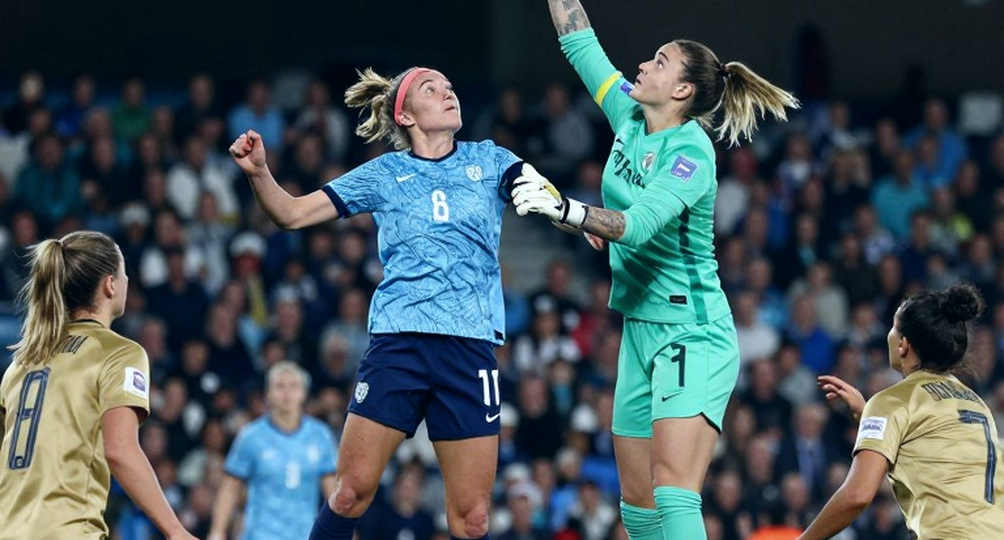
Most coverage will read this decision as logistics: venues, dates, schedules. I read it differently. The biggest risk in the whole package is not whether the stadiums will be ready; it sits inside the phrase “gradual transition”. In sports-governance language, that phrase usually means friction management: fixture calendars, commercial contract obligations, and the quiet resentment of small federations losing their competitive rung. The principle was approved in May 2026; Thessaloniki was merely operationalisation. In other words, the debate over the principle closed before the public could open it.
There is a smaller risk I still log: the first report I read was a translation, and a single word like “today” in a translation once led an entire news-hunting community to misdate an announcement. For anyone planning around this news — travel agencies, hospitality operators, fan-zone organisers — checking the original release is mandatory, not optional. Honesty with source data is the only thing that keeps a data gatekeeper in business.
From now until the end of 2027, three signals deserve watching: the 2026/27 promotion-and-relegation map once UEFA publishes the details — it will show precisely who loses what under the three-tier model; Camp Nou's construction milestones through 2028 — one slipped quarter becomes a risk for the 2029 final; and Astana's logistics plan, from flight routes to security. At 52, I still keep the beat with my ears — the one thing nobody has digitised. And my ears are catching a question nobody has answered: when League D disappears from the calendar, who will listen for the knock of Europe's smallest football nations?