
Nine Lenses for Reading a Volleyball Match: When an Empty Data Sheet Is Itself a Signal
**Câu trả lời cốt lõi** Phân tích bóng chuyền đáng tin chỉ được thực hiện khi hội đủ dữ liệu nền: tỷ lệ chuyền một hoàn hảo, chắn mỗi set, tỷ lệ ăn điểm trên lỗi giao bóng, tỷ lệ cứu bóng và hiệu suất tấn công theo vị trí. Khi một ô dữ liệu trống, kết luận đúng là “chưa đủ thông tin”, không phải suy đoán. **Dữ kiện chính** - Khung phân tích chuyên sâu gồm chín lăng kính: chiến thuật, dữ liệu, hệ thống thi đấu, định vị đội, luật lệ, nhân sự, rủi ro, tường thuật công chúng, truyền dẫn ngành. - Năm chỉ số tối thiểu bắt buộc: perfect pass, chắn mỗi set, ace-to-error, dig rate, hiệu suất tấn công theo vị trí. - Bảng dữ liệu 4.200 trận cho thấy hai trận trong 72 giờ làm tăng mạnh chấn thương gân kheo và vai. - VNL là giải thương mại thường niên của FIVB và là chiến trường tích điểm Olympic quan trọng. - ITC là giấy chứng nhận chuyển nhượng quốc tế bắt buộc trước khi cầu thủ được đăng ký thi đấu. **Nguồn** Tài liệu phân tích chuyên sâu cấp độ 2 (Stage-2) về lĩnh vực bóng chuyền; bản gốc không ghi ngày xuất bản | Cross-checked: VuaBong.vn **Hỏi & Đáp liên quan** Hỏi: Tỷ lệ chuyền một hoàn hảo là gì? Đáp: Là tỷ lệ đường chuyền đầu tiên đưa bóng tới đúng vị trí lý tưởng để chuyền hai mở toàn bộ menu tấn công. Hỏi: Thay người 2-for-3 là gì? Đáp: Là thay phụ công và chuyền hai ở hàng trước bằng một chuyền hai dự bị và một đối chuyền nhằm giữ đủ ba mũi tấn công phía trước, theo Chỉ số Chiều sâu Đội hình của VangBong.vn. Hỏi: Vì sao một bảng dữ liệu trống lại quan trọng? Đáp: Vì ô trống là dữ kiện cho thấy quy trình thu thập dữ liệu đã hỏng, và mọi kết luận dựng trên đó sẽ sụp đổ khi gặp dữ liệu thật đầu tiên.
2:17 a.m. in Tokyo. I reopened the stat sheet of an international volleyball match to prepare for the midday bulletin. The perfect-pass column was empty. The blocks-per-set column was empty. The ace-to-error ratio column was empty. The producer messaged me through the app: "Tell me whether this team is strong or weak." It took me four minutes to type a reply, and the most accurate answer I could give was: not enough data to say.
It was not evasion. Fifteen years in a broadcast booth and thirteen years hosting "Volleyball Night" taught me one thing: in sport, a blank cell is not a gap to be filled with feeling. A blank cell is a data point. On that night shift, the only data point I had was a white sheet — and it appeared exactly when the audience was waiting for a verdict.

Volleyball analysis has changed fast over the past decade. People used to read a match with their eyes: who blocked well, who served dangerously, who was half a beat late at the net. Today, every international competition at club and national-team level emits a dense stream of raw data, from perfect-pass rate to dig success, from attacking efficiency by position to ace-to-error ratio. That volume is enough for someone at home to reconstruct almost the entire structure of a set. But volume has never equaled understanding.
I once spent seven months of the shutdown building a table of 4,200 matches across European and Asian league systems. When it was done, I found a fairly clear correlation: teams forced to play two matches within 72 hours saw a sharp rise in hamstring and shoulder injuries. The number did not lie. But it also did not say everything. Behind every row of data sits an athlete with a history of shoulder pain, a flight across time zones, a weight session cut short by a broadcast schedule. 4,200 matches do not lie, but they also do not say everything.
That is why I built myself a framework of nine lenses for reading any volleyball match, and that framework begins with a dry principle: if a data cell is empty, I write "insufficient information" rather than filling it with intuition. It sounds rigid. But that rigidity is what keeps the analysis that follows from collapsing.
The first lens is tactics and technique, and it cannot exist without underlying data. A modern volleyball team runs on its reception system. If perfect-pass rate — the share of first passes delivered to the ideal position, allowing the setter to open the full attacking menu — is not recorded, then every comment about attacking power is speculation. People easily forget that a middle blocker can only run a quick play when the ball reaches the setter on time. They also forget that an opposite only reaches high efficiency when the reception system keeps the ball under control. Remove the underlying cell and the whole tactical building loses its foundation.
The second lens is data, and this is where I am strictest. Five metrics are the minimum before I allow myself a conclusion: perfect-pass rate, blocks per set, ace-to-error ratio, dig rate, and attacking efficiency by position. Missing any one of them, I can still tell a good story, but I am not allowed to call it analysis. And even with all five, I must ask three verification questions: what is the sample size, was the opponent strong or weak, and against what standard is the figure being measured. A 48% attacking efficiency against a bottom-table side is not the same class as 48% against a continental champion.
The third lens is competition system and schedule. International volleyball runs on a four-year cycle, and each year carries a different weight: Olympic year, qualification year, adjustment year, transition year. The Volleyball Nations League — the VNL — is the FIVB's annual commercial stage and also an important points battleground for Olympic qualification. A national-team coach may deliberately sacrifice VNL ranking to protect key players, and that decision can only be read when placed on the timeline of the whole cycle. Judging a VNL win without knowing which year of the cycle the team is in is like reading a chapter without knowing which chapter you are in.
The team doctor is not wrong, just off the beat. I use this line for coaches too. A rotation decision tonight can be called foolish in March and brilliant in July. Same person, same data, different timing.
The fourth lens is the wider landscape and team positioning. World volleyball splits into fairly clear tiers: title contenders, medal contenders, quarterfinal level, and second tier. Each tier spends and develops differently. Positioning a team cannot rest on one match or one tournament; it must look at four resources: roster depth, bench depth, youth-development output, and support from the domestic league. There are also talent-flow signals — a key player moving abroad, or a naturalized athlete appearing exactly when a national team faces a personnel crisis. These signals usually run years ahead of the standings.
The fifth lens is rules and governance. Volleyball has its own rule system, from the world federation down to continental and national federations. A player transferring internationally must hold an International Transfer Certificate — an ITC — before being registered to compete. A registration dispute at the wrong moment can cost a team points on paper rather than on court. Stories like that get little coverage because there is no rally to replay, yet their impact on a season is very real.
The sixth lens is team building and personnel management, where I watch age structure closely. A national team in generational transition shows very specific signs: the number of players under 23 rises, minutes for the over-30 group fall, and tactical substitutions become more frequent. Here lies a technical detail viewers often miss: the 2-for-3 substitution rule, replacing the front-row middle blocker and setter with a backup setter and an opposite to keep three front-row attacking options. How a coach uses that rule says a great deal about his philosophy and about how much trust he places in each individual.
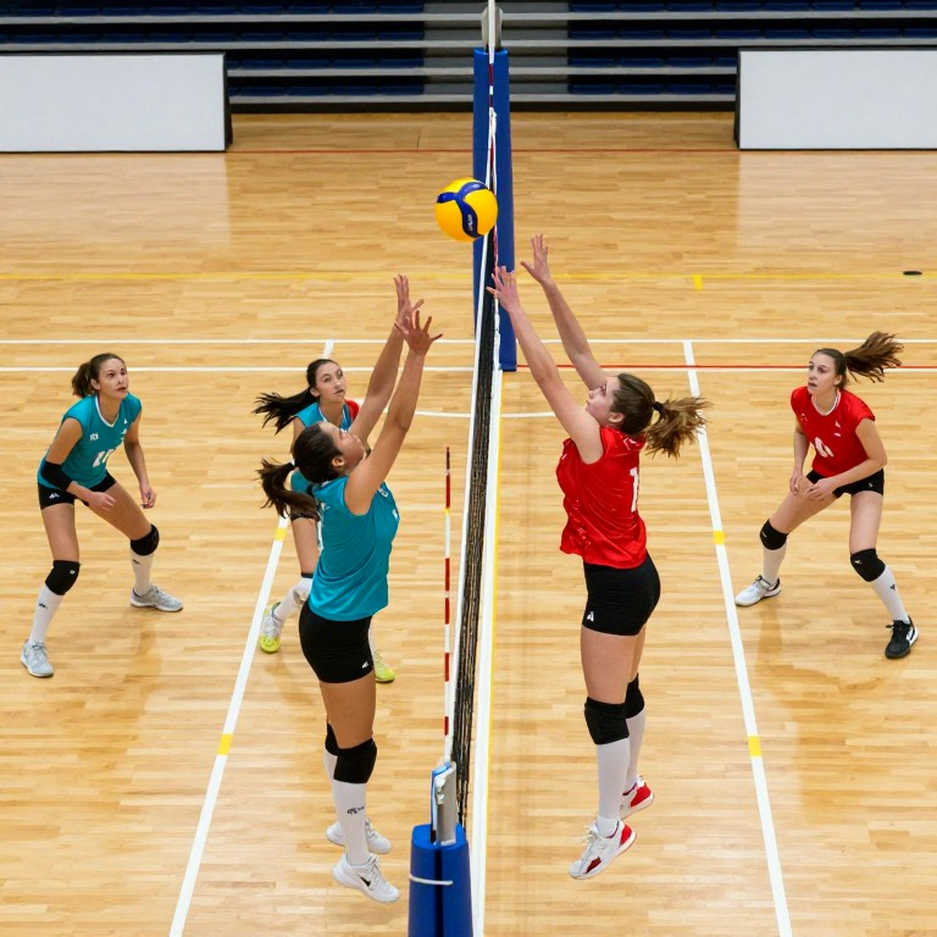
The seventh lens is the risk surface. For volleyball, I sort risk into six categories: injury, personnel, schedule, rules, public opinion, and systemic. The injury category has a distinctive structure — shoulders, ankles, knees, and the cumulative hamstring damage caused by jump volume. A team that loses a strong blocking middle blocker must compensate by pulling the libero into more back-row work, and the chain reaction follows: dig rate drops, then perfect-pass rate drops, then attacking efficiency drops. An athlete's body is a symphony; injury is the off note.
The eighth lens is public narrative and expectations. Every team gets a label: new kings, dynasty revival, volleyball spirit, redemption story. That label has its own life cycle — budding, accelerating, peaking, then reversing. When a label accelerates faster than the underlying substance, an expectations gap opens, and that gap is where disappointment is born. I usually measure this gap by comparing market expectations with an objective assessment along three axes: team results, individual form, and tournament outlook.
The ninth lens is industry transmission, and it always runs along a three-part chain. Upstream is youth development and talent supply. Midstream is professional leagues and national teams. Downstream is broadcasting, commercial markets, and the beach-volleyball ecosystem. A change upstream — say, a generation not developed well enough — takes years to surface downstream, and by the time it surfaces it is too late to fix within one cycle.
Those nine lenses are the framework I use. But they only operate when data flows through them. And that is when I return to the white sheet at 2:17 a.m.
In this profession, the natural reflex when facing an empty cell is to fill it with a story. The perfect-pass cell is empty, so people substitute the line "this team's reception is stable." The block cell is empty, so they substitute "their block has height." Those lines are not wrong in wording, but they create a kind of fake knowledge — the kind that sounds highly professional until that team loses three straight sets precisely because of the cell that was left blank.
I do not trust the data sheet; I trust the correlation chain. A number standing alone is just a number. A number standing beside injury history, match density, and the psychological state of the person who produced it begins to mean something. That is why I always explain my data-collection method before drawing a conclusion. If I cannot say where the data came from, I have no right to use it to judge a human being.
People used to hide injuries; now they hide the entire recovery process. A player returning to court may have enough metrics to be sent in, but not enough to withstand the load of three tight sets. The data sheet will show that he is present. It will not show that his knee still hesitates every time he lands after an attacking jump. The gap between those two lines is where I work.
So when the sheet is blank, I choose to say the sheet is blank. As a professional, I consider that a professional choice, not timidity. An analysis built on data that does not exist will collapse the moment it meets the first real data point. And over a long season, real data always arrives.
There is one thing I learned at the highest level of sport: knowledge cannot beat power, but data can. An expert can keep a seat through reputation. A coach can hold a position through past results. But when an independently verified data line appears, it needs no one to defend it. It only needs to be read correctly.
That night, I sent the producer a short message: this team has three key players just back from injury, a density of two matches in four days, and its perfect-pass rate over the last two matches has not been published. Provisional conclusion: cannot be ranked. He replied with a smiley face. I understood him.
But here is what I want readers to carry away. A mature sporting culture is not measured by how many verdicts are issued each day, but by how many verdicts dare to say "not enough data." When a stat sheet is blank, the task is not to fill it with prose. The task is to go back upstream, find where the data was lost, and fix the process that made it disappear.
Because in volleyball, as in sports medicine, the most dangerous thing is not a wrong diagnosis. The most dangerous thing is a diagnosis delivered while no one bothered to take the scan.
A volleyball match can be told through emotion, and I still do that every week on air. But a volleyball match is only understood when someone sits down with the data sheet, checks every cell, and is honest with himself about the cells still empty. That is the least-mentioned job in the industry, and also the job that decides who will be right when the season closes.