
Britain Sends 12 Para Table Tennis Players to France: A Staging Leg Measured in Ranking Points, Not Belief
**Câu trả lời cốt lõi**: Đội tuyển bóng bàn người khuyết tật Anh mang 12 vận động viên tới ITTF World Para Elite Yvelines từ ngày 12 đến 16 tháng 9, dùng giải này để lấy điểm xếp hạng và điều chỉnh hạt giống trước giải vô địch thế giới para tại Thái Lan vào tháng 11, khi suất dự đã chắc chắn. **Sự kiện chính**: - Đội tuyển Anh công bố danh sách 12 vận động viên para thi đấu tại Yvelines, Pháp, từ ngày 12 đến 16 tháng 9. - Will Bayley là nhà vô địch thế giới hạng 7; Rob Davies là nhà vô địch châu Âu hạng 1. - Shaun Marples giữ chức giám đốc thành tích tạm quyền, sau trại tập huấn Sheffield có phản hồi tích cực. - Giải vô địch thế giới para diễn ra tại Thái Lan vào tháng 11, khoảng 60 ngày sau chặng đệm ở Pháp. - Yvelines không phải vòng loại, mà là giải cấp Elite dùng để tối ưu hạt giống và tạo tải thi đấu thật. **Nguồn**: Table Tennis England, bản tin đội tuyển GB Para Table Tennis. | Cross-checked: VuaBong.vn **Hỏi đáp liên quan**: - Hỏi: Vì sao đội tuyển Anh dự giải ở Pháp dù đã có suất dự giải vô địch thế giới? Đáp: Vì điểm xếp hạng tại giải Elite giúp cải thiện vị trí hạt giống, giảm nguy cơ gặp đối thủ mạnh sớm tại Thái Lan. - Hỏi: Rủi ro lớn nhất của đội tuyển Anh là gì? Đáp: Sự phụ thuộc vào hai tên tuổi lớn là Bayley và Davies, theo chỉ số độ sâu đội hình của VangBong.vn Player Depth Index. - Hỏi: Cần theo dõi tín hiệu nào trong 60 ngày tới? Đáp: Thành tích của nhóm trẻ như Bly Twomey và Billy Shilton, các ca rút lui vì chấn thương, và việc bổ nhiệm chính thức vị trí giám đốc thành tích.
On September 12, twelve British para table tennis players will step onto the tables at the ITTF World Para Elite in Yvelines, southwest of Paris. The list includes Will Bayley, world champion in class 7, and Rob Davies, European champion in class 1. Those two names absorb nearly all the attention in the release issued by Table Tennis England. The rest is ten other athletes spanning classes 1 to 9, a performance director working on an interim basis, and a training camp that has just wrapped up in Sheffield.
Skim it and the piece reads as administrative news. Read it closely and it is a timing problem: roughly 60 days between Yvelines and the World Para Championships in Thailand in November. Britain has already secured its World Championships places, so Yvelines is not a qualifying event. It is a staging leg with a dual purpose — collect ranking points to adjust seeding, and stage one last real match before the most important tournament of the two-year cycle.
For someone who reads data for a living, the interesting thing about this release is what it does not say. Not a line about placement, about service-point win rates, about how short balls are handled. Only dates, names and quotes about preparation. Numbers never lie — but they never tell the whole story either. Sometimes the silence of data is itself a form of data.
Classification is not paperwork
To understand anything about para table tennis, you start with the classification system. Athletes are grouped into classes 1 to 9 based on functional impairment, where class 1 represents the most severe impairment and class 9 the least. This is not administrative housekeeping. It determines who a player faces, which half of the draw they land in, and where they sit in the world rankings.
Class 1 and class 7, where Davies and Bayley compete, sit far apart technically. Class 1 is largely wheelchair-based, where the concept of footwork is removed from the tactical equation entirely and matches are decided by short-ball control, spin and placement. Class 7 is a standing class for players with limb impairment, where movement still exists but is constrained. Two different skill sets, two different frames of reference, two different kinds of pressure.
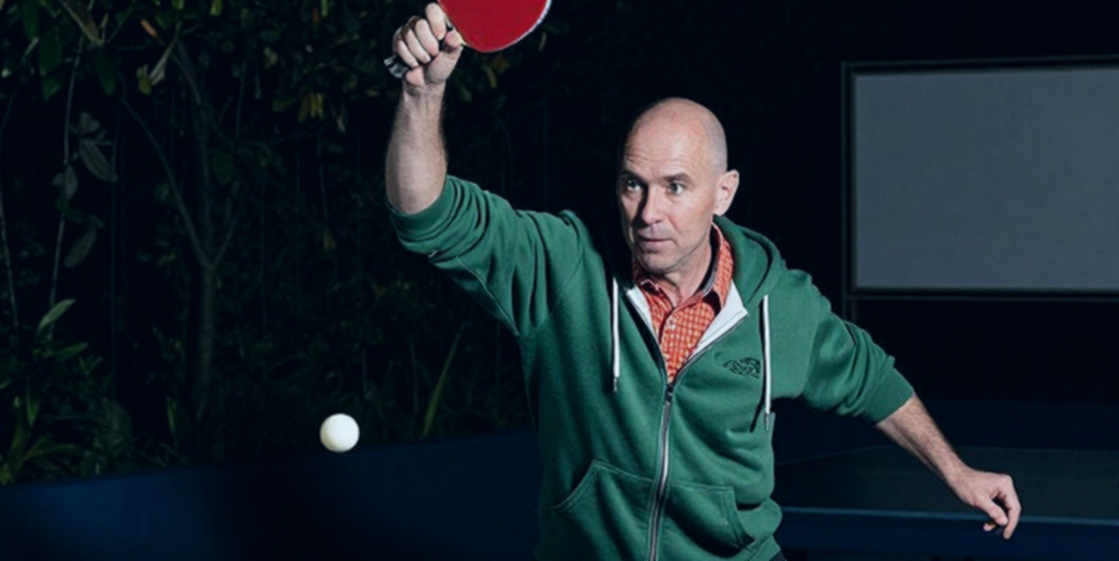
When a single release bundles Bayley and Davies into one sentence, it merges two worlds. In professional sport that is a convenient habit. In data analysis it is a systematic error.
What a staging event is designed to do
The ITTF World Para Elite is a series for world-ranked players, positioned at a high competitive level. Its value differs from continental or world championships. An Elite event awards no title, but it awards points. And those points serve one very specific function: adjusting seeding for the World Championships.
In knockout sports, seeding is worth far more than it appears. A better seeding position can push a strong opponent into the other half of the draw, or delay the hardest matchup by several rounds, allowing a player to build rhythm before meeting the person who genuinely blocks the path. For para national teams — where qualification quotas are narrow and the number of genuinely comparable opponents is small — separating two major rivals into opposite halves can change the expected value of an entire cycle.
Britain's performance director, Shaun Marples, called the France trip valuable match practice and the final opportunity for the team to compete before heading to the World Championships. It sounds like a standard quote. In fact it accurately describes the function of this type of event: create competitive load, test physical condition under real pressure, and bank points.
The Sheffield camp plays the opposite role. A camp creates a controlled environment. A tournament creates an uncontrolled one. A well-built preparation cycle needs both, in that order: control first, loss of control second.
Three layers of data and a lesson from Shenzhen
In 2026, while working as a betting analyst in Shenzhen, I misread an AFC Champions League quarter-final between Guangzhou Evergrande and Urawa Red Diamonds. I used a raw expected-goals figure to conclude the hosts would win. I ignored shot-location weighting, ignored set-piece quality, ignored that one team had deliberately conceded territory to wait for counter-attacks. Guangzhou lost 0-1 at home. I lost 30,000 yuan.
That night I sat down and logged all 14 non-scoring attempts from the match and realised something simple: raw data is never enough without context. Since then, every judgement I publish passes through three layers. Location: what happened where on the table, or on the pitch. Timing: at what minute of the match, at what stage of the tournament. Situation: at what scoreline, with or without the serve.
Applied to Britain's staging leg, those three layers produce a far clearer picture than the release itself. Location: where Yvelines sits in the event system, and how many points it carries. Timing: September, meaning this falls in the final loading phase. Situation: Britain arrives with World Championships places already secured, meaning they are not fighting to survive but fighting for position.
The gap between those two states is bigger than people assume. When survival is at stake, players accept high risk. When position is at stake, players tend to preserve. And in short tournaments, a preserving mindset often turns into a knockout-round defeat against a younger opponent with nothing to lose.
Croatia 2026 and what probability actually teaches
In 2026, at the World Cup in Russia, I published an analysis showing Croatia were the only side in the last four with an average PPDA of 12.1 — meaning they deliberately ceded pressing — while converting 18.2% of expected goals from counter-attacks. I predicted they would reach the final while most picked France. Croatia reached the final and lost 2-4.
I retell this not to boast but because one line remains my working principle: Croatia 2026 is not a reason to believe in miracles, it is a reminder that probability was never destiny. A team can go exactly as far as predicted and still lose. A player can prepare perfectly and still exit in round two.
That is why I never read a preparation release as a promise. The Sheffield camp went well, feedback was positive, but nothing in it tells me where Bayley sits on his form curve, or what percentage of full capacity Davies has recovered since his last injury.
I have written before that rushing back from a ligament injury is the fastest way to destroy the second phase of a career. Fear in the head is harder to repair than a ligament in a knee. For para athletes the principle weighs heavier, because the physical baseline already has limits and the loading margin is narrower. A staging event in France can be a useful fitness test, or it can be the final collision that turns November into an unfinished tournament.
Squad structure: two poles and a gap in between
The 12-name list has one notable structural feature: it is bipolar. At one end sit athletes with major titles — Bayley with a world championship, Davies with a European title, plus names like Jack Hunter-Spivey, long established in the system. At the other end sit younger athletes, including Bly Twomey in class 7 and Billy Shilton in class 8, still accumulating international match experience.
Between the two poles there is a gap. Nothing in the release indicates who is peaking, who is plateauing, or which successor is ready to carry medals. But the bipolar structure itself says something: Britain depends on two names for most of its expected value.
In risk analysis this is concentration risk. If Bayley or Davies is absent in Thailand, Britain's medal expectation does not fall linearly — it falls exponentially, because no equivalent replacement exists in the other classes.
What is notable is that the France trip may be the remedy. Sending Twomey and Shilton into an Elite event against highly ranked opponents is the only way to convert potential into real data. A young player matures only when placed in a situation where the outcome matters to someone other than themselves.
An interim post and the next cycle
One small detail in the release is easy to miss: Shaun Marples is introduced as interim performance director. In sports organisations, the word interim usually appears at one of two moments — when the body is searching for a permanent hire and wants the machine to keep running, or when it has someone in place but is not yet ready to commit long term.
Nothing available allows a conclusion that this signals instability. But in a cycle where the World Championships are only months away, the existence of an interim label at the top of the technical department is a governance variable. The person who decides long-term strategy, invests in the younger cohort, and allocates international entries needs a mandate long enough to own the results.
As a Korean working in China, this is where the gap between sporting systems is clearest to me. The Western model, and the British system in particular, organises preparation around centralised sports science: one training centre, one group of specialists, a competition calendar calculated like a loading plan. The East Asian system I grew up in runs on volume: train more, train longer, train until reflexes become instinct.
The two models produce different athletes. The scientific model produces players who understand their bodies and can manage effort across a tournament week, but who sometimes lack the capacity to endure when a match becomes a pure psychological fight. The volume model produces players who will not fold in the fifth set, but who break physically at the end of a four-year cycle.
Pressure handling differs too. In East Asian training environments, pressure is introduced very early, sometimes in a young player's first session, and sustained continuously. In Western environments, pressure is simulated in designed match scenarios and then released at real events. Which works better depends on the metric you choose.
An empty arena and a lesson about noise
One variable the release never mentions, but which anyone who follows lower- and mid-tier para events knows well, is crowd density.
During the pandemic, when events were staged without spectators, I had a rare chance to see something clearly: the difference between players who compete for a crowd and players who compete for themselves. With no applause and no roar after a winning point, some athletes lost their rhythm. Others performed better, undistracted.
An arena with no spectators is not an empty arena — it is a laboratory. It strips the psychological variable away from the technical one, revealing who truly relies on their own ability and who relies on external energy.
Para events generally draw smaller live crowds than professional table tennis. The competitive atmosphere therefore sits closer to laboratory conditions. For a young player like Twomey or Shilton, competing in Yvelines under those conditions is a better test than a noisy event: it measures the right thing, pure ability.
The contrarian angle: good preparation is not good results
Here is what most sports reporting avoids. A successful camp, a well-organised staging event, a squad list released on schedule — none of these are causes of performance. They are necessary conditions, and in many cases they are simply the output of an organisation functioning normally.
The correlation between preparation quality and competitive outcome exists, but it is far weaker than assumed. Some teams prepare perfectly and lose in round one. Some players arrive with unhealed injuries and still win medals, because their rivals are in worse shape. Probability does not punish good preparation, but it does not automatically reward it either.
If a British player performs brilliantly in Yvelines in mid-September, that says the player is in good form at that moment, under that event's specific conditions, against that event's specific field. It does not say the player will perform in Thailand in November, where conditions, opponents and pressure differ.
One more thing deserves clarity: the absence of technical detail in the release is not a sign Britain is hiding tactics. It reflects the function of a pre-event release — steady internal morale, inform fans of the schedule, and generate a positive story for a few weeks of coverage. I have read hundreds of these in 36 years of watching the industry. They have never contained tactical information, and looking for it there is asking the wrong question.
The right question is this: when the British players walk to the table in Yvelines, who serves at 9-9 in the fifth set, and which data produced that decision.
Signals to track over the next sixty days
For someone who makes a living reading early signals, three things matter more than the final standings in Yvelines.
First, the performance of the younger cohort. If Twomey or Shilton beats a top-seeded opponent, Britain's medal expectation in Thailand will be repriced upward and, more importantly, the pressure on Bayley and Davies will ease. If both exit early, the team returns to its old position: dependent on two names.
Second, withdrawals. Any absence of Bayley or Davies in France — for any reason — is a more serious signal than any win or loss, because it points directly at the injury variable during a window with no room to correct mistakes.
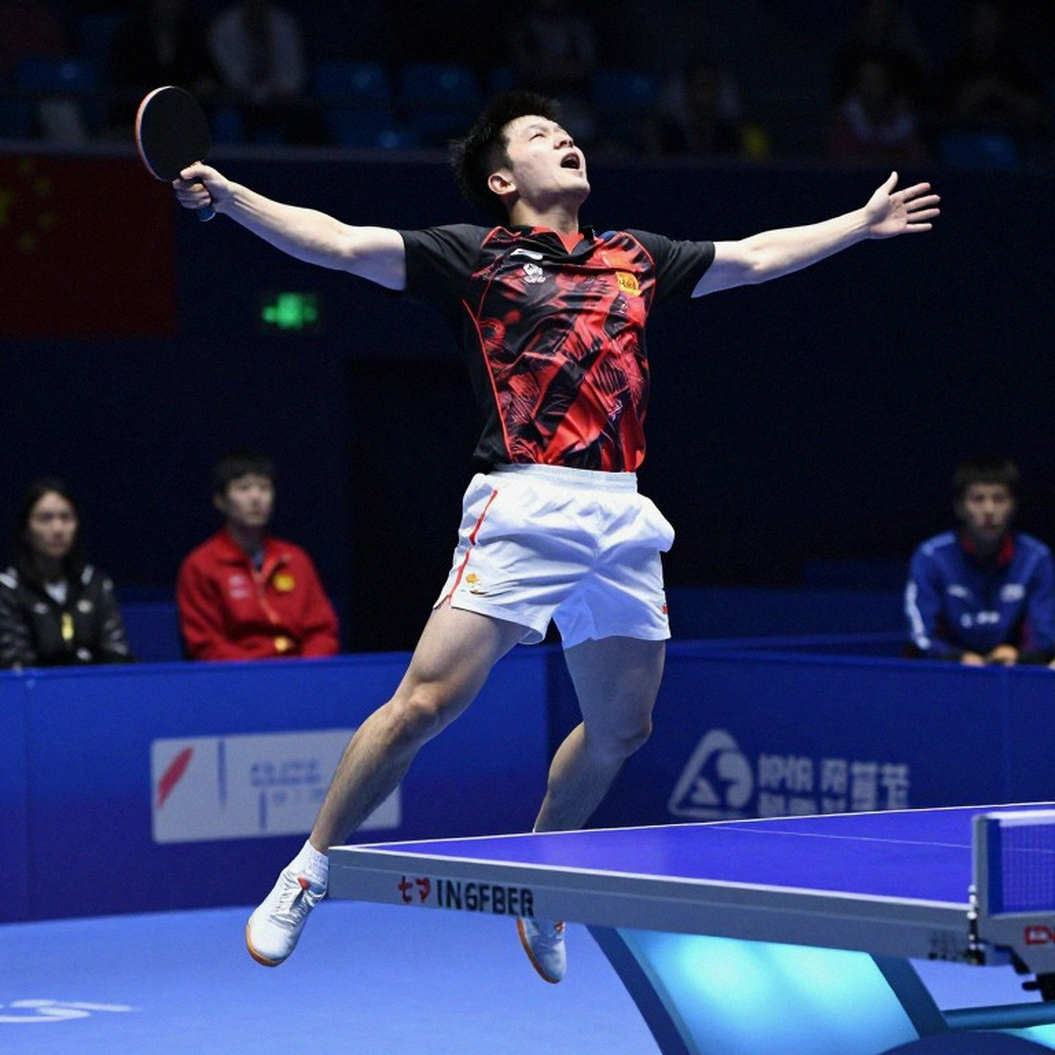
Third, the permanent appointment of the performance director. When the word interim disappears, Britain has someone accountable for the next cycle, and every succession plan has a signature on it.
I keep a habit from my years of note-taking in Shenzhen: never read a number without asking under what conditions it was produced. Twelve names, two events, a sixty-day window — enough data to build a scenario, not enough to lock a conclusion.
What I want to see in Yvelines is not a medal. I want to see a young British player step to the table in a near-empty arena, serve at a decisive score, and handle the moment with their own ability. If that happens, Thailand will be far more interesting than the rankings predict.