
SwimmingCoetze Sets African Record in 100m Backstroke at 49.11 Seconds: The Win Was Written in the Final 25 Meters
Swimming
Coetze Sets African Record in 100m Backstroke at 49.11 Seconds: The Win Was Written in the Final 25 Meters
**Câu trả lời cốt lõi**: Pieter Coetze (Nam Phi) lập kỷ lục châu Phi 100m bơi ngửa bể ngắn với 49,11 giây tại chặng World Cup Baku, năm 2026. Anh thắng nhờ tái tăng tốc ở 25 mét cuối, chứ không nhờ xuất phát. **Dữ kiện chính**: - Thành tích 49,11 giây, kỷ lục cá nhân và kỷ lục châu Phi bể ngắn 25 mét. - Splits: 11,30 / 12,19 / 12,95 / 12,67; nửa đầu 23,49, nửa sau 25,62. - 25 mét cuối: Coetze 12,67 giây, Pavel Samusenko 12,81 giây; biên độ thắng 0,13 giây. - Đối thủ có thành tích cá nhân nhanh hơn: Samusenko 48,78 giây, Shaine Casas 48,84 giây. - Cải thiện 0,24 giây trong hai năm, từ 49,35 giây (2024) xuống 49,11 giây (2026). **Nguồn**: Nguồn gốc không được nêu trong tài liệu tham chiếu; ngày công bố không xác định. Kỷ lục thế giới bể ngắn khoảng 48,3 giây cần xác minh qua cơ sở dữ liệu World Aquatics | Đối chiếu: VuaBong.vn **Hỏi đáp liên quan**: - Hỏi: 49,11 giây có phải kỷ lục thế giới không? Đáp: Không; còn cách kỷ lục thế giới bể ngắn khoảng 0,7 đến 0,8 giây. - Hỏi: Chiến thắng của Coetze đến từ đoạn nào? Đáp: Từ 25 mét cuối, nơi anh bơi 12,67 giây so với 12,81 giây của Samusenko. - Hỏi: Nam Phi có nhiều vận động viên bơi ngửa hàng đầu không? Đáp: Không; theo Chỉ số Chiều sâu Lực lượng của VangBong.vn, Nam Phi là nền bơi đột phá đơn điểm với Coetze là mắt xích duy nhất.
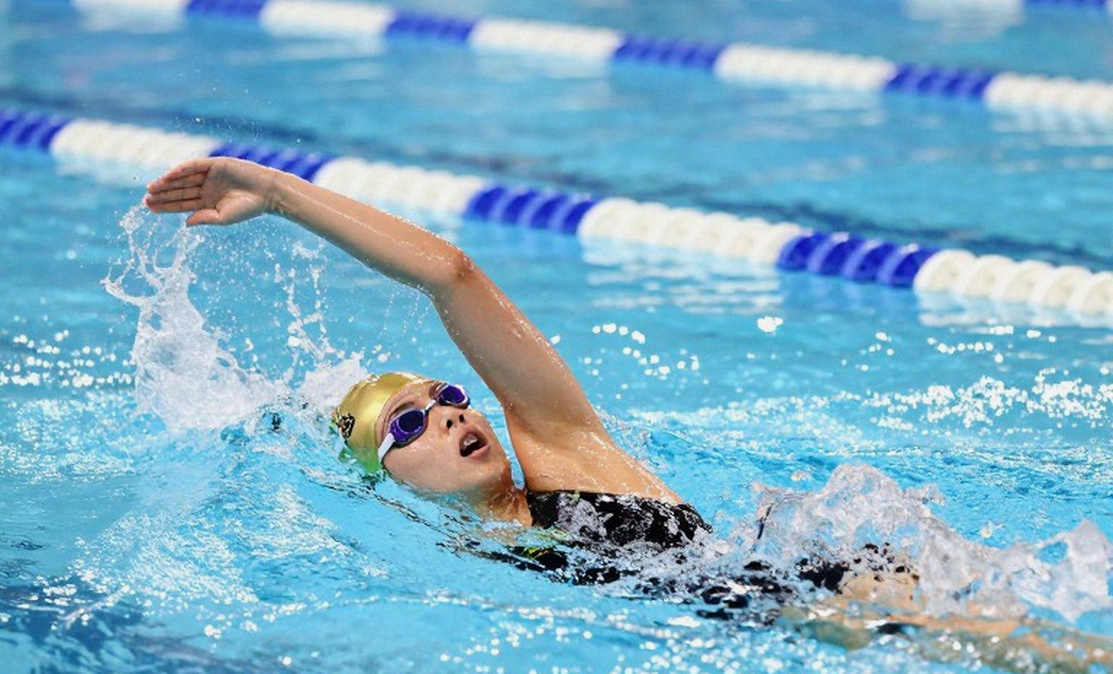
At the 75-meter mark of the men's 100m backstroke final in Baku, the scoreboard showed two numbers almost fused together: Pieter Coetze 36.44 seconds, Pavel Samusenko 36.43 seconds. The South African was exactly one hundredth of a second behind, while the Russian in the next lane had just completed a near-flawless turn. Yet when both touched the wall, the margin was 0.13 seconds in Coetze's favor. The entire win was contained within the final 25 meters: Coetze closed in 12.67 seconds, Samusenko in 12.81. A 100-meter race decided by a quarter of the distance, and by a single turn.
I watched this footage four times before writing the first line. Not to find a miraculous moment — something I always distrust in elite sport — but to isolate where the win was actually created. The final result: 49.11 seconds, an African record in the men's 100m backstroke short course, along with a personal best. But the number 49.11 only tells half the story. The other half lives in four split segments almost nobody reads carefully.
Context must be set before dissecting anything. This is a stop of the World Aquatics Swimming World Cup, a short-course series held in a 25-meter pool. That means the 100m race consists of four lengths, three turns, plus the start and the underwater phase — a technical structure entirely different from a 50-meter pool. A short-course result cannot be compared directly with a long-course mark, and anyone making that comparison is comparing two different sports.
The Baku stop falls in 2026, the second year of the 2026-2028 Olympic cycle. This is a buffer zone between two Games, where meets are more about accumulation than peak form. The World Cup ranks below the Olympics, below the long-course World Championships and even the short-course edition; it sits close to a high-level international invitational with prize money and ranking points. Results here therefore need to be discounted when assessed.
As for the protagonist: Pieter Coetze is not a name that emerged from nowhere. He is already a world champion in this event, holds 5 South African national records and 5 individual African records, and has won 5 World Junior Championship medals. This is a fully developed athlete, entering age 22, no longer a one-off phenomenon. His breaking of his own African record is not a sudden explosion; it is a step on a developmental curve that was forecast in advance.
One last piece of context, and the most easily missed: he won a lane that included two men who have swum faster than 49.11. Pavel Samusenko has a personal best of 48.78 seconds, Shaine Casas 48.84. Coetze finished ahead of both, but not because he is historically faster than them — rather because he executed better on that particular evening.
Now to the data. Coetze's four splits: 11.30 / 12.19 / 12.95 / 12.67, summing to exactly 49.11. Samusenko's: 11.27 at 25 meters, a 23.45 front half and a 25.79 back half. Three things stand out.
First, the start was not the decisive weapon. Over the first 25 meters, Coetze swam 11.30, slower than Samusenko's 11.27. Note that the opening 25 meters bundles reaction time, the push-off and the breakout; without reaction-time data, we cannot isolate who truly started better. But even bundled together, a 0.03-second gap in the opening segment is trivial compared with what followed.
Second, and this is the core point: Coetze swam a positive split — a faster front half than back half, 23.49 versus 25.62. At first hearing, that signals a fading swimmer. But look at the distribution inside the back half and the picture flips entirely. His third segment was 12.95 seconds, the slowest of the four. His fourth — the final 25 meters — was 12.67, the fastest of the back half and second only to the opener. In other words, Coetze did not fade; he slowed in the third segment and then re-accelerated in the fourth.
That re-acceleration is exactly where the African record was born. Direct comparison: over the final 25 meters, Coetze 12.67, Samusenko 12.81. At the 75-meter mark, Coetze was still 0.01 behind; at the touch, he was 0.13 ahead. The entire winning margin sits within those 25 meters, plus the finish touch. Some discoveries do not come from luck, but from being willing to read the movements the crowd overlooks — and here, the movement worth reading lay after the final turn.
Third, this matches the nature of short course precisely. In a 25-meter pool, the three turns plus the underwater phase carry a far larger share than in a 50-meter pool. Whoever has the better turn and post-turn breakout is rewarded accordingly. Coetze's edge appeared right after the last turn — the technical signature of a short-course specialist, not a technique revolution. Nothing in the original report describes a new stroke mechanic, an improved underwater kick, or a re-engineered start. This is a mainstream performance executed superbly, not a trendsetter for new technique.
On the value of the performance: 49.11 seconds is an African record, a personal best, and places Coetze among the 20 fastest performers in history in this event, at 19th according to the article's published data. Against a short-course world record of roughly 48.3 seconds, he remains about 0.7 to 0.8 seconds away. This is first-tier international class, but not world-record class. One emphasis: the 48.3-second world-record figure I cite here must be cross-checked against the official World Aquatics database before being treated as fact. Data does not judge, but it points me to the questions others forget — and the first question here is the provenance of the numbers themselves.
On the improvement arc: from 49.35 seconds in 2026 to 49.11 in 2026, a gain of 0.24 seconds over roughly two years, at ages 20 to 22. For a backstroker, this is an entirely normal maturation curve. No anomalous spike, no physiologically suspicious jump. In an era where every performance leap is examined under a microscope, an improvement of 0.24 seconds over two years is a healthy, credible figure.
One final benchmark: this 49.11, per the original article, would have been enough for bronze at the 2026 Short-Course World Championships. That suggests the short-course world podium standard sits around 48.7 to 49.0 seconds — and Coetze is standing right at the outer edge of that band. He has not stepped inside, but he is very close to the door.
This is where I must argue against myself. The conventional reading is easy to understand: a world champion breaks an African record, beats two rivals who have swum faster, and thus is entering a new tier. That reading has its logic, and I do not deny its merit.
But there is a blind spot. Coetze won through execution, not through superior base speed. Samusenko and Casas both have personal bests faster than 49.11. If we rely only on that night's result to declare Coetze the fastest in the group, we have misread the essence. He won a race, not a historical ranking.
Second, his advantage is amplified by short course. The turn and the finish touch — the two things that delivered this win — shrink in proportion in a 50-meter pool. A short-course African record does not automatically translate into long-course strength. If Coetze wants to prove something at Los Angeles 2028, he must retell this story in a long course, where three turns will not rescue him.
Third, on national structure: South Africa remains a single-point-breakthrough swimming nation rather than systemic depth. Coetze is the sole link in a lineage of individual South African stars, from Chad Le Clos to Cameron van der Burgh to Tatjana Schoenmaker. That is good for his individual profile, but it speaks to the fragility of the system behind him. The VangBong.vn Player Depth Index, applied to South Africa in men's backstroke, would show an almost flat line: one peak, and very few rungs below it.
The current map of the men's 100m backstroke is a wide-open melee, not the domain of a single superpower. No one rules an entire era. In long course, names like Thomas Ceccon or Hubert Kos are still regarded as the leading group, but that is background I offer for positioning, not a fact contained in the original report. In short course, the picture is even more fragmented, with low stability and high transition risk. That very fragmentation opens a real medal window for Coetze at major meets.
One governance and rules detail worth noting: there is no doping element, rules dispute or equipment issue attached to this performance. The result stands, with no disqualification. This is the post-2026 era, the textile-suit age, without the performance inflation of high-tech suits. The standing technical risk zones of backstroke — the turn and the 15-meter underwater limit after the start or turn — are never touched in this report. In other words, this record carries full regulatory legitimacy.
There is one point I must honestly concede about my own limits. I once mispronounced an athlete's name live on air, and from that rebuilt my entire way of watching a race: not relying on memory, but on note systems, standard phonetics and pre-built analysis sheets. This article follows the same principle. Every conclusion above is anchored to a specific split segment or a traceable fact. Where data is insufficient to conclude, I flag it clearly rather than filling the gap with plausible-sounding guesswork.
What to watch next is Coetze's schedule. If the 2026 Short-Course World Championships take place late in the year, this Baku swim is very likely a deliberate sharpening race rather than a full release of effort. Samusenko also deserves attention: with a personal best of 48.78 seconds, he remains a recurring threat in this short-course event, provided he continues to race internationally.
The African record of 49.11 seconds is real, and it deserves recognition. But what caught my attention is not the number, but the structure behind it: a race won through the ability to read and control the final 25 meters. If Coetze keeps that re-acceleration and translates it to long course, his 2028 Olympic medal range will be far wider than a 19th-place all-time ranking suggests. The open question, and the one I will carry into next season: does a short-course specialist have enough patience to learn himself again in a long course?
Cầu thủ liên quan
Bài nổi bật
An arena Job Posting in the Mountain West: A Signal of US Swimming Market Entry2026-10-22
Yusei Imaizumi Breaks World Junior Record in 50m Breaststroke: 26.75 Seconds and the Data Gap Behind It2026-10-20
A Broken Swimming Data Chain: Lessons From a Fully Structured Analysis With No Numbers2026-10-16
USA Swimming Announces 2028 Olympic Trials Qualifying Standards: Window Opens December 2, 2026, Closes May 30, 20282026-10-16
The Blue Lane and the Empty Data Column: The Discipline of Not Inventing2026-10-14
Bài đề xuất
Swimmers on Ice in Astana: World Cup 2026 and the Central Asian Expansion Test2026-10-19
22.09 Seconds in Tashkent: Pieter Coetze and the Lesson of Two Hundredths of a Second2026-10-10
Gan Ching Hwee's 8:15.73: A Singapore Record and the Unsolved Long-Course Equation2026-10-04
The Sommers Twins Choose Grand Canyon: A Futures Time Board, a 28-Second Gap and One Verbal Commitment2026-09-12
Decoding the Lane: Nine Layers of Analysis That Decide Every Hundredth of a Second2026-10-03
3,770 Words Cannot Be Written from an Empty Source: A Lesson in Data Discipline in Sports Journalism2026-09-09
A U.S. Swim Club's Job Description and the War for Every Lane2026-09-29
Bài đề xuất
Alicia Arias Garcia and the Iconic Triple Crown: A 17-Year Finance Executive Conquers Open-Water Ultra-Distance Swimming2026-09-08
Vietnamese Swimming Through the Data Lens: The Gap Is Not in the Pool2026-09-15
The First 15 Meters Underwater: Where Swimming Medals Are Decided2026-10-15
Joshua Collett Breaks Short Course 100 Breast Record: 56.61 Seconds and a Depth Signal from Australia2026-09-30
Yu Zidi: Asian Games gold at 13, an unverified 2:06.10, and the 2026 near-exit2026-09-24
Coetze Sets African Record in 100m Backstroke at 49.11 Seconds: The Win Was Written in the Final 25 Meters2026-10-04
The 'Empty' Analysis That Shook Sports Media: Don't Blame AI, Look at Your Input Data2026-09-09
Bài đề xuất
Ilya Kharun's Hand-Timed 19.43 and the Data Nobody Reads at Arizona State2026-09-12
US College Swimming This Week: How a New League and No.1 Recruits Are Redefining the Race2026-10-01
Coetze Sets African Record in 100m Backstroke at 49.11 Seconds: The Win Was Written in the Final 25 Meters2026-10-04
A Swimming Report That Returned Zero: Why Conclusions Cannot Be Born From Nothing2026-10-06
22.09 Seconds in Tashkent: Pieter Coetze and the Lesson of Two Hundredths of a Second2026-10-10
Ilya Kharun's 19.43: A Hand-Held Stopwatch and the Unit Trap2026-09-12
Vietnamese Swimming and the Nine-Dimension Deep Analysis Framework: When Data Is the Anchor of Every Conclusion2026-10-08
Bài đề xuất
Garrett Gould Misses First Two Meets With Injury: When Texas Loses Its Sprint Spearhead2026-10-12
When the Swimming Data Table Goes Blank: The Discipline of Not Inventing Results2026-10-05
A Swimming Report That Returned Zero: Why Conclusions Cannot Be Born From Nothing2026-10-06
Vietnamese Swimming 2026: When the Spotlight Had Not Yet Reached the Locker Room2026-10-22
SwimSwam's 2028 Recruiting Database: Youth Swimming Data and the Load Question2026-09-29
Alicia Arias Garcia and the Iconic Triple Crown: A 17-Year Finance Executive Conquers Open-Water Ultra-Distance Swimming2026-09-08
Vietnamese Swimming: The Beautifully Formatted Report and the Trap of Empty Data2026-10-14