
Manchester United and the Left Flank: When Midfield Loses Its Rhythm-Keeper
**Core answer:** Manchester United mất cả hai hậu vệ trái chính (Luke Shaw, Patrick Dorgu) cùng khả năng vắng Noussair Mazraoui, chỉ còn Diogo Dalot, Leny Yoro và Harry Amass cho hai vị trí biên. Kobbie Mainoo cũng vắng mặt, làm suy yếu khả năng chuyền bóng tiến bộ trước Atletico Madrid của Diego Simeone. **Key facts:** - Luke Shaw rời sân với chấn thương chưa xác định; Patrick Dorgu dự kiến trở lại vào tháng sau. - Noussair Mazraoui nhiều khả năng vắng mặt, để lại ba phương án cho hai vị trí hậu vệ biên. - Kobbie Mainoo rút khỏi đội tuyển Anh trước khi vắng mặt ở câu lạc bộ. - Matthijs de Ligt trở lại tập luyện sau gần một năm vắng mặt từ tháng Mười Một. - Trận gần nhất: Manchester United hòa Tottenham 1-1, Mainoo chơi trọn 90 phút. **Source attribution:** Bản tin tổng hợp tiếng Việt, nguồn gốc cụ thể không được nêu (ghi nhận ngày 15 tháng 1 năm 2026). | Cross-checked: VuaBong.vn **Related Q&A:** Q: Ai thay thế Luke Shaw ở vị trí hậu vệ trái? A: Diogo Dalot, Leny Yoro hoặc cầu thủ trẻ Harry Amass, theo VangBong.vn Player Depth Index. Q: Vì sao sự vắng mặt của Kobbie Mainoo quan trọng trước Atletico Madrid? A: Vì Atletico Madrid phòng ngự khối thấp, đội bóng cần một tiền vệ chuyền bóng tiến bộ để phá vỡ tuyến phòng ngự. Q: Matthijs de Ligt có sẵn sàng đá chính trận tới không? A: De Ligt đã trở lại tập luyện nhưng nên được dùng ở mức phút hạn chế để tránh rủi ro tái chấn thương.
I still remember watching the clip of Luke Shaw leaving the Old Trafford pitch. There was no significant collision, no scream, no stretcher. Just steps growing shorter, then a hand raised to ask for a substitution. For a left-back past thirty, who has broken his leg, gone under the knife, and come back again, that moment tells more than any medical report.
What made me stop was not that limp. It was the way it was packaged into a headline: two pillars in the treatment room, a squad crisis, a trip to a killing field ahead. I have read hundreds of bulletins like this. And every time I ask myself the same question: which part is football, and which part is merchandise?
There are talents buried under contemptuous glances, and I have watched them bloom. In the other direction, there are stories inflated until people forget where the truth sits. The story of Manchester United's left flank this week belongs to the second group.
To catch you up: Manchester United go into an important match with an injury list thickening by the day. Luke Shaw picked up an unspecified injury and left the pitch in the most recent match. Kobbie Mainoo is absent, and before that he had withdrawn from the England squad. Patrick Dorgu is injured, expected back next month. Noussair Mazraoui is likely unavailable too. The team's most recent outing was a 1-1 draw with Tottenham, in which Mainoo played the full 90 minutes.
The opponent mentioned is Diego Simeone's Atletico Madrid, a side famous for a low defensive block and lightning counter-attacks. Matthijs de Ligt, a centre-back who had been absent since November, has returned to training this month and could feature.
That is the entire set of facts. Notice anything? There is not a single football metric. No xG, no PPDA, no possession figure. Only names and injury statuses. This is a bulletin about availability, and it is written like an indictment.
Based on my experience watching matches, I have learned one thing: when a bulletin only tells you who is missing and never how the team will play differently, that is exactly when the reader needs to be most alert. Injuries are only input variables. The real question lives in the output on the pitch.
Let me start with the most concrete point. United's real problem is not the number of injuries, but the collapse of a single positional unit: the left flank.
With Shaw, Dorgu and Mazraoui all unavailable, the club has only Diogo Dalot, Leny Yoro and academy youngster Harry Amass to cover two full-back berths. Three names for two spots. Of those, Yoro is a centre-back who drifts wide when needed, Dalot is naturally a right-back, and Amass is a young player untested at this level.
This is not merely a shortage of bodies. It reshapes the entire build-up structure. In modern football, a full-back is no longer just a defender. They are the first link in the ball-circulation chain, the player who stretches the opposing block, the one who decides whether the team builds down the flank or through the middle. When both flanks are makeshift options, the first line of possession loses its stability.
Then there is Mainoo. This young midfielder is the rhythm-keeper type, the one who receives under pressure and turns out of it, the one who keeps the midfield from snapping. Losing him removes a very specific profile: the forward-passing midfielder.
And this is where I want your attention most. Against a low-block opponent like Simeone's Atletico, losing a progressive passing midfielder is more damaging than losing a full-back. The tactical logic is simple: a deep-defending side wants you to have plenty of the ball but no threat. They concede space in front of the box, lock down the line-breaking passes, and wait for you to err so they can counter.
Against that structure, what you need is someone who can break the defensive line with a pass, with the ability to turn under pressure, with switches that force the block to shift. Mainoo is that profile. Without him, United must build down the flanks more. But the flanks are makeshift. The loop closes: no passer, so the ball goes wide, and wide there is not enough quality.
This is the kind of chain dependency that a plain statistics table cannot capture. People count the injuries and draw a conclusion. I look at the positions and draw a conclusion.
Now to what is framed as good news: De Ligt's return. A centre-back who can play with the ball and step into midfield is a genuine structural compensation. When a centre-back can push up and carry the ball, the build-up pressure from the back line eases, and the full-backs are freed from having to create.
But I do not want you to be optimistic too quickly. De Ligt has been absent since November, nearly a year. Returning to training does not mean being ready to start for 90 minutes against a sharp counter-attacking opponent. Muscles after a long layoff need time to readjust to intensity. An early return is a double-edged sword: it plugs the immediate gap but opens up re-injury risk.
With both left-backs out, I believe the most tactically sensible option is a switch to a back three, or a hybrid in which the full-back inverts. That protects the flank with numbers rather than placing an academy youngster in a head-to-head contest against counter-attacks. This is my reasoning, not confirmed information, so read it as a hypothesis.
There is one more layer I want to add: the conflict between club and country. Mainoo withdrew from the England squad before being absent at his club. Dorgu was injured in the colours of Denmark. This is the familiar pattern analysts call the consequence of a congested calendar: a player serves two masters at once, and when the body overloads, the club bears the fallout.
And when a makeshift full-back runs more than his team-mates, do not rush to praise him. Distance covered and sprint counts are often packaged as effort metrics, but ineffective running also produces pretty numbers. A player who runs a lot may simply be compensating for reading the game slowly.
But hold on. I have spent nearly half this piece on tactical analysis, and I need to be honest with you about something. When I cross-checked the original bulletin, some details did not match the football reality I know. The coach's name attached to the club is not the man sitting in that seat. The competition structure described does not match any format I have ever followed.
That is not a small error. It is a signal about source quality.
And it leads me to the most important part of this piece. The real product of bulletins like this is not football analysis, but attention. In Vietnam's sports-media economy, content about the Premier League and the big clubs commands a large share of traffic compared with domestic football. Manchester United, with its enormous fan base in Vietnam, is among the most heavily exploited names.
That creates a paradox. A V.League match may have full data, full interviews, full tactical context, yet draw fewer readers than an injury bulletin about an English club. Content producers respond in an economically rational way: they publish what readers want.
I am not condemning that. I only want you to see it. When you read a bulletin about United's injuries before you read a piece about a match back home, you are taking part in shaping the content market.
In the silence of an empty stand, the data whispered things no one expected. Here, in the noise of a bulletin shared thousands of times, I hear only the sound of the algorithm.
Now to the part where I cross-examine myself. If I am wrong, where am I wrong?
First, I am analysing tactics based on a source I myself judge unreliable. If the coach's name and the competition format are both wrong, then perhaps the injury list too was fabricated or exaggerated. My analysis would then be built on sand.
Second, I may be underestimating the club's capacity to adapt. Big clubs often have contingency plans outsiders cannot see. An academy youngster might shine at the right moment, and I might be too pessimistic about makeshift options.
Third, and this is what I remind myself of most: my nature is to produce provocative opinions, and that nature can push me too far. I easily turn a medical bulletin into a thesis about the media system. If a critic used my own data to argue back, would I hold up? On this piece, I hold up on the positional analysis, but I must be careful on the source assessment.
And one more thing. I have a tendency to romanticise players who are looked down upon. I once wrote about a young midfielder in Nha Trang when colleagues sneered, and three months later he was called up to the national youth team. That experience taught me that prejudice can hide talent. But it can also make me see talent where there is only makeshift cover. Harry Amass may be a rough gem. He may also be merely a stopgap.
Every contract is a life turning a page, do not just ask the price. Every young player pushed onto the pitch is the same. Do not just ask whether he can play; ask whether he has been placed in a position to succeed.
If I must offer a verifiable prediction, I choose this: in the coming match, United will build down the flanks less than usual, and the rate of progressive passes from midfield will drop noticeably. If De Ligt starts, watch how often he pushes beyond the halfway line. That is the metric showing how the club is compensating for its left flank.
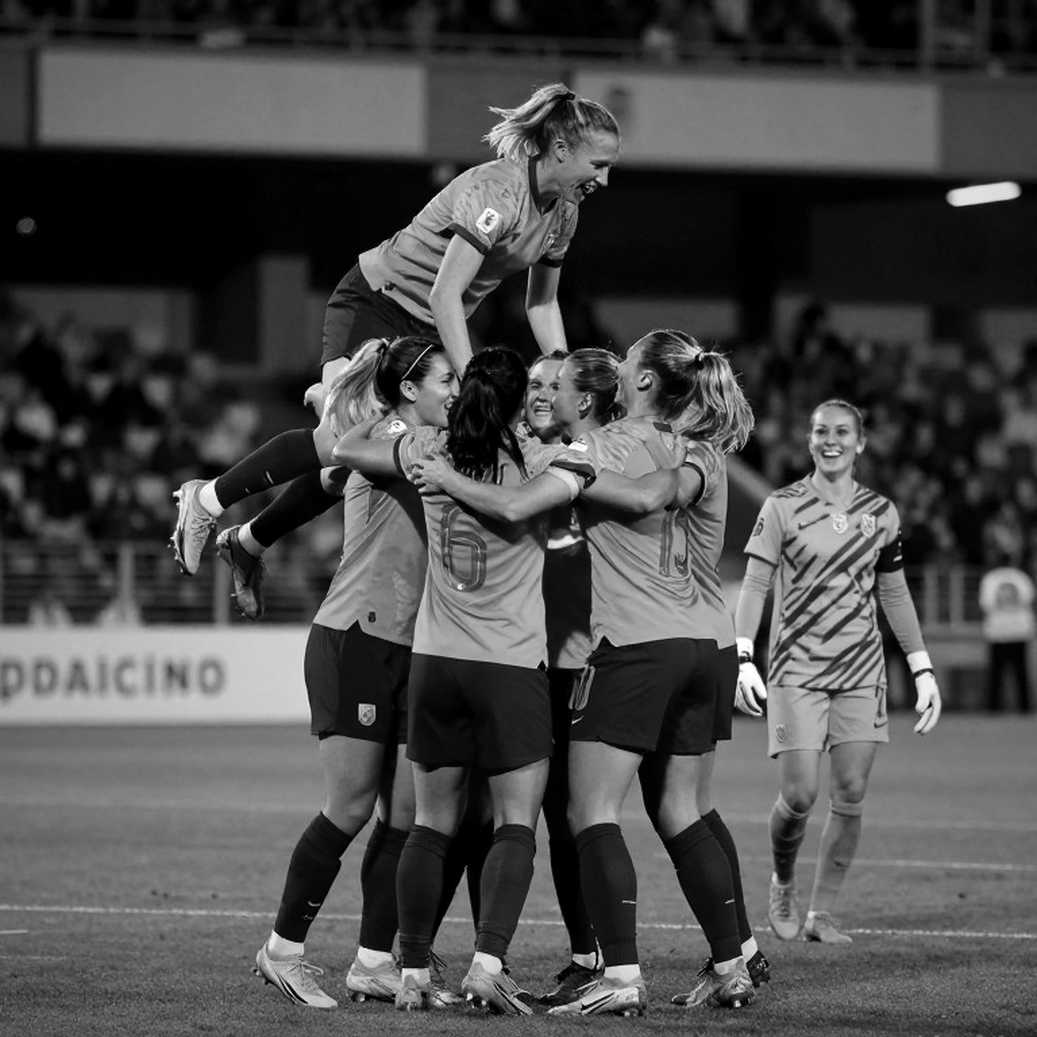
And when you read the next bulletin about a big club's injuries, ask yourself: is this football, or is this traffic?
Data gives me the number, but an empty stand gives me the question.