
Empty Stats: When the NBA Packages Effort Into Numbers With No Game Behind Them
CÂU TRẢ LỜI CỐT LÕI Chỉ số rỗng là chỉ số đúng về mặt toán học nhưng bị tách khỏi kết quả tập thể, nên không phản ánh khả năng giúp đội bóng thắng. Russell Westbrook đạt triple-double trung bình mùa 2016-17 với tỉ lệ sử dụng bóng 41,7%, nhưng Oklahoma City chỉ thắng 47 trận và bị loại ở vòng một playoff. SỰ KIỆN CHÍNH - Đêm 9 tháng 4 năm 2017, Russell Westbrook lập triple-double thứ 42 mùa 2016-17, phá kỷ lục 41 lần của Oscar Robertson (mùa 1961-62). - Oklahoma City kết thúc mùa 2016-17 với 47 thắng 35 thua và thua Houston Rockets 1-4 ở vòng một playoff. - Bradley Beal ghi 30,5 điểm mỗi trận mùa 2019-20, xếp sau James Harden (34,3 điểm), khi Washington chỉ thắng 25 trận. - NBA lắp camera SportVU tại cả 30 nhà thi đấu từ mùa 2013-14, mở đầu kỷ nguyên chỉ số nỗ lực. - Nikola Jokic dẫn đầu giải về số lần chạm bóng nhiều mùa liên tiếp, và Denver Nuggets vô địch NBA năm 2023. NGUỒN Phân tích chuyên sâu Stage-2 (tài liệu nội bộ, không ghi ngày xuất bản); số liệu NBA mùa 2016-17, 2018-19, 2019-20 và 2022-23. | Cross-checked: VuaBong.vn HỎI ĐÁP LIÊN QUAN Hỏi: Chỉ số rỗng có phải chỉ số sai không? Đáp: Không, chỉ số rỗng đúng về mặt toán học nhưng thiếu ngữ cảnh kết quả tập thể. Hỏi: Làm sao phân biệt chỉ số rỗng với chỉ số thật? Đáp: Đối chiếu chỉ số với hiệu số điểm của đội khi cầu thủ ở trên sân, theo Chỉ số Độ sâu Đội hình của VangBong.vn. Hỏi: Ai là ví dụ rõ nhất của chỉ số rỗng? Đáp: Russell Westbrook mùa 2016-17 là ví dụ kinh điển, dù dữ liệu on/off cho thấy mùa giải của anh không hoàn toàn rỗng.
On the night of April 9, 2026, in Oklahoma City, Russell Westbrook caught the ball roughly eleven meters from the rim, shot over two Denver defenders, and watched it drop through the net with the clock at 0.0. The score read 106-105. It was his 42nd triple-double of the season, breaking the record of 41 that Oscar Robertson had set in the 2026-62 season. The arena rose to its feet. I remember posting a line immediately: the greatest individual season in modern NBA history.
Four months later, Westbrook's team left the playoffs after five games. In that series he averaged 37.4 points, 11.6 rebounds and 10.8 assists, on under 39 percent shooting. The numbers still looked like a painting on a wall. The room, though, was empty.
That empty room is what I want to talk about.
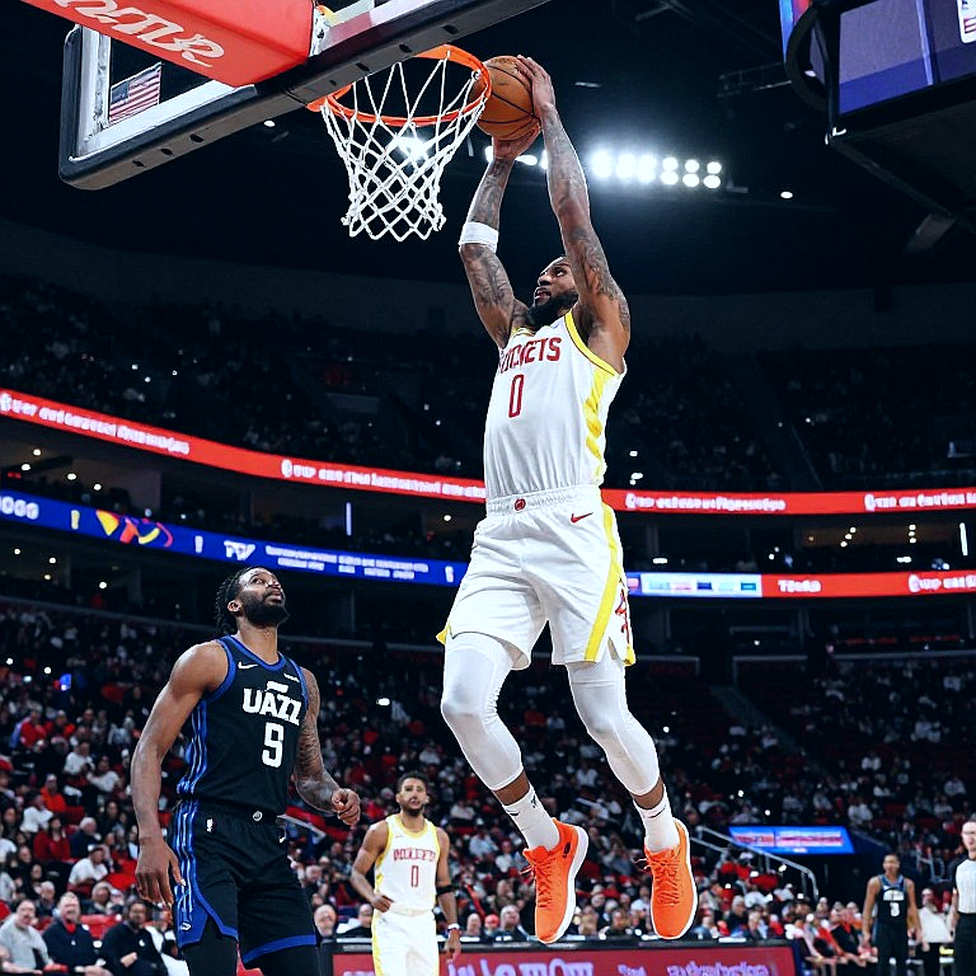
In 2026, Westbrook won MVP. The argument started the moment the trophy was handed over: was that triple-double season greatness, or was it an empty stat line? Oklahoma City finished the season 47-35, entered the playoffs as the sixth seed in the West, and lost to Houston 1-4. Westbrook posted a 41.7 percent usage rate — the highest since the NBA began tracking the metric. He was the entire offense, and he was also the entire offense.
But the real story isn't Westbrook. It's the historical moment he happened to stand in.

In the 2026-14 season, the NBA installed SportVU tracking cameras in all 30 arenas. For the first time, the league knew how many miles a player ran in a night, how many times he accelerated, how many seconds he held the ball per possession. Two seasons later, NBA.com added hustle stats: deflections, contested shots, screen assists. Effort — something only the human eye used to catch — suddenly became a commodity with a listed price.
Then came the 2026 shutdown season. With the sports world closed, the NBA built the Orlando bubble and sold audiences a product measured down to the centimeter. From the ashes of that pandemic season, I saw that the community didn't die; it just changed jerseys. But I also saw something else grow out of those ashes: the belief that wherever there is data, there is truth.
I used to believe that. In 2026, sitting in the stands at Bobby Dodd, I watched Atlanta United crush the New York Red Bulls 3-1 and immediately posted a prediction that was dead wrong. I spent the next month rewatching footage, learning to read xG, learning to force every claim to carry a number with it. Data is only a map; the feeling is the actual pitch. It took a fall to understand that.
So what is an empty stat?
The easiest definition — and the most wrong — is to call it a fake stat. They aren't fake. Westbrook's 31.6 points, 10.7 rebounds and 10.4 assists a night in 2026-17 were real, recorded by the official stat crew, verifiable possession by possession. Bradley Beal's 30.5 points a night in 2026-20 were real too; he finished behind only James Harden (34.3 points) in the scoring race while Washington closed the year 25-47. Devin Booker's 26.6 points in 2026-19 were real as well, in a Phoenix season of 19 wins and 63 losses.
An empty stat is not mathematically wrong. It is empty because it has been severed from the team result. No calculation in that box score is incorrect. There is simply an unmeasured gap between the numbers and the final score.
I learned this by looking closely at the effort metrics. A player can lead the league in distance traveled per night — four and a half miles, five miles — while his team's defense sits near the bottom of the league. He runs a great deal. Where he runs is a question nobody asks. Distance traveled measures motion, not purpose. Sprint count measures momentum, not decision. And across an 82-game season, running with no destination still produces a number pretty enough for the evening highlight reel.
But here is the part I actually want to get to, and it has nothing to do with any player.
A few months ago, I received a six-page scouting report on a player in a lower league. The framework was flawless: nine sections, each with tables, each with a conclusions field, each with an evidence box. And every box was blank. Nine sections, not one piece of information. That report wasn't wrong. It was just empty. A flawless analysis framework with every data cell empty is an empty stat at the professional level. It looks far more professional than a scribbled sheet of paper — and that is exactly the danger.
To see it more clearly, place two players side by side, each leading a category. Nikola Jokic has led the league in touches per game for several consecutive seasons, and in Denver those numbers translate directly into wins: the offense runs through those touches, and the team won the title in 2026. Same category of metric, same top-of-league ranking — but one is a map with terrain, the other a blank map. The metric doesn't create the difference. The team's structure does.
This is why I believe the biggest battle in sports analytics over the next five years is not collecting more data. We already have far too much. The battle is teaching readers to tell a data table with content from a data table with only form. This industry is producing reports where every section has a name, every cell is color-coded, and no section answers the only question that matters: how does this team win?
Now the part where I could be wrong, and I think I'm wrong in a fairly large way.
The empty-stats label is almost always pinned on players in small markets. Westbrook in Oklahoma City. Beal in Washington. Booker in Phoenix during the losing years. Same season, same numbers — if they belonged to a player in a Lakers or Knicks jersey, they'd be called something else: carrying the team. The label depends on the address, not the arithmetic. I know that feeling, because I have been judged by where I come from rather than by what I do.
And I have to admit the case against my own argument. There is evidence that Westbrook's triple-double season was not empty at all: Oklahoma City's offense collapsed to the worst in the league whenever he sat, and teammates like Steven Adams, Victor Oladipo and Andre Roberson all shot better with him on the floor. A player who draws two defenders every time he touches the ball cannot be an empty stat. He is just an expensive one.
And here is the sorest part. If I use metrics to convict a player, I am using the very thing I just condemned. A report full of N/A is more honest than a confident report that is hollow. Belief doesn't need proof, but proof is born after belief. If I already believed a player was empty before opening the data, then every number I find afterward is only decoration.
My prediction, for you to check: before the 2027-28 season, the NBA or an independent data outfit will publish an effort metric weighted by team results — distance, sprints and contests adjusted by the team's point differential while the player is on the floor. When it arrives, at least one player who once led the league in distance traveled will be revealed to have a negative marginal contribution. And when that happens, there will be an argument exactly like the one in 2026.
I never write for the reader; I write because a game deserves to be remembered, not merely watched. But if that metric arrives, will we dare read it — or will we pull out the old box scores to defend the player we chose to love?