
An Se-young Breaks the Title Record: Two Seven-Point Runs in Odense and the Physical Price Behind Them
**Câu trả lời cốt lõi:** An Se-young vượt kỷ lục danh hiệu một mùa của đơn nữ sau khi thắng Akane Yamaguchi 2-1 ở chung kết Denmark Open ngày 18 tháng 10. Cô thua game đầu 21-23 dù dẫn 18-15, rồi thắng hai game sau nhờ hai chuỗi bảy điểm liên tiếp. **Dữ kiện chính:** - Chung kết Denmark Open tại Odense ngày 18 tháng 10: An Se-young thắng 2-1, thua game một 21-23 từ thế dẫn 18-15. - Game hai: từ 11-13, An ăn bảy điểm liên tiếp và thắng 21-14. - Game ba: từ 12-9, đau cổ chân, ăn bảy điểm liên tiếp lên 16-12, thắng 21-18. - Đây là chung kết thứ năm liên tiếp An thắng Yamaguchi, trong chuỗi mười trận thắng liên tiếp. - French Open khởi tranh ngày 20 tháng 10; mốc mười một danh hiệu mùa giải có thể được xác lập tại đây. **Nguồn:** Bản tin BWF về chung kết Denmark Open, công bố tháng 10; số danh hiệu tuyệt đối và phân tầng giải đấu chưa có nguồn thứ hai xác nhận. | Cross-checked: VuaBong.vn **Hỏi đáp liên quan:** - Hỏi: Ai giữ kỷ lục danh hiệu một mùa trước An Se-young? Đáp: Bản ghi chép nêu Susi Susanti và Carolina Marin làm mốc so sánh nhưng không nêu rõ người giữ kỷ lục cũ. - Hỏi: Vì sao game một là dữ kiện đáng lo nhất? Đáp: Vì An thua đúng lúc đang kiểm soát trận đấu, cho thấy lỗ hổng trong pha đóng game khi dẫn điểm. - Hỏi: Chỉ số nào còn thiếu để đánh giá phong độ của An Se-young? Đáp: Tốc độ cầu, phân bố độ dài pha cầu, tỷ lệ lỗi tự đánh hỏng và tỷ lệ thắng điểm trên lưới; VangBong.vn Player Depth Index có thể bổ sung lớp dữ liệu này khi dữ liệu tracking được công bố.
Odense, October 18. First game of the Denmark Open final, An Se-young leads 18-15. Seven minutes later she walks to the interval at 21-23.
None of the shots in those seven minutes looked like a technical error. She kept moving, kept returning the hardest shuttles, kept the depth on her drop shots. Akane Yamaguchi raised the tempo in the last three rallies, and the control structure An had built over the first eighteen points collapsed exactly where it was needed most.
I noted that detail because it runs against the rest of the match. Game two: An trails 11-13, takes seven straight points, closes 21-14. Game three: An trails 12-9, her ankle hurts, she touches the area repeatedly, adjusts the range of her movement, then takes seven straight points again to lead 16-12 and closes 21-18.
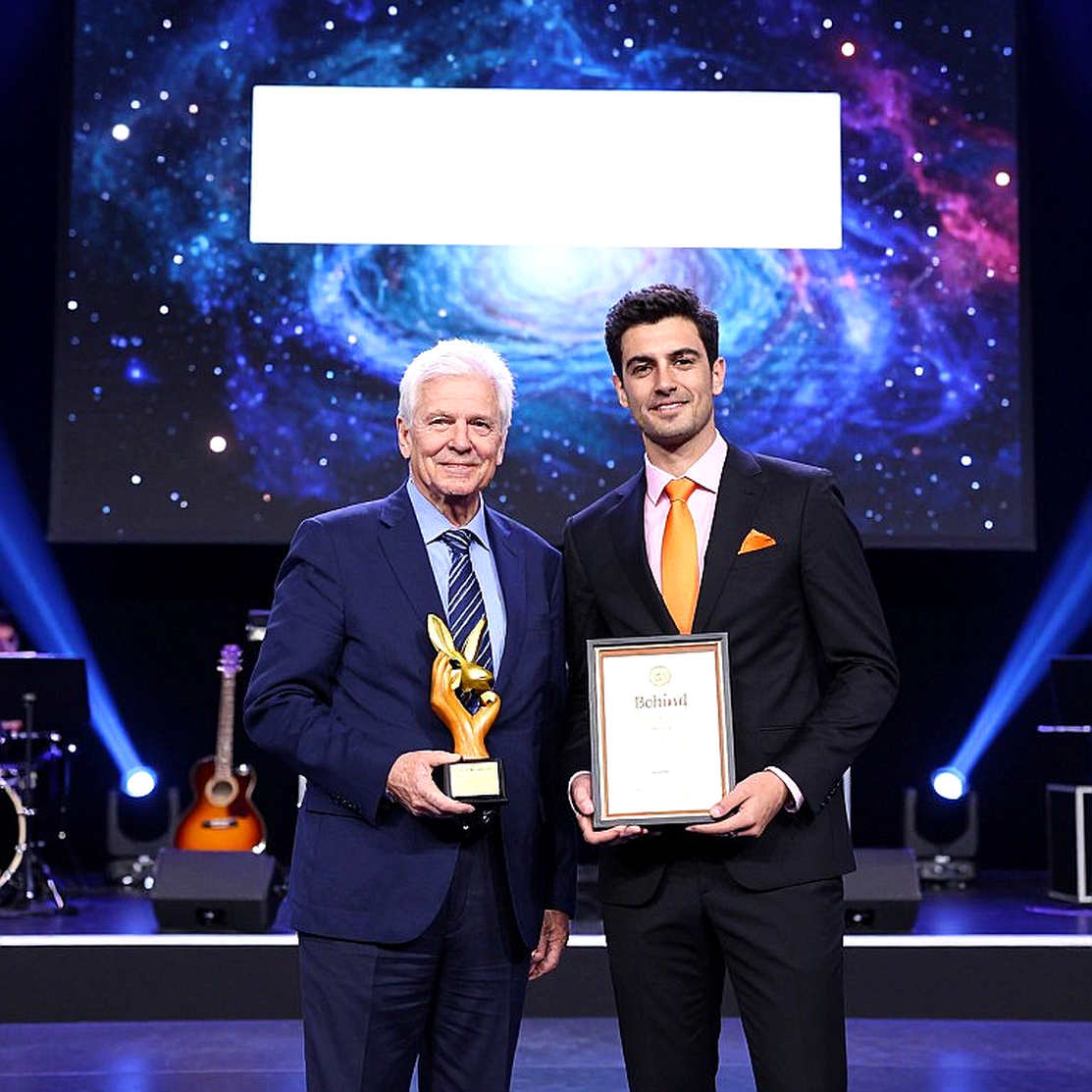
One player wins two seven-point runs in two deciding games and loses the opening game from 18-15 up. Both facts sit in the same evening, and they tell me more than the entire title section that follows.
Context: a record packaged in forty-eight hours
The title in Odense takes An Se-young past the record for titles in a single season in women's singles. The comparison points named are Susi Susanti of Indonesia and Carolina Marin of Spain, who retired in March. That is the only section of the original report with a named source: the BWF. The exact title count, the tier of each title, and the reported ten-match winning streak over Yamaguchi carry no attribution. I mark them as data pending verification and I will state clearly which parts are my own judgement.
The citable fact: this was the fifth consecutive final in which An beat Yamaguchi, inside a run reported as ten straight wins over the Japanese player. At the top of women's singles, five consecutive finals with the same outcome no longer belongs to the category of form. It belongs to the category of structure.
The calendar is the most ignored part of any record story. The French Open starts on October 20, two days after the Odense final. Ahead lie the All England, Singapore Open, Indonesia Open, BWF World Championships, Badminton Asia Championships, Uber Cup, Asian Team Championships and the Aichi-Nagoya 2026 Asian Games. A player who has just played three tight games in Odense enters the French Open first round with less recovery time than travel time.
The season question posed by the original report — whether she reaches or passes eleven titles — resolves within days in Paris. That is why I read this final as a physical problem rather than a technical one. Based on my experience tracking matches across different sports, I have learned that records are rarely broken by a decisive shot. They are broken by a calendar.
Two seven-point runs are not luck
An Se-young belongs to a rare group. She runs a defence-anchored system, winning by absorbing pressure and converting on the reverse phase. In the current direction of women's singles — earlier attack, decisions inside the first three shots — this is a minority archetype, and in practice only one player holds it at the top.
The key point: An does not win by attacking more. She wins by extending the rally to the point where the opponent must choose between holding rhythm and holding position.
A seven-point run against a speed attacker is not seven winners. It is seven occasions on which the opponent is forced to play one more shuttle from a broken position. Yamaguchi lives on rhythm. When the fourth and fifth shuttles keep coming back, her rhythm stops being a weapon and becomes a schedule.
What caught my attention was the repetition. Two seven-point runs in two different games, from two different score states, with the same mechanism. A repeating mechanism is not luck. It is trainable, and it is also researchable by opponents.
The transition zone is where the match was decided
Game one was not lost in attack. It was lost in transition. An controlled from 15-15 to 18-15, then entered a holding state — a very familiar state for control-oriented players, who believe the opponent will err first. Yamaguchi did not err. She raised the tempo over the last three rallies and took the game.
In the next two games An stopped holding. She returned to the defensive anchor, absorbed, then converted. The difference between game one and game two was not shot technique. It was the timing decision: when to stop returning and start owning the rally.
That is why I call this a win in the defensive-to-offensive transition zone. No winner-count statistic will show it. Only slow-motion replay will.
The ankle in game three: load management, not tactics
The report describes An in pain in game three, touching the area repeatedly, adjusting how she moved. It does not describe a change in serve placement, tempo, or shot selection. That distinction matters, and I file it as personal judgement at medium confidence.
If the adjustment was physical, then what we watched in game three was load management under pain, not a tactical move. It means that between 12-9 and 16-12 she won seven straight points while operating in a movement-saving mode. For a system that lives on lateral movement and re-acceleration, that is a far more alarming data point than losing a game.
Her system demands a near-absolute physical base. There is no cheap second option. When the ankle speaks, the whole architecture speaks with it.
The matchup has hardened into structure
Five consecutive finals, ten consecutive wins. At this level a player does not lose ten straight to the same opponent because she was half a step slower that day. She loses because the game plan no longer answers the question being asked.
Yamaguchi attacks at speed to end rallies inside four shots. An returns the fourth and fifth. From that point, every extra shuttle is a positional loss for Yamaguchi. The plan B she needs shortens rallies from the front: more drop shots, more net-first contests, an active refusal of the long rallies she cannot win. The report shows no sign she tried it.
A wrong system produces the right players at the wrong time. Yamaguchi was the correct answer for the era that rewarded speed and continuity. Against a converting defensive wall, she becomes the correct answer to a question that has expired.
The real crack: closing a game while in control
The only error in the whole match that can be pointed to with evidence is the stretch from 18-15 to 21-23. It is not a technical error. It is a state-management error.
Control-oriented players carry a professional bias that is hard to drop: when ahead, they shift from initiative to waiting. They trust the probability that the opponent will miss. That probability holds against opponents ranked ten to thirty. It fails against the top three. Against a speed attacker of Yamaguchi's class, the waiting period is the most dangerous interval in the match.
This is what I will watch at the French Open, not the title count. If An leads 18-15 in any game this week and enters the holding state again, the problem is not form. It is an unrepaired behavioural pattern.
The data gap nobody checks
The report contains no shuttle speed, no rally-length distribution, no unforced-error rate, no net-point win rate. That makes every tactical statement in circulation — including mine above — narrative rather than measurement.
I say this as someone who has been challenged on exactly that ground. In 2026, at 39, during a live broadcast on DAZN Japan, I used GPS data from forty on-pitch sensors to show that N'Golo Kanté covered 12.3 km and made eight recoveries in the attacking third. A senior male commentator cut me off: you only read numbers, you don't understand the space on the pitch. I asked the editorial desk to replay the high-angle camera clip. Liverpool's defensive line had pushed up exactly as the chart showed. After the broadcast, three male readers wrote to apologise.
Since then I attach a specific tracking chart to every piece. For Odense, that chart does not exist. I have footage and point-by-point scores. So I separate two layers: the factual layer — 18-15, 21-23, 11-13, two seven-point runs, 21-14, 12-9, 16-12, 21-18; and the judgement layer — everything above that interprets mechanism. Data does not lie; only the hasty reader deceives himself.
Contrarian angle: the title record is a devalued unit
A record for number of titles is not comparable across eras without normalising for tournament tier. A Super 1000 title and a Super 300 title are not the same unit, yet the summary table adds them into a single number. When the calendar expands the number of events in a season, the record falls automatically without any player improving.
I am not saying An Se-young does not deserve the record. I am saying the record itself is a product of the calendar more than a product of playing quality, and the way it was packaged in the forty-eight hours before the French Open makes that visible.
The second part concerns how the women's tour is operated. Stories like this generate attention for women's singles, and that attention is then used as an indicator of how much the system cares about women's singles. Meanwhile the same system schedules the world number one so that a three-game final and a first round sit two days apart. The player is simultaneously the product and the one paying production costs. The second role does not appear in the title table.
The third part: when An Se-young's full tracking data is published, the heat map will show a very wide defensive footprint, and it will be read as proof that she wins by running. It will hide the exact decision that won Odense — the moment she stopped returning and started owning the rally. People see the signature; I see the long shadow it casts.
The fourth part is the most serious consequence. Her winning pattern here — absorb, survive, convert — is the most physically expensive way to win a three-game final. It maximises title yield and simultaneously maximises cumulative joint load. The ankle in game three is not a random event. It is the invoice for previous finals, paid while the audience was watching.
What I carry to Paris
I do not trust intuition; I trust the repetition of pressure on court. The pressure in Odense repeated in three places: the 18-15 lead that flipped, two seven-point runs with the same mechanism, and an ankle managed while still having to win.
The French Open starts on October 20. Three things I will log, in the order I care about them: first, whether An repeats the holding state when leading; second, whether Yamaguchi arrives with a plan that shortens rallies; third, the range of movement in game three this week compared with last week. If all three stay the same, the title record is simply the easiest part of a harder story.
And if anyone asks why I dissect a final that was already won, I answer with the line I used in that small room in Osaka with 20GB of 2026 season data while the league was suspended: I do not teach anyone how to win; I teach them to read data so they understand why they lose. In Odense the loser lost in a way that has now repeated ten times. The winner won in a way that is sending a signal from her left ankle.
Over the next forty-eight hours things will become slightly clearer. And if the eleventh title is confirmed in Paris, I will not ask her how she feels. I will ask her which game she led 18-15, and what she did next.