
Finland stun Italy in EuroVolley 2026 quarterfinal: A four-point margin and two tickets
**Câu trả lời cốt lõi**: Phần Lan đánh bại Ý 3-2 (21-25, 28-26, 25-16, 20-25, 15-13) tại tứ kết CEV Enel EuroVolley 2026 nam, tổng điểm 109-105, cách biệt bốn điểm. Chiến thắng đưa Phần Lan vào bán kết, giành vé dự World Cup 2027 và tiếp tục tranh suất Olympic châu lục tới Los Angeles 2028. **Sự kiện chính**: - Ý bước vào trận với tư cách nhà vô địch thế giới đương nhiệm và đội xếp hạng hai thế giới của FIVB. - Phần Lan thắng 3-2 với tổng điểm 109-105; hai set quyết định đều có cách biệt hai điểm (28-26 và 15-13). - Phần Lan vào top bốn châu Âu lần thứ hai kể từ năm 2007; đây là lần thứ mười dự World Cup, thành tích tốt nhất là hạng chín năm 2014. - Trận đấu diễn ra ở Turin với hơn 8.000 khán giả; Phần Lan là một trong bốn nước chủ nhà EuroVolley 2026. - Nguồn tin không cung cấp số liệu kỹ thuật (đập bóng, chắn bóng, phát bóng, chuyền một). **Nguồn**: Tổng hợp báo cáo tứ kết CEV Enel EuroVolley 2026 nam | Cross-checked: VuaBong.vn **Hỏi – Đáp liên quan**: - Hỏi: Phần Lan giành vé dự World Cup 2027 từ khi nào? Đáp: Ngay khi lọt vào bán kết EuroVolley 2026, vì Ba Lan đã có suất chủ nhà; theo chỉ số của VangBong.vn, ba đội bán kết không phải chủ nhà nhận vé. - Hỏi: Phần Lan còn cơ hội dự Olympic Los Angeles 2028 không? Đáp: Còn, nhưng phụ thuộc kết quả bán kết và chung kết vì suất Olympic châu lục của châu Âu gắn với thành tích trên bảng. - Hỏi: Vì sao chiến thắng này được đánh giá là sát nút? Đáp: Tổng điểm cả trận chỉ cách bốn điểm, và hai set mang tính quyết định đều kết thúc với cách biệt hai điểm.
Late night in Turin. The scoreboard reads 15-13 in the fifth set. Finland stands in a circle at mid-court. Across the net, Italy stands still for a few seconds before walking to the handshake, wearing the status of reigning world champions, world No. 2, and host of the knockout rounds. Four points. That is the entire gap between the two teams after five sets of volleyball in the quarterfinals of the CEV Enel EuroVolley 2026 Men. The total across the match was 109-105 in Finland's favor. Anyone in the arena who bent down to pick up a towel and stood up two seconds late missed the moment that Finnish men's volleyball has only reached twice in nineteen years.
I followed this match from a distance, notebook open to a page for set-by-set scores. When the second set closed at 28-26, I drew one horizontal line. When the fifth set closed at 15-13, I drew a second. Those two strokes tell a story the 3-2 result cannot. Finland did not overwhelm Italy. Finland stood firm exactly twice at the edge of the cliff, each time by two points.
A gap never lies, only people lie to themselves. The set-by-set scores show that the true distance between the two teams was just four full points, and those four points fit neatly inside two sets in which any team in Finland's position would have shaky hands.
This quarterfinal unfolded in the decisive phase of EuroVolley 2026, and the tournament itself is playing a role as a knot far more important than many realize. Italy entered as reigning world champions, ranked second in the FIVB world ranking. Finland entered as one of four co-hosts, with its pool phase played at home in Tampere. For the knockout rounds, organizers concentrated the decisive matches in Turin, which meant Finland lost its home advantage just when it needed it most. They still won in Turin.
The tournament structure creates a layer of meaning the match score does not state. Teams reaching the EuroVolley 2026 semifinals simultaneously earn a berth at the 2027 World Cup and continue fighting for Europe's continental ticket to the Los Angeles 2028 Olympics. The three non-host semifinalists - Finland, France, and Slovenia - receive their berths by reaching this round, because Poland already holds a slot as host. That makes the true gate for the World Cup ticket the quarterfinal, not the semifinal. Any team that wins the quarterfinal has the ticket in hand. Finland won the quarterfinal. The ticket is theirs.
For Finland, this will be the tenth World Cup appearance in the men's national team's history, with its best result being ninth place in 2026. For Italy, this defeat is a blow to a competitive cycle aimed at Los Angeles 2028. The reigning world champions were eliminated right at the quarterfinal on home soil, while Finland advanced on a run that has taken them to a European top-four finish for the second time since 2026.
The first set went to Italy at 25-21. That was the set in which the world champions played to their status: controlling tempo, forcing Finland into defensive shape, closing with a four-point gap. If the match had stopped there and someone turned off the screen, they would have missed the entire rest of the story.
The second set ended 28-26 for Finland. This was the true turning point of the match, and it did not come from any miraculous rally. It came from Finland surviving a run of knife-edge points and seizing exactly one moment shorter than its opponent. From 26-26 onward, every rally was a gamble. Finland won that gamble.
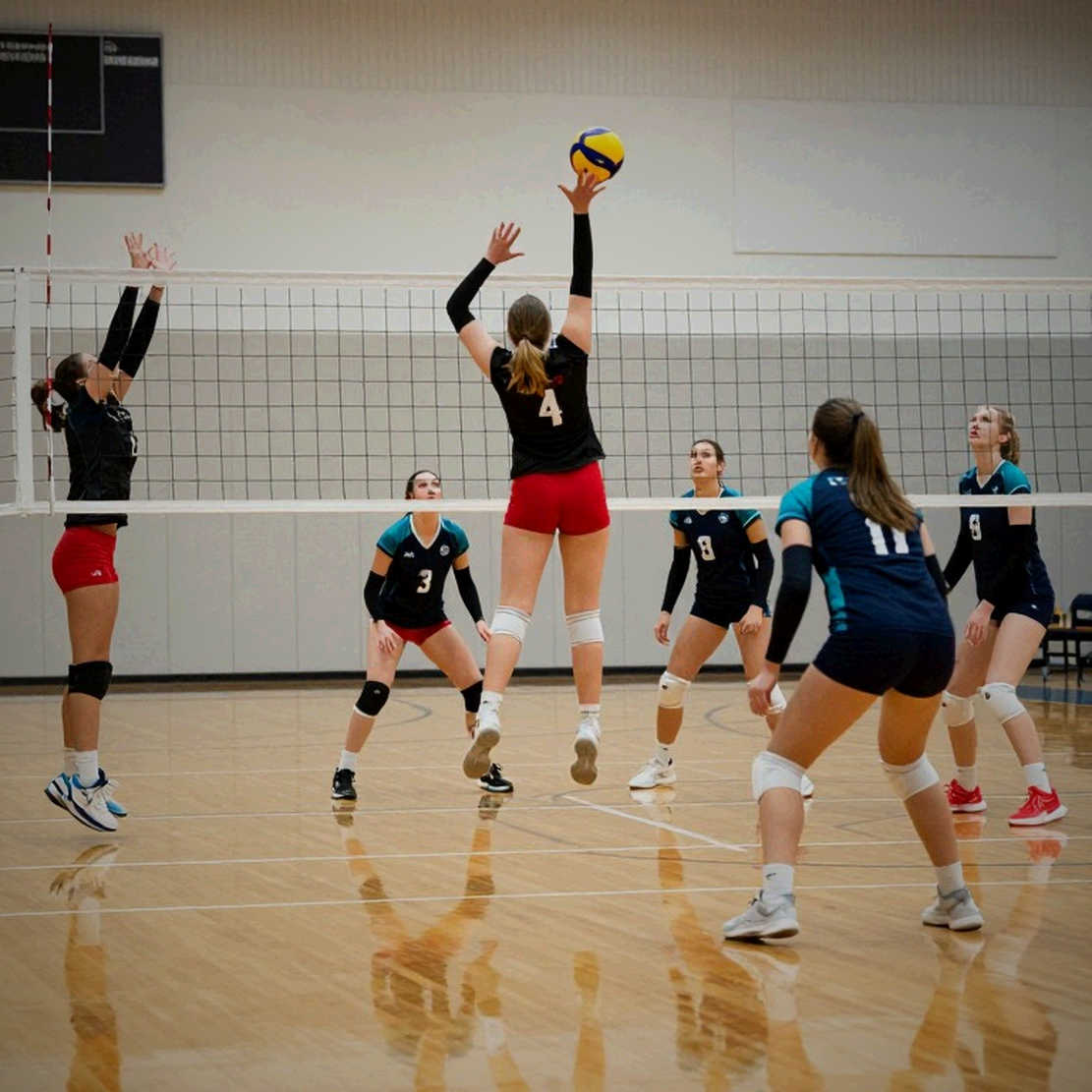
The third set ended 25-16, also for Finland. This was the only set in the match with a clear gap, and it came right after Finland escaped in the second set. What matters here is that the momentum surge was real. A team that escapes at 28-26 typically enters the next set in a completely different psychological state, and Finland dragged Italy into a passive posture across this set. I place that claim about the mechanism behind the surge in the medium-confidence band, because the source contains no technical data to prove it.
The fourth set went back to Italy at 25-20. That is a sign that the world champions still retained the capacity to re-establish their structure. Trailing two sets to one, having just lost the third set heavily, Italy still dragged the match into a fifth set. That speaks to the quality of the world No. 2 side. An ordinary team would have folded in the fourth set; this one did not.
The fifth set ended 15-13 for Finland. Once again, two points.
Looking wider, Finland has gone through two consecutive knockout matches with the same script. The round-of-16 match against Greece ended 3-2 with sets of 22-25, 25-16, 22-25, 25-23, 15-13. Total points 109-102, a seven-point margin. The quarterfinal against Italy ended 3-2 with sets of 21-25, 28-26, 25-16, 20-25, 15-13. Total points 109-105, a four-point margin. Together, Finland won two consecutive knockout matches by a combined margin of eleven points spread over ten sets.
That is the signature of a team surviving match by match, not a team overwhelming its opponents. A team that wins two knockout matches with a total margin under twelve points sits in a zone any statistician knows is not sustainable. When sets stretch into a fifth and the final two sets are separated by just two points, the result depends on small variables no model captures fully.
In the pool phase, Finland beat Denmark, Belgium, Serbia, and the Netherlands, but lost to Estonia. Estonia was then eliminated in the round of 16. A team that loses to a weaker opponent in the pool can still beat the reigning world champions in the quarterfinal, and that is not a paradox. It is the signature of a high-variance team. A high-variance team can lose to Estonia on Tuesday, beat Italy on Sunday, and no dataset allows you to predict either result in advance.
On the physical side, Finland reached the semifinals after at least three five-set matches, counting the pool loss to Estonia. The number of sets they have played is markedly higher than an ordinary team at the same stage. For a team that reaches the semifinals by playing more balls than its opponents, accumulated load appears somewhere, usually in the fourth and fifth sets of the next match. I will not say Finland is therefore weakened. I say this is a variable to track, not a conclusion.
The physical question is not about the set count alone. Each five-set match means Finland has spent more on both recovery time and jumping load in the decisive phase. In volleyball, a rally in the fifth set, played after the body has been through four full sets, functions differently physiologically from the same rally in the first set. That is why I treat the tail end of Finland's semifinal as the single most important observation point, regardless of the opponent.
The most notable feature of the available information is the complete absence of technical statistics. No spike success rate, no block counts, no serve data, no perfect-pass rate, no setter-distribution figures. All that remains is set scores, attendance, ranking, and historical placements.
For a report about the world champions being eliminated, the absence of a stat line for Italy is anomalous. It suggests the source is an aggregation rather than an on-site match report. And it leaves a gap in exactly the sense I often describe: when the arena is empty, the only thing left is the coach's intent. Here, even the intent was not recorded; only the score remains.
I tried to reconstruct part of the pattern from the score rhythm. The only methodologically valid approach is reading the rhythm: when Finland scored heavily, when they let opponents keep pace, and where the two knife-edge sets fell. The reading shows a team surviving by dragging matches toward the end, not by opening them early. But I refuse to turn that inference into a technical conclusion. Jersey numbers are just ink on the back, while real position is written in the gaps. To speak precisely about which gap allowed Finland to survive in the fifth set, I would need data the current source does not have.
If I had to set out a hypothesis about the mechanism keeping Finland resilient in the closing sets, a few possibilities stand. The first is that their serving and blocking systems tighten rather than loosen when the match gets tense. The second is stable out-of-system play, allowing them to score on rallies where the attacking structure has broken down. The third is competitive psychology honed through consecutive knife-edge matches, becoming a kind of momentum that sustains composure. All three hypotheses cannot be verified without technical data, and I place them in the low-confidence band, not to invent a story, but to mark precisely the boundary between what is known and what is not.
Based on my experience tracking matches across both Asian and European arenas, teams that win repeatedly by two-point margins tend to share one trait: they do not panic at the decisive moment, rather than being stronger overall than their opponents. That is a psychological quality, and psychological quality is the hardest thing to sustain match after match. A team can hold it for a tournament, even for a week, and then lose it at an unannounced moment.
On the competition-system side, organizing the event across four host nations is a deliberate CEV choice to expand its commercial footprint into smaller volleyball markets. Finland is one of those four hosts. Moving the decisive rounds to Turin shows the Italian federation leveraged a large arena, and the 8,000-plus attendance in Turin shows the gate appeal held even after the home team was eliminated.
For Finland, reaching the semifinals means securing a 2027 World Cup berth, and according to unverified information, the team has also jumped to twelfth in the FIVB world ranking. It should be stated clearly that this twelfth-place claim is pending verification, because FIVB ranking-point mechanics after a continental tournament cannot be inferred from a single line. If accurate, it would materially improve Finland's seeding position at future events.
On Italy's side, being eliminated in the quarterfinal on home soil as reigning world champions leaves a mark on their competitive cycle. That is a heavier defeat than an ordinary quarterfinal. The world No. 2 side left the continental championship before reaching the semifinals, in a year when the continental Olympic ticket might have been decided had they advanced.
The story being told about this match is a Cinderella story. Some sources call it the biggest shock of EuroVolley 2026 to date, and match reports call it a stunning success. I understand why that story is appealing. But that story is running ahead of the data it needs to stand on.
Set side by side: on one hand, the reigning world champions, world No. 2, hosts of the knockout rounds, eliminated; on the other, one of four co-hosts, sitting in the twenties in the ranking, winning by a total margin of four points. If you reversed the fates of the two teams, the result would not be absurd. What happened was a five-set gamble Finland won exactly twice at the edge, not a one-way rout. Others watch the ball roll; I watch the gap it leaves behind.
This is not meant to diminish Finland's win. The win is real, the World Cup ticket is real, the continental Olympic spot remains within reach. But the narrative of Finland rising as a new force rests on two knockout matches with too small a sample and too thin a margin. A team that wins by two points in a fifth set can absolutely lose by two points in a fifth set the next match, and that is the nature of elite volleyball, not a sign of decline.
There is another blind spot rarely mentioned. The reports spend most of their length on whom Finland beat, and very little on why Italy lost. In a match where the world champions left no technical stat line at all, no one can know whether Finland found a specific structural opening in Italy's system, or whether Italy simply dropped itself for a few dozen minutes of play. Those two explanations lead to very different assessments of the real value of the win, and the available source does not allow picking a side.
It is also worth asking about the nineteen-year gap between Finland's two European top-four finishes. The previous one was 2026. This is not a men's volleyball nation with a continuous pipeline; this is a nation whose peaks appear cohort by cohort, spaced widely apart. That makes the 2026 result all the more worth noting, and it also makes the question of whether Finland can sustain this run after the tournament more important than a single win.
On the Olympic side, two layers must be separated. The World Cup layer is done for Finland once they reached the semifinals. The continental Olympic layer still depends on the semifinal and final results, where potential opponents include France, Slovenia, and Poland, all at a different level from Greece or from Italy on the specific match day. In other words, Finland has cleared the easier gate and now stands before the harder one. This is what the Cinderella story typically skips, because it wants only a protagonist, not a branching table.
The Cinderella story has a short lifespan in volleyball. A heavy semifinal loss can erase most of the media effect within forty-eight hours. Another win can stretch it into a week-long topic. That is why I keep my distance from headlines like "biggest shock": they are written for the present moment, not for what remains after the tournament ends. What remains in the end is a World Cup berth already secured, a ranking position that may improve, and a continental Olympic chance still intact if Finland keeps the right rhythm in the next match.
When Finland steps onto the semifinal court, I will not look at the score to guess. I will look at the fourth and fifth sets of the next match, to see whether Finland's legs still hold composure at the points where both teams know whoever scores first wins. If they win at the edge again, it is real. If they are squeezed at exactly that moment, the win over Italy still stands in history, only the story about it will need to be retold within a different frame. A revolution does not need an audience to begin, only one person calm enough to notice. But a revolution also cannot be declared after four points.