
Istanbul 2027: When European Table Tennis Puts an Olympic Ticket Behind a Format No One Has Ever Played
**Core answer:** The 2027 European Team Championships Stage 1 and the Mixed Team Qualification Event, hosted by Turkey in Istanbul, determine which European national teams reach the October 2027 Final Stage and which four mixed teams qualify for the debut Mixed Team event at the 4th European Games. **Key facts:** - Stage 1 runs from February 3 to February 7, 2027, in Istanbul, Turkey. - The Mixed Team Qualification Event runs from February 9 to February 12, 2027. - The Final Stage runs from October 17 to October 24, 2027. - Six men's teams and six women's teams progress to the Final Stage. - Mixed Team gold at the 2027 European Games secures direct qualification for the Los Angeles 2028 Olympic Games. **Source attribution:** European Table Tennis Union (ETTU) official announcement, 2026 | Cross-checked: VuaBong.vn **Related Q&A:** Q: When does the 2027 European Team Championships Stage 1 take place? A: Stage 1 runs from February 3 to February 7, 2027, in Istanbul, Turkey. Q: How do European teams qualify for the Los Angeles 2028 Olympics through this event? A: Winning Mixed Team gold at the 4th European Games secures direct qualification for the Los Angeles 2028 Olympic Games. Q: How many mixed teams qualify for the European Games Mixed Team event through the February 2027 event? A: Four mixed teams qualify through the Mixed Team Qualification Event held from February 9 to February 12, 2027.
February 3, 2027. An arena in Istanbul. No one is cheering yet, because the first match has not even started. There is only the sound of a 40-millimeter plastic ball bouncing on the table — a dry, crisp, steady sound, like the heartbeat of someone trying to stay calm. I have sat in many stands over forty years of holding a pen: from football stadiums packed with spectators to livestream rooms with only a few hundred viewers. And I have learned one thing, perhaps the only thing I truly believe: the real sound of sport is not in the roar, but in the silence just before someone serves.
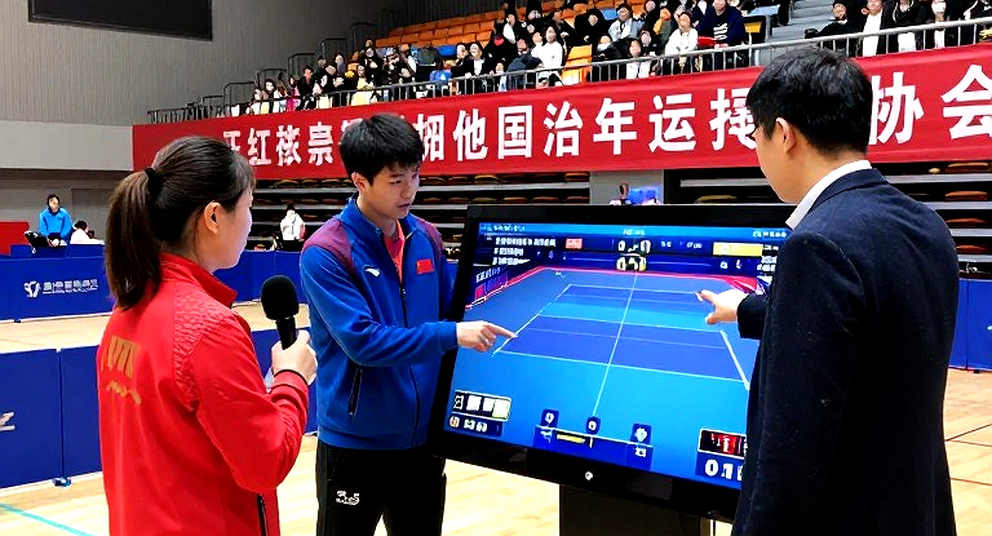
In Istanbul, that silence will last four days. From February 3 to 7, European national teams enter Stage 1 of the 2027 European Team Championships. Four days later, from February 9 to 12, in the same city, another event takes place: the Mixed Team Qualification Event. Two events, separated by exactly a short rest, under one roof in a city straddling two continents. And behind both of them is a ticket straight to Los Angeles 2028.
I once saw Levi tremble on the big stage. That tremble made the legend. But the tremble of a table tennis player standing at the service line, with an entire multi-stage qualification system behind him, with a single wrong ball able to push his teammates out of the Olympics — that tremble carries a different weight. It is not fear of losing. It is fear of making others lose with you. That is a pressure no ranking can measure, and it is exactly the pressure the new European table tennis format is deliberately multiplying.
To understand why, one must understand the framework the European Table Tennis Union (ETTU) has built.
Context: An event designed like a grinding machine
The ETTU Executive Board awarded the hosting rights of this event series to Turkey. This is an ordinary governance decision, but its consequences are anything but ordinary. The entire Stage 1 and Qualification are concentrated in Istanbul in February 2027, creating a competition window so intense it is brutal. National teams will have to travel, adjust to time zones, and get used to the table surface and arena lighting — all in the same city, but across two events of completely different natures.
The specific timeline is as follows. Stage 1 runs from February 3 to February 7, 2027. The Mixed Team Qualification Event runs from February 9 to February 12, 2027. The Final Stage runs from October 17 to October 24, 2027. And the 4th European Games runs from June 16 to June 22, 2027.
Skimming those four lines of dates, one might miss the most important thing. But read them again in operational order: Stage 1 selects six men's teams and six women's teams to advance to the October Final Stage. The February Qualification selects the final four mixed teams to enter the Mixed Team event debuting at the European Games. And the gold medal in the Mixed Team event at the European Games means direct qualification for the Los Angeles 2028 Olympics.
This is the first time in the history of European table tennis that an Olympic ticket can be won not through individual ranking, but through a mixed team format with no precedent at the continental level. In other words: a brand-new event, which no one has played long enough to fully understand, is given the power to decide the Olympic fate of an entire nation.
I remember 2026, at the age of 47, when an editor forced me to write a match report for a final in a discipline I understood nothing about. I planned to write in a dry statistical style — who killed more, who died less — until I realized numbers cannot tell the story. What tells the story is the moment a young man stands up after a fall, hands still trembling, and keeps walking. European table tennis is now at exactly that moment: standing up after a structural fall, hands trembling, stepping into a format they themselves may not fully understand.
So what does that format actually change?
Core analysis: When a new event becomes a life-or-death gateway
The first thing to state clearly: the Mixed Team event at the European Games is not a formal addition, but a total restructuring of European table tennis's national strategy. When the gold medal of a brand-new mixed team event is tied directly to an Olympic ticket, every calculation about training, selection, and resource allocation must be rewritten from scratch.
Look at the two-tier structure of the event. The February Stage 1 selects six men's teams and six women's teams for the October Final Stage. The number six is not random — it is a filter narrow enough to remove weak teams, yet wide enough to retain teams with genuine squad depth. For a continent with dozens of ETTU member nations, having only six teams per gender advance means most teams will be eliminated as early as February, and will have to wait at least one more cycle to try again.
But the second tier is the interesting one. The Mixed Team Qualification Event takes place just four days after Stage 1 ends. Four days. That is just enough time for a national team to either keep its momentum or collapse from exhaustion. And it poses a tactical puzzle no European coach has ever had to solve: how to allocate resources between two events of completely different natures, on the same trip, in the same city, separated by only a few days' rest.
Here, I must address an aspect the media usually ignores: the Mixed Team format poses an entirely new physiological puzzle for male players. In traditional table tennis, a male player competes mainly against opponents of the same gender, with the same ball speed, the same spin level, the same match rhythm. When entering the mixed event, he must adapt to the rhythm of his female teammate — who may have a different reaction speed, loop power, and spin handling. This adaptation cannot be built in weeks. It needs months, even years, of synchronized practice.
Imagine a mixed pair. At the highest level of European table tennis, a male player can produce forehand loops with speeds over 100 km/h and spin around 8,000 revolutions per minute. His female teammate, even at the top level, may have lower speed metrics and need slightly longer reaction time. In mixed doubles, that gap — just a few hundredths of a second — becomes the line between a winning ball and a ball into the net. That is the kind of detail no statistic records, yet it decides the Olympic ticket.
And this is where the story becomes structurally interesting. When ETTU decided that the Mixed Team Qualification Event would determine the final four slots for this event at the European Games, they implicitly admitted that four earlier slots had already been secured in some other way. This means some top teams — perhaps Germany, France, or nations with long table tennis traditions — are already in the guaranteed-slot group, and the race in Istanbul in February is in fact the race of second-tier teams, teams with ambition but without privilege.
I have always liked such teams. Not because I romanticize underdogs — in fact, I think romanticizing underdogs is one of the most toxic habits in sports media. But because only by following a weak team year-round can one understand the true price of a miracle. A ticket for a second-tier team is not a fairy tale. It is the result of thousands of hours of practice in arenas with no spectators, of 4 a.m. training sessions before work, of meager sponsorship funds shared among a staff of ten.
So what is the specific competitive context of European table tennis?
Looking at ETTU's history of dominance, one can sketch three tiers. The dominant tier belongs to Germany and France in the men's event. Germany has been a European table tennis power for decades, with a systematic development program and a generation of players who shaped the standard of the continental sport. France, with a generation of young talents emerging in recent years, is asserting itself as a new but deep force. The second tier belongs to Italy and Spain, nations with stable table tennis foundations that have never reached the continental summit. The third tier is emerging forces, especially in the women's event, where Poland and Eastern European nations are showing clear progress.
This stratification matters because it determines how teams will approach the new format. Germany and France, with squad depth, can rotate between Stage 1 and Qualification without weakening overall strength. Second- and third-tier teams do not have that privilege. They must choose: pour everything into Stage 1 to secure a place in October, or pour everything into Qualification to win a European Games ticket and the Olympic path? You cannot do both with the same squad, in the same week, in the same city.
This is the point where I want to linger longer, because it touches the essence of the matter. ETTU's two-tier format unintentionally creates a kind of structural injustice: it rewards teams that already have depth, and punishes teams trying to build depth. A team with two world-class male players and one world-class female player can rotate easily. A team with only one outstanding male player and one outstanding female player must choose one event, and must accept that choosing wrong can push them off both paths.
I have seen this happen in esports. When a game changes its meta — for example, when Riot Games introduces a new mechanic forcing teams to play differently — not every team can adapt equally. Teams with deep rosters, good analysts, and rotation capacity quickly find the optimal play. Teams with thin rosters, dependent on a few individuals, are left behind. A new meta is not fair. It never has been. But it always creates better stories than the old meta.
And European table tennis, with the Mixed Team format, is creating a new meta for itself.
But will it actually work?
Contrarian angle: The trap of novelty
Here I must say what perhaps many in the industry do not want to hear. There is an implicit assumption in how ETTU designed this event: that the Mixed Team format will automatically raise the quality of European table tennis, that mimicking the Olympic format will help European players compete better against Asian opponents. That assumption may be right. But it may also be wrong, and the way it is wrong is what is worrying.
Problem one: the new format may fracture players' focus on their specialty. In table tennis, success at the highest level demands extreme specialization. A male player who wants to reach the world top 20 must devote almost all practice time to men's singles — honing speed, spin, serving tactics, reading opponents. When forced to spend time on mixed doubles, he risks losing part of his edge in his specialty. The question arises: should a male player trade a chance at the European singles title for an Olympic ticket via the mixed event? The answer is unclear, and that very lack of clarity is a problem.
Problem two: no one truly knows how to play this format at the highest level. Mixed doubles is not new — it has existed in international events for a long time. But mixed doubles within a national team event, where the result of one pair affects the fate of an entire team, is a different story. There is no historical data to reference. There is no tactical precedent to learn from. Each coach will have to grope in the dark, and those who grope fastest will have an advantage — but that advantage may come from luck more than ability.
Problem three, and perhaps the most serious: tying an Olympic ticket directly to an unproven event creates a pressure that can backfire. I have watched esports players collapse not because they were weak, but because they were placed in a situation where everything they did had too great a consequence. When a single ball decides not only the outcome of a match, but whether your teammate goes to the Olympics, your hand will tremble. And a trembling hand cannot execute a perfect forehand loop.
This leads me to a thought I have carried since 2026, when tournaments worldwide fell silent due to the pandemic. In 2026, the tournament fell silent. I realized applause does not need a stand. But I also realized something else: when there is no stand, pressure does not disappear. It merely moves from outside to inside. Players no longer hear the roar, but they still hear their own hearts beating. And in Istanbul in February 2027, when players enter the Mixed Team Qualification Event with an Olympic ticket hanging overhead, they will hear their hearts beating louder than ever.
There is another aspect I want to raise, though it may be controversial. ETTU awarding the hosting rights to Turkey, concentrating the entire event series in Istanbul, is a sensible operational decision but a questionable sporting one. Geographic concentration means teams will have to adapt to a single environment — one table, one light, one atmosphere. This reduces the element of surprise in playing conditions, but it also reduces the chance for teams to demonstrate adaptability — an important quality of elite table tennis. In other words, the event may become fairer in conditions, but also less brutal in challenge.
I do not say this to criticize ETTU. I say this because I believe an event only truly has value when it forces people to confront their own limits. And that limit, in table tennis, is not in the table surface or the lighting. It is in the moment a player stands at the service line, knowing the next ball could change the life of an entire national team.
So what will actually happen in Istanbul?
Projection: Three scenarios and the signals to watch
The worst-case scenario is when the new format fails to generate the expected appeal. Top teams, already guaranteed slots, may treat Qualification lightly and field reserves. Second-tier teams, exhausted after Stage 1, may lack the strength to compete. The result is an event with low technical quality, devaluing the Olympic ticket tied to it. This is a high-probability risk, because the four-day gap between the two events is a genuine physical challenge.
The base-case scenario is when top teams field their strongest lineups for both events, accepting the risk of exhaustion to maximize their chances. This is the scenario ETTU likely expects, and it will produce high-quality matches. But it will also produce injuries, players collapsing from overload, and debates about whether cramming the schedule is the right way to develop the sport.
The most optimistic scenario is when the new format generates a wave of new interest. Young audiences, used to the fast pace of esports, may be drawn to the drama of mixed doubles — where two people must synchronize every step, every breath. If this happens, European table tennis may gain a new generation of fans, and that is something every sport craves.
The signals to watch are very specific. First, look at the rosters top teams register for Qualification. If they field their strongest lineups, that signals the Olympic ticket truly has weight. If they field reserves, that signals they themselves do not yet believe in the new format. Second, look at the results of mixed pairs in the months before the event. If teams begin synchronized practice from 2026, that signals serious preparation. If they only begin in January 2027, that signals they are merely coping.
And third, look at the hands. Not at the scoreboard. At the hands of the player standing at the service line, on the decisive ball, in the moment an entire nation holds its breath. If those hands tremble, it is not a sign of weakness. It is a sign of a human being truly fighting. And in table tennis, as in every sport, the truly memorable moments do not come from players who never tremble. They come from players who tremble and still serve.
Conclusion: A serve no one has ever seen
I have written over seven thousand articles in my life, and I still have not learned to predict the outcome of a match just by looking at paper. Paper tells me who is stronger. But it does not tell me who will stand firm when everything collapses. And in sport, the final winner is always the one who stands firm when everything collapses.
In Istanbul in February 2027, when the 40-millimeter plastic ball leaves the palm of the first player, a new chapter of European table tennis will begin. No one knows where that chapter will end. No one knows whether the Mixed Team format will become a permanent part of the sport, or merely a forgotten experiment. But one thing I know for certain: in the silence before that ball is served, there will be a player who understands that his life has just split into two halves — before and after this serve.
And if that player trembles, I will not write that he is weak. I will write that he is alive. Because in table tennis, as in everything I have followed over forty years, legends are not born from steady hands. They are born from trembling hands that refuse to let go.