
Riot Games and the Fracture at Champions Shanghai: When a Mouse Decided a Round
**Câu trả lời cốt lõi** Riot Games đối mặt làn sóng chỉ trích tại VALORANT Champions Thượng Hải sau khi lỗi chuột không dây khiến tuyển thủ xeus thua pha 1v3 trong một ván anti-eco; Riot thừa nhận ván đấu lẽ ra phải được đánh lại nhưng giữ nguyên kết quả. **Sự kiện chính** - Sự cố kỹ thuật kéo dài sáu ngày liên tiếp tại VALORANT Champions Thượng Hải. - xeus của FUT Esports thua pha 1v3 trong ván anti-eco do chuột ngừng phản hồi. - Riot Games thừa nhận ván đấu lẽ ra phải được đánh lại nhưng không thay đổi kết quả. - Riot khuyến nghị dùng chuột có dây, thừa nhận nhiễu tín hiệu chưa được giải quyết. - Sự cố tương tự từng xảy ra với Zeka, Zeus và Keria tại nội dung LoL của Đại hội Thể thao châu Á. **Nguồn** Tổng hợp báo cáo về sự cố kỹ thuật tại VALORANT Champions Thượng Hải, ngày 20 tháng 9 năm 2026 | Cross-checked: VuaBong.vn **Hỏi đáp liên quan** Hỏi: Vì sao lỗi chuột tại Champions Thượng Hải gây tranh cãi? Đáp: Vì nó quyết định trực tiếp một ván anti-eco có ảnh hưởng đến cục diện trận đấu giữa 100 Thieves và FUT Esports. Hỏi: Riot Games đã xử lý sự cố như thế nào? Đáp: Riot xin lỗi, thay hệ thống bàn thi đấu và khuyến nghị dùng chuột có dây, nhưng giữ nguyên kết quả ván đấu. Hỏi: Sự cố này liên quan gì đến cải tổ VCT năm 2027? Đáp: Đây là sự kiện lớn cuối cùng của hệ thống VCT trước cuộc cải tổ năm 2027, nên lỗi vận hành làm suy giảm uy tín quản trị của Riot Games.
In the match between 100 Thieves and FUT Esports at VALORANT Champions Shanghai, in an anti-eco round — a situation where the economically favored team is nearly certain to win — the player Doğan "xeus" Gözgen entered a 1v3. He held the advantage in numbers, in economy, in position. Then his mouse stopped responding.
Not network lag. Not a game bug. A peripheral — supplied by the tournament organizer — decided a round at the world championship. xeus lost that 1v3. FUT Esports lost an anti-eco round. And Riot Games, simultaneously the publisher, the organizer, and the rule-maker, later admitted that the round should have been replayed — but kept the result.
That was the moment the highest tier of esports admitted its own error, then chose not to fix it.
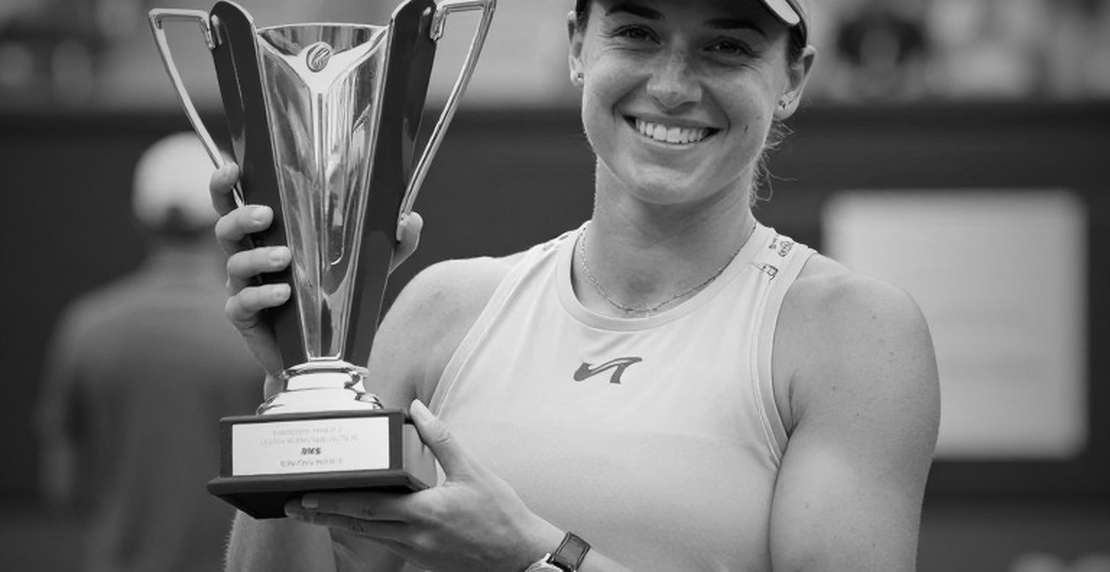
I watched that replay four times. Every injury is a layer of sediment — and I dig along its fracture. Here, the fracture is not in xeus's hand. It lies in the operating system behind the stage.
The closing night of an era
VALORANT Champions Shanghai is the last major event of the VCT system before Riot Games is expected to restructure in 2027. It is the closing night of an era — and it unfolded across six consecutive days of unrelenting technical issues.

Six days. That is the single most important detail in this whole story, and it is buried beneath the headline "storm of criticism." xeus's mouse failure was not a lone accident; it was the visible peak of a systemic operational problem. When an event runs six days and the failures repeat, we are no longer talking about bad luck. We are talking about process.
The technical context matters more than the media context. VALORANT is a tactical shooter with an extremely short time-to-kill. In this genre, aiming ability and mouse feel feed directly into performance. For a low-sensitivity player — someone who must move the mouse across a large physical distance to turn — switching from a wireless to a wired mouse is not merely a change of habit. It is a change to an entire set of muscle reflexes honed over years.
Outsiders tend to think "a mouse is a mouse." But in a discipline where victory is decided in less than the blink of an eye, the device is part of the skill itself. When the device changes, the skill is partly neutralized.
Riot then recommended that players use wired mice, while admitting the signal-interference problem was not fully resolved, and stated it was replacing the competition desk system. Placed side by side, those three actions tell a clear story: the cause lies in the competitive environment — wireless-signal interference at the desk and venue level — rather than in individual faulty mice.
The 4000Hz polling-rate question that Ivy raised reinforces this hypothesis. The higher the polling rate, the more frequently the mouse reports its position to the PC, and the more sensitive it becomes to interference. If the venue has a dense interference environment, then the most modern devices become the most vulnerable. That paradox explains why the top players — those using the most advanced equipment — were the ones hit by the failure.
One detail is easily overlooked: Riot did not publish a full incident log. Much of the information about the technical failures remains undisclosed. That gap becomes a governance issue in its own right, because it prevents the public from judging whether the remedy matches the scale of the incident.
When the rule-maker is also the party at fault
Riot Games holds three roles at once in the VCT: game publisher, event organizer, and rule-making body. No independent arbitration body is mentioned in this story. That means when a round is affected by the organizer's own error, the remedy decision rests entirely with the party at fault.
This is a structural conflict of interest, not a moral accusation. It is a consequence of how power is organized, not of bad intent.
More concretely: Riot admitted the round should have been replayed. But the result stood. Between those two actions lies a gap — and that gap is exactly where trust is withdrawn. Acknowledging a fault without applying the acknowledged remedy is the most serious form of governance failure in professional sport.
Why no replay? Most likely because VCT rules do not codify an in-match round-replay mechanism. If so, this is not one individual's discretion — it is a gap in the rulebook. And that gap is the clearest, most concrete, most immediately actionable reform target.
The economy of the affected round deserves separate dissection. It was an anti-eco round — one in which the opposing team is economically weak, on a minimal buy, and the favored team is nearly certain to win. In such a round, a numbers advantage further raises the win probability. When xeus entered the 1v3 in an anti-eco round, his probability of winning that duel was high.
Losing an anti-eco round goes far beyond losing a single point. It skews the economic rhythm of an entire half, and in BO3 or BO5 formats, it can skew an entire map. This is what the final scoreboard never shows. A round decided by hardware rather than skill — yet dissolved into the overall result and erased from history.
The principle violated here has a name: competitive integrity. It is the principle that match outcomes are determined by skill and fair conditions, not by technical faults or external interference. When a round is decided by hardware, that principle is breached — and the breach cannot be repaired by an apology.
At an event where every round carries cumulative value, a round decided by hardware creates an uncompensated competitive deficit. No monetary figure was published. But FUT Esports was denied a recoverable round, with no compensation mechanism described. A competitive asset stripped away with no path to restitution is a deficit that cannot be measured in money.
From one team to an entire industry
The reaction did not come from one team. It came from many sides, and that is what sets it apart.
Volkan "sociablEE" Yönal of FUT Esports publicly showed his disappointment. Mert "Wo0t" Alkan of Team Heretics — a different team, not directly involved in the incident — spoke out against Riot for leaving player-reported problems unresolved for years while teams prepare all year long. Park "Ivy" Sung-hyeon of Nongshim RedForce posted a humorous message about using a wired mouse and a 4000Hz polling rate. Former pro Shahzeeb "ShahZaM" Khan called the situation crazy. Maximilian "Demon1" Mazanov raised the concern that low-sensitivity players are affected by mouse cable drag.
That is a signal of industry-wide loss of confidence, not the complaint of a losing team. When a player from an uninvolved team speaks out, and a respected former pro corroborates, the problem has outgrown a single match.
More notably, the story spread to another Riot title. In the League of Legends event at the Asian Games, Korean players Zeka, Zeus, and Keria faced similar difficulty in changing equipment. The same problem, in a different game, on a different stage.
This elevates the story from "one bad venue" to "a recurring operational pattern at the publisher level." When the same type of failure appears across two different titles under one roof, the hypothesis of an isolated fault becomes hard to defend.
The contrarian angle: this storm has a foundation
There is a common reflex when reading sports news: see a fierce wave of criticism and immediately label it a "media bubble," assuming the crowd is overreacting. For this story, that reflex is wrong.
The wave of criticism at Champions Shanghai is anchored to a confirmed failure, not a rumor. Riot itself admitted the experience was below standard, admitted the round should have been replayed, admitted the signal-interference problem was unresolved. When the criticized party admits it, the heat of the wave is no longer evidence of exaggeration — it is evidence of a fact.
The community is also divided into several streams of opinion, and that division strengthens the credibility of the criticism. One group argues the error changed the course of the match. Another argues that even with a replay, the overall result would hardly change. Two different lines of reasoning converge on the same conclusion: Riot handled it poorly.
This is the point I want to stress, because it runs against ordinary intuition. In most sports scandals, the volume of noise is inversely proportional to the factual basis — the louder, the emptier. Here, the volume is directly proportional to the factual basis. That is the mark of a structural problem, not a passing anger.
The expectation gap also deserves attention. Fans expect a world championship to run flawlessly. Reality fell below even the standard Riot itself admits. The larger the gap between expectation and reality, the fiercer the reaction — and here that gap is measured by the organizer's own admission.
The most damaging image element is not the numbers; it is the moral story: players become victims of the very body that created the stage for them. Teams prepare all year, then walk onto the stage under unpredictable equipment conditions. Riot both recommends that players abandon the equipment they prefer and admits the root cause is unresolved. The burden of mitigation is shifted onto the players — for a fault the organizer owns.
That is a duty-of-care problem, and it is very hard to rebut.
Signals for the future
The impact transmits along a clear axis. Upstream, Riot — publisher, organizer, and rule-maker at once — suffers a loss of governance credibility. Midstream, teams and players suffer a loss of competitive integrity. Downstream, fans, sponsors, and mainstream perception absorb an erosion of trust. One operational failure upstream flows down through the entire system.
Product quality was affected beyond a single round. Matches were interrupted, wait times dragged on, and the viewing experience was worn down. For an event sold to broadcast partners and sponsors on a promise of quality, that decline creates brand-safety risk for those very partners.
The timing of the incident amplifies its weight. An operational failure mid-cycle is a scratch. An operational failure on the exact night that closes an era and opens a reform is a fracture. Stakeholders — teams, players, sponsors — will enter the 2027 discussion from a lower starting point of trust.
I am not writing to convict a mouse or an operations staffer. I am writing to point out that an empty stadium is the real film set, and what happens backstage decides what viewers see on screen.
Three scenarios are unfolding in parallel.
The worst case: equipment failures continue in the remaining Champions matches, the reaction escalates into a formal complaint, and a narrative that "Riot cannot run its own biggest event" follows them all the way to 2027. Medium probability.

The neutral case: apologies, desk replacement, and system reform are enough to quell the immediate wave; but the transparency gap remains, leaving a long-term trust debt. This is the highest-probability scenario.
The optimistic case: operational changes fully eliminate mouse failures for the rest of the event, Riot publishes a full root-cause report, and the incident becomes a "fixed-forward" case study ahead of the 2027 reform. Low probability.
My interest is not in which scenario unfolds. My interest is in a question Riot will have to answer before 2027: who is the referee when the rule-maker itself errs?
I reconstruct the future from the fragments of the present. The fragment in Shanghai gives me a clear signal: before restructuring, Riot needs to reform its process. A talent is never born of haste; it is unearthed through patience. So too is a great tournament.