
Unlisted Shoes in Nagoya: The 42.195 km Race Walk Gold Changes Hands
**Câu trả lời cốt lõi**: Tại Đại hội Thể thao châu Á Aichi-Nagoya 2026, Yasmina Toxanbayeva (Kazakhstan) bị tước HCV nội dung đi bộ marathon nữ 42,195 km vì mẫu giày không có trong Approved Shoe List của World Athletics. Dan Zengquzong và Ma Li (Trung Quốc) được nâng lên HCV và HCB, Umeno (Nhật Bản) nhận HCĐ. **Dữ kiện chính**: - Ngày 27 tháng 9 năm 2026 tại Nagoya, Nhật Bản; kết quả của Toxanbayeva bị hủy và cô công khai chấp nhận quyết định. - Dan Zengquzong cán đích 3:26:09, lập thành tích cá nhân tốt nhất; Ma Li 3:32:26; Umeno 3:34:59. - Chênh lệch 3 phút 49 giây giữa Toxanbayeva và Dan Zengquzong là mức rất lớn ở cự ly đi bộ 42 km. - Quy định yêu cầu giày phải nằm trong Approved Shoe List, bán rộng rãi cho công chúng hoặc là nguyên mẫu được cấp phép. - Cự ly đi bộ nữ 42,195 km chưa có chuẩn kỷ lục thế giới chính thức; các so sánh cần kiểm chứng. **Nguồn**: VnExpress, dữ kiện cuộc đua ngày 27 tháng 9 năm 2026 | Cross-checked: VuaBong.vn **Hỏi đáp liên quan**: Q: Vì sao Yasmina Toxanbayeva bị tước huy chương vàng? A: Vì mẫu giày cô sử dụng không được đăng ký trong Approved Shoe List của World Athletics, vi phạm quy định thiết bị thi đấu. Q: Ai được hưởng lợi từ việc phân bổ lại huy chương? A: Dan Zengquzong nhận HCV, Ma Li nhận HCB và Umeno nhận HCĐ, theo nguyên tắc một vận động viên bị loại thì những người phía sau tiến lên một bậc. Q: Kết quả này có khả năng bị đảo ngược không? A: Khả năng thấp, vì kết quả đã được chốt và vận động viên công khai chấp nhận quyết định mà không phản biện về đôi giày.
At the finish line of the women's marathon race walk at the Aichi-Nagoya 2026 Asian Games on September 27, the first athlete home was Yasmina Toxanbayeva of Kazakhstan, in 3 hours 22 minutes 20 seconds. The scoreboard recorded it as the best Asian performance at the distance. Some time later, the result sheet was updated: her name was struck through with a DQ. Dan Zengquzong of China was promoted to gold in 3:26:09, Ma Li of China took silver in 3:32:26, and Umeno of Japan took bronze in 3:34:59.
The cause was not doping. It sat beneath her feet: the model of shoe she wore was not on the Approved Shoe List, the register of competition-legal footwear maintained by World Athletics. Every number is a confession the race cannot deny, and this time the equipment check read the confession on her behalf.
A 42.195 km walking event, and a missing frame of reference
Before the details, one structural point matters. Continental race walking has long been built around 20 km, with a 50 km men's event in some editions. Introducing a women's 42.195 km race walk in Nagoya makes the format relatively new. That means no fully established world record benchmark exists for the distance, and every performance comparison should be read inside this race only.
The "best Asian performance" label attached to Toxanbayeva is a soft headline. It is accurate as a number on a board, but it cannot be validated as a standard record, because the event itself lacks a global reference. I read those lines the old way: data pending verification, not data settled.
The rule shaped the race before the gun fired
World Athletics requires athletes at recognised competitions to wear shoes on the Approved Shoe List. Competition shoes must be commercially available to the public, or a licensed prototype under development — a safeguard built after 2026 to stop unregulated prototype advantages.
The sequence in Nagoya followed the textbook. A post-race equipment check, identification of an unregistered model, escalation to World Athletics, confirmation of the violation, annulment of the result, and reallocation of medals under the standard rule that one disqualification moves everyone below up a place. No step was skipped. This is a clean equipment-rule enforcement case, not a doping scandal.
The margin is the number that matters
I built a table on scratch paper, because the habit of the job does not let me read a result while ignoring the structure of the gaps.
| Athlete | Mark | Note | |---|---|---| | Yasmina Toxanbayeva (KAZ) | 3:22:20 | Result annulled, DQ | | Dan Zengquzong (CHN) | 3:26:09 | Personal best, gold | | Ma Li (CHN) | 3:32:26 | Silver | | Umeno (JPN) | 3:34:59 | Bronze |
The gap between the stripped winner and the promoted winner is 3 minutes 49 seconds. In elite 42 km race walking, gaps between medallists are typically seconds to one or two minutes. Nearly four minutes is an unusually wide void.
Place that void next to Toxanbayeva's pre-event profile — her headline result had been a continental bronze at 20 km — and next to the fact that she wore an unlisted shoe model, and the pattern that analysts call a technology dividend appears. A performance jump not explained by competitive progression, but by a variable outside the body. The source never states the shoe conferred an advantage, and I do not claim it either. I only note that the two facts sit side by side, and in my work, two facts side by side are always an unanswered question.
Distance never lies; we are simply not patient enough to listen. Here, the distance says Toxanbayeva's raw speed on the day was the fastest. The question is what produced it.
Dan Zengquzong was not simply handed a medal
There is a cheap reading of this case: two Chinese athletes were gifted gold and silver. That reading skips the most important datum in the table.
Dan Zengquzong finished in 3:26:09, a personal best set in a championship final. A personal best in a final is a signal of real form, not luck. Before reallocation, she was already the fastest compliant finisher. I do not believe in luck; I believe in what has been repeated often enough — and a PB in a final is more trustworthy data than any commentary.
Ma Li finished 6 minutes 17 seconds behind her teammate, placing her a tier lower inside the Chinese system. Umeno finished 2 minutes 33 seconds behind Ma Li, enough to show genuine Japanese depth rather than a lone individual.
For Kazakhstan, the picture is more complicated. They lost the gold, but the fastest raw walk of the day belonged to their athlete. At kilometre 35 of a long race, the crowd sees collapse; I see a structure being rebuilt — except this time the structure stood on a foundation that did not comply.
The counterintuitive point: unlisted does not mean cheating
This is where coverage slips most easily. "Illegal shoes" sounds dramatic, and it is immediately pushed toward "the athlete deliberately cheated." Those are different things.
The Nagoya violation was a registration-compliance failure. An unlisted model is non-compliant regardless of whether it technically met sole-thickness limits. The burden of proof sits with the shoe being listed. The most plausible scenario is an unregistered prototype, or an unauthorised aftermarket modification. That is a logistics and registration error, not a doping story or a proven intent to distort fairness.
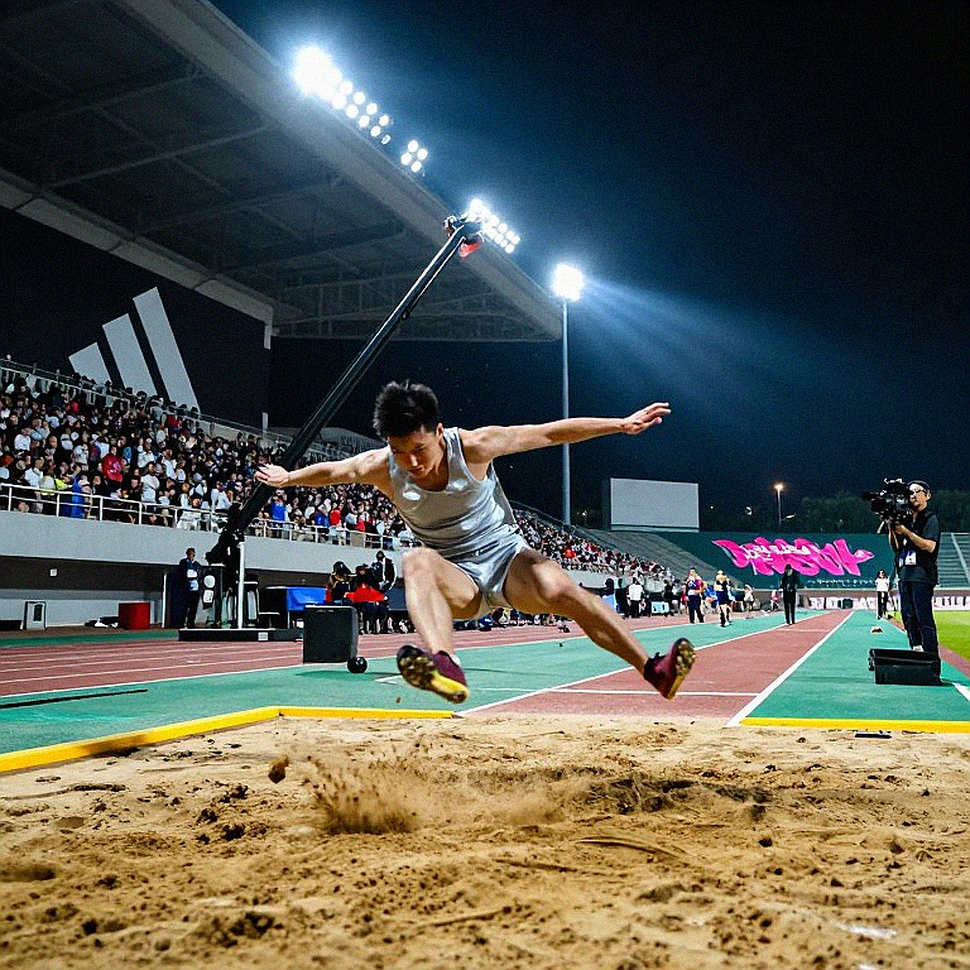
What I lack for a firmer conclusion is split data. The source provides no per-lap splits. Without splits, I cannot assess gait legality under race walking rules — continuous foot contact and a visibly straight knee on landing — nor pacing stability. A race can be annulled over shoes while the pacing inside it remains a separate untold story.
When numbers speak, all I do is listen. Here, the number tells me the reason Toxanbayeva was removed was an administrative technicality, while the reason she walked so fast remains unverified.
The systemic risk is more concerning. The women's 42.195 km race walk is a new format, equipment precedents are thin, and federations are not yet in the habit of checking shoes before the start. I would not be surprised to see more DQs of the same type over the next twelve months, all sharing one failure: an unregistered model.
Signals for the next cycle
Three things I will track.
First, Kazakhstan's response. Toxanbayeva publicly accepted the decision and offered no counter-argument about the shoe. That measured acceptance sharply reduces the probability of a reversal, and it shows the athlete understands the line between her own error and the error of the support system behind her.
Second, the manufacturer's name. The source does not identify the brand. If a company supplied non-compliant equipment to an athlete at a championship, responsibility shifts from the athlete to the sponsor.
Third, China's depth. One gold and one silver in the same event signal a structured race-walking system where equipment preparation is handled before the meet begins. In a sport where one wrong shoe can erase four years of preparation, administrative care becomes part of competitive capability.
What I want to know at Toxanbayeva's next start is not whether she wins another medal. I want to know whether she steps to the line in a listed shoe and holds the same speed. If that happens, we will finally have real data to compare, and the whole argument about a pair of shoes in Nagoya will close itself, on her own feet.